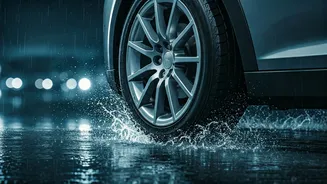










Tyres: Your Grip on Reality
Your tyres are the only part of your vehicle that actually touches the road, making them critical for safety in wet conditions. Before you set off, check the tread depth. While the legal minimum in India is 1.6mm, for monsoon safety, experts recommend
at least 2-3mm to ensure your tyres can effectively channel water away and prevent aquaplaning. A simple way to check is with a one-rupee coin; if you can see the Ashoka Pillar's head when inserted into the tread, it's time for new tyres. Also, ensure your tyre pressure is at the manufacturer's recommended level, which you can find on a sticker inside the driver's door. Both under-inflated and over-inflated tyres can reduce grip on slippery surfaces. Don't forget to check the spare tyre as well.
Wipers and Washers: For a Clear View Ahead
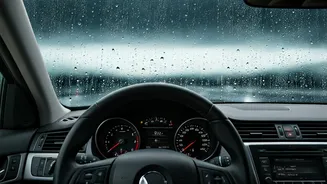
Visibility is severely reduced during heavy rain, making your windscreen wipers your first line of defence. Over time, wiper blades degrade from heat and dust, causing them to crack, skip, or leave streaks. If you notice any of these signs, replace them immediately. It’s a small investment for priceless clarity. Top up your windscreen washer fluid, preferably with a proper cleaning solution, not just water, to help clear oily grime and dirt thrown up from wet roads. A clean windscreen, both inside and out, is essential for safe driving when it's pouring outside.
Brakes: Stopping Power is Crucial
Wet roads significantly increase your vehicle's braking distance—sometimes by two or three times. This makes it absolutely essential to ensure your braking system is in top condition. Before your trip, listen for any unusual noises like squealing or grinding when you apply the brakes. If the brake pedal feels spongy or sinks to the floor, it could indicate a serious problem like a fluid leak or worn brake pads. Get your brake fluid, pads, and discs inspected by a professional if you have any doubts. A responsive braking system is non-negotiable for navigating slippery roads safely.
Lights and Electrics: Be Seen, Be Safe
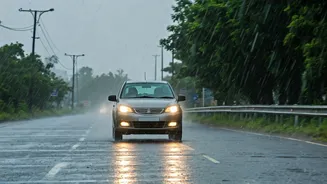
In the grey, dim conditions of a downpour, being visible to other drivers is just as important as being able to see. Walk around your car and check that all your lights are working perfectly: headlights (low and high beams), tail lights, brake lights, and turn signals. Clean the headlight and tail light covers, as a layer of mud or grime can significantly reduce their brightness. The monsoon is also tough on a car's electrical systems. Ensure your battery terminals are clean and secure, as the increased use of wipers, lights, and defoggers puts more strain on the battery.
Defogger and AC: Fight the Fog
High humidity during the rainy season means your windscreen can fog up in an instant, both inside and out. This creates a dangerous blind spot. Before your trip, check that your car's air conditioning and defogger systems are working correctly. The AC helps to remove moisture from the cabin air, effectively clearing a foggy interior windscreen. Test both the front and rear defoggers to ensure they can quickly clear condensation, providing you with a clear view of the road all around you.
Assemble a Monsoon Emergency Kit
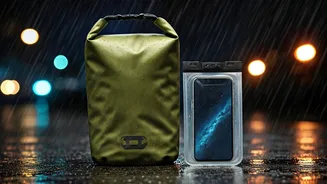
Even with the best preparation, things can go wrong. Being stuck on the side of the road is bad enough, but it's worse in the pouring rain. Prepare a simple emergency kit to keep in your car. This should include a tow rope, jumper cables, a high-visibility reflective vest, and a torch. It’s also wise to pack a first-aid kit, an umbrella, a dry towel, and some snacks and water in case you're stuck for a while. Having these items on hand can turn a potential crisis into a manageable inconvenience.