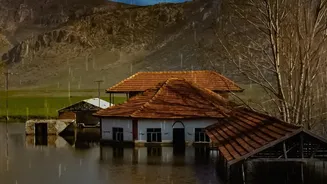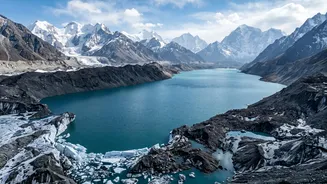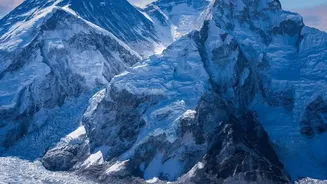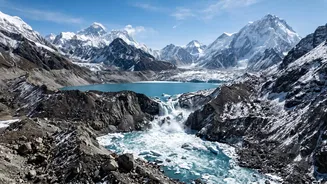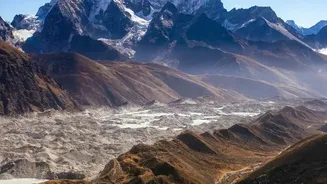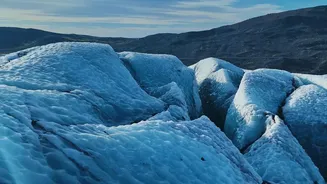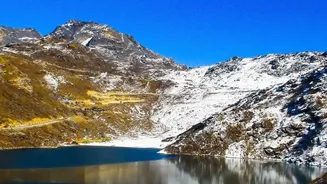







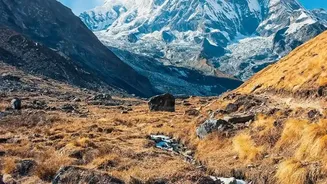
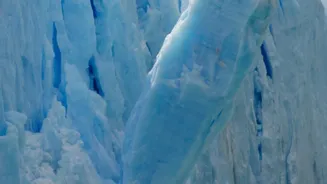
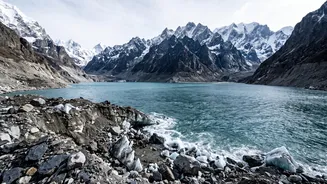
High in the Himalayas, thousands of glacial lakes are swelling, creating silent, ticking time bombs. A series of United Nations-backed reports are issuing stark warnings: the risk of catastrophic Glacial Lake Outburst Floods is escalating.
What is a GLOF?
Imagine a massive
natural reservoir of icy meltwater, held back only by a fragile dam of loose rock and sediment left behind by a retreating glacier. This is a glacial lake. A Glacial Lake Outburst Flood, or GLOF, occurs when this unstable dam fails suddenly. The result is a devastating flash flood, a terrifying torrent of water, mud, boulders, and ice that rushes down mountain valleys, often with little to no warning. These events can destroy entire villages, wipe out critical infrastructure like roads and bridges, and cause immense loss of life. The 2023 disaster in Sikkim, which destroyed the Teesta III dam after the South Lhonak Lake breached its banks, is a recent, tragic example of their destructive power.
The UN's Alarming Assessment
Recent reports from UN agencies and associated climate bodies paint a grim picture. They warn that climate change is dramatically increasing the frequency and intensity of GLOFs across the Hindu Kush Himalaya region. According to Kanni Wignaraja, a UN Assistant Secretary-General, the population at risk from these events 'goes into the millions'. A joint report by the UNDP and the International Centre for Integrated Mountain Development (ICIMOD) identified 47 potentially dangerous glacial lakes across river basins in Nepal, China, and India that require urgent monitoring. Another UN-linked study found that between 1835 and 2025, India recorded the highest number of deaths from GLOFs among eight Himalayan countries, highlighting the nation's acute vulnerability.
Climate Change as the Culprit
The primary driver behind this escalating risk is global warming. The Hindu Kush Himalaya region is warming faster than the global average. This accelerated warming causes glaciers to melt at an unprecedented rate. As glaciers retreat, they leave behind more and larger lakes, many of which are inherently unstable. Since the 1990s, the number of glacial lakes in the Himalayas has surged, with some growing dramatically in size over just a few years. Simultaneously, climate change contributes to more extreme weather events, like heavy rainfall or cloudbursts, and can thaw permafrost, triggering the very landslides and avalanches that can cause a glacial lake's dam to collapse.
India’s Vulnerable Mountain Frontiers
For India, this is not a distant threat but a clear and present danger to its Himalayan states. From Ladakh and Himachal Pradesh to Uttarakhand and Sikkim, hundreds of glacial lakes pose a potential hazard. Past events like the 2013 Kedarnath catastrophe, which involved a GLOF from Chorabari lake, and the 2023 Sikkim flood are stark reminders of the country's exposure. Dozens of potentially dangerous lakes have been identified in the Indian Himalayas alone, but a key challenge is the difficult terrain and the sheer scale of the monitoring required. Communities, pilgrimage routes, and a growing number of hydropower projects are located in downstream areas, directly in the path of potential GLOFs.
A Race Against Time for Solutions
Responding to the threat requires a two-pronged approach: mitigation and adaptation. In the long term, the only way to slow the growth of glacial lakes is to address the root cause—climate change—by cutting global emissions. In the immediate term, the focus is on saving lives through better preparedness. Following the Sikkim disaster, the Indian government has initiated plans to install early warning systems (EWS) for nearly 200 critical lakes. Agencies like the Centre for Development of Advanced Computing (C-DAC) are developing indigenous technology to monitor water levels in realtime. Recently, India's first such GLOF early warning system was installed at Ghepan glacial lake in Himachal Pradesh. These systems, which use sensors and satellite communication, are designed to provide precious lead time for evacuation, but deploying them across the vast and remote Himalayas remains a monumental task.