

An Icon of the Solar System
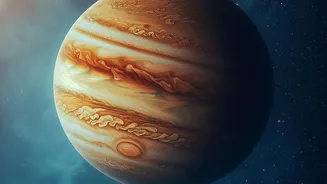
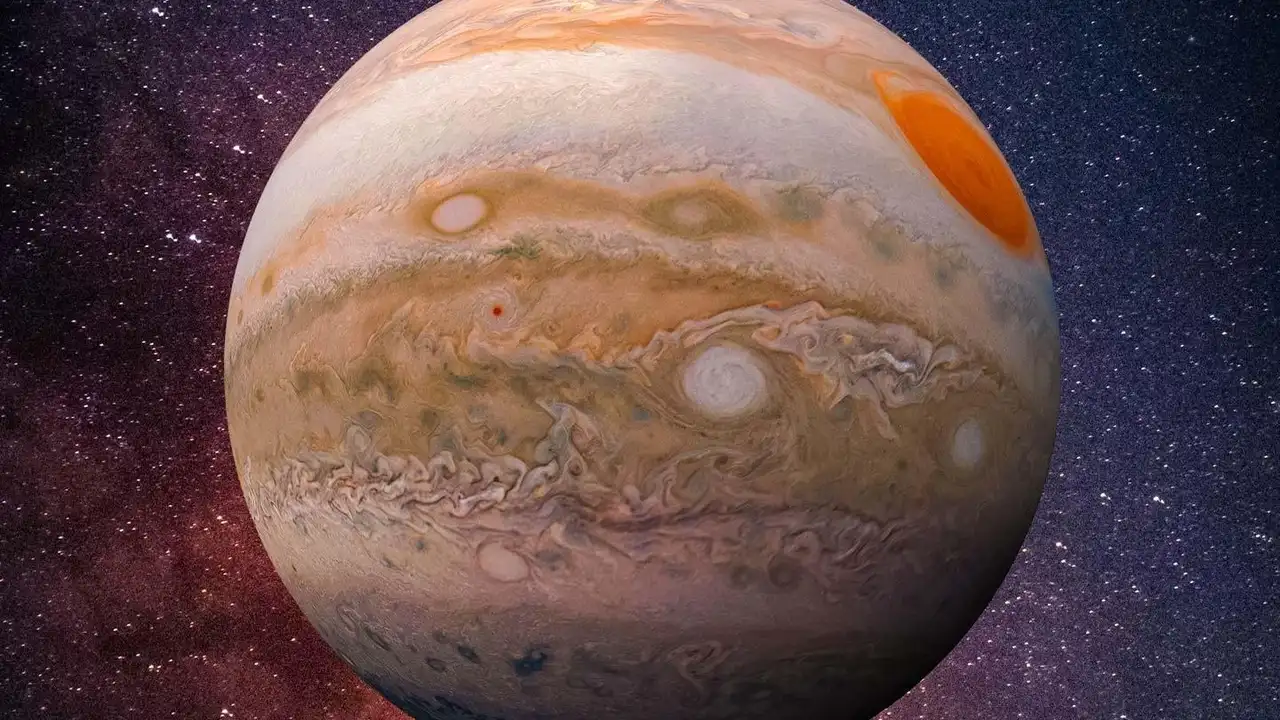
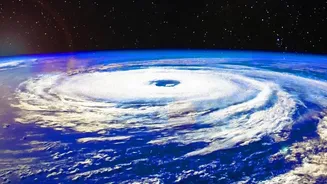
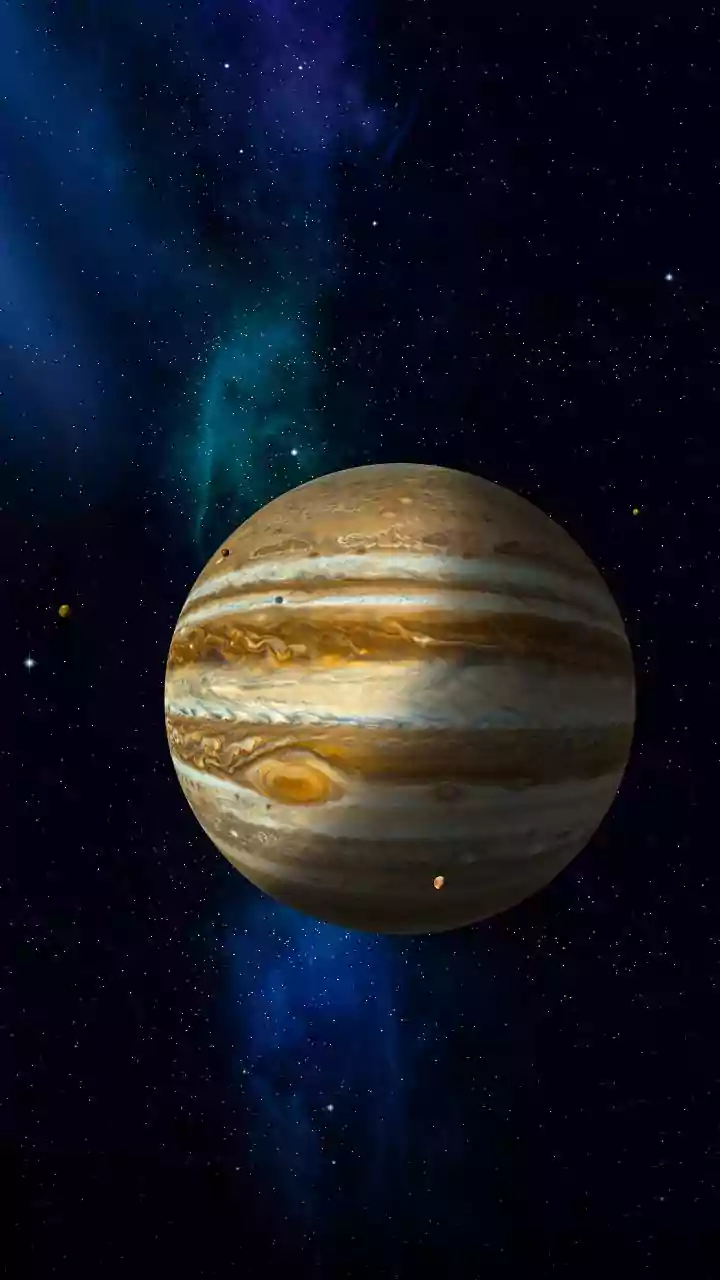
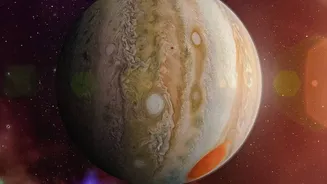
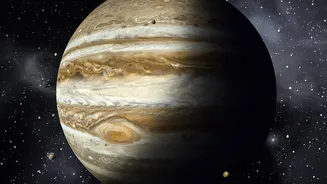
The Great Red Spot is a gigantic, swirling storm in Jupiter's southern hemisphere. It's an anticyclone, a high-pressure system that rotates counter-clockwise, with wind speeds far exceeding any hurricane on Earth. For at least 150 years, and possibly
much longer, this crimson-hued vortex has been a subject of fascination for astronomers and stargazers alike. At its largest observed size in the late 1800s, it was wide enough to swallow three Earths. This enduring storm has long been a symbol of the dynamic and violent weather on the gas giant, but its consistent presence has been a key feature. That consistency, however, now appears to be in question.
What the New Images Reveal
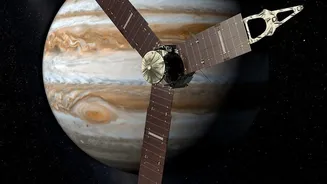
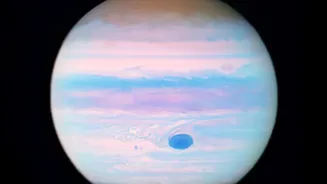
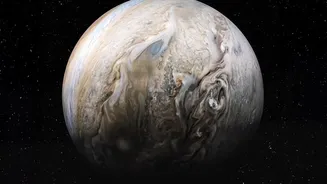
Recent observations, particularly from instruments like the Hubble Space Telescope and NASA's Juno spacecraft, have provided an unprecedented look at the storm. The headline-making change is that the Great Red Spot is shrinking. Over the last century, its diameter has decreased significantly. What was once a large oval is becoming more circular. Historical data shows the storm measured about 25,500 miles across in the late 1800s, but recent measurements put it closer to 10,250 miles. Some observations have shown an accelerated rate of shrinking in recent years. Furthermore, the storm's internal dynamics are becoming more complex. Images have captured smaller eddies and storms being pulled into the main vortex, a process scientists believe might be altering its energy and structure. Some images even show pieces of the storm 'flaking' off its main body.
A Shrinking Storm Getting Taller
One of the most curious findings is what happens to the storm in the vertical dimension as it shrinks horizontally. Studies suggest that as the Great Red Spot gets smaller in area, it is also growing taller. Think of it like a piece of clay being squeezed at its sides; it gets narrower but also stretches upwards. This vertical growth could explain another observed phenomenon: its colour is becoming more intense. One theory suggests that as the storm's chemicals are pushed higher into Jupiter's atmosphere, they are exposed to more solar ultraviolet radiation, which could be responsible for the deeper red hue seen in recent images. So while it's losing its greatness in width, it is becoming more prominent in height and colour.
Why Is It Changing Now?
The honest answer is that scientists are not entirely sure why the storm is shrinking. Jupiter's atmosphere is an incredibly complex system of jet streams and vortices, and the Great Red Spot is a product of these powerful forces. Several hypotheses are being explored. One leading theory is that changes in the jet streams that border the storm are affecting its stability. Another idea is that the storm's diet is changing; it may be interacting with a different number or type of smaller storms, which can either feed it energy or sap its momentum. Researchers are using advanced computer models to simulate the storm's behaviour and test these different scenarios, trying to understand the delicate balance of forces that has kept it raging for so long.
The Future of a Solar System Landmark
The big question on everyone's mind is whether the Great Red Spot will eventually disappear. The answer remains uncertain. Based on the current rate of shrinkage, some scientists have predicted the storm could become circular by around 2040 and potentially break apart completely within the next few decades. However, it's also possible that the storm will stabilize at a new, smaller size. The recent observations of short-term oscillations, where the storm seems to jiggle and fluctuate in size over a 90-day cycle, add another layer of complexity to any forecast. For now, the Great Red Spot is still wider than our entire planet, a colossal feature that continues to challenge our understanding of planetary atmospheres.