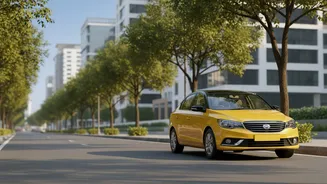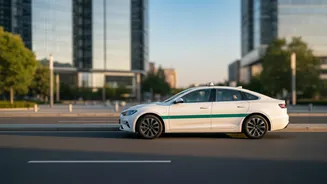



A New Model on the Streets
For most of us, booking a cab means tapping an app from a major aggregator. We get a ride, and the driver gets a fare, minus a hefty commission of 20-30% for the platform. A cooperative taxi network flips this script entirely. In this model, drivers are not
just contractors; they are member-shareholders of the company. Platforms like the government-backed Bharat Taxi are built on this 'driver-is-owner' philosophy. Drivers often pay a nominal membership fee to join and, in return, keep nearly all of their fare earnings. This structure isn't just about better pay; it's about giving drivers a stake and a voice in the business, with some cooperatives even including elected driver representatives on their boards. The goal is to create a more equitable system that benefits both the person behind the wheel and the passenger.
The Push for an Alternative
The expansion of cooperative networks is a direct response to growing dissatisfaction with the prevailing gig economy model. Many drivers for large aggregators feel squeezed by fluctuating incentives, high commissions, and a lack of say in fare-setting, which can undermine their financial stability. Cooperative platforms are emerging as a driver-centric and people-centric alternative. By eliminating or drastically reducing commissions, they offer a direct path to higher and more stable earnings. Furthermore, they often promise more transparent and surge-free pricing for customers, aiming to build loyalty through fairness rather than aggressive price algorithms. This shift is gaining momentum, with initiatives like Bharat Taxi rapidly onboarding hundreds of thousands of drivers and planning expansion into smaller cities and towns, aiming to provide a viable alternative across the country.
Beyond the Fare: The Support Gap
While higher income is a powerful motivator, the long-term success of cooperative networks depends on a much deeper level of driver support. The core challenge for any ride-hailing service is building and maintaining a large, reliable network of drivers to ensure quick pickups and quality service. For cooperatives, this means going beyond financial incentives. It’s about building a community of empowered owners. This support structure must address the common pain points drivers face: unpredictable demand, vehicle maintenance costs, and the lack of a social safety net. If a cooperative simply offers a better payment structure but fails to support its members in other crucial areas, it risks losing them to established giants who compete fiercely for driver availability.
Building a Foundation of Trust
So, what does comprehensive driver support look like in a cooperative? It’s a multi-layered approach. Firstly, it involves tangible benefits that provide stability and security. Some platforms are promising access to social security schemes, insurance coverage, and other welfare measures that have traditionally been absent in the gig economy. Secondly, it’s about providing operational and technical support. This includes user-friendly apps with reliable navigation, transparent payment processing, and responsive assistance for resolving fare disputes or technical glitches. Finally, and perhaps most importantly, it’s about democratic participation. Giving drivers a real vote and a role in governance ensures that the platform evolves in their best interests, fostering a sense of ownership that goes far beyond just a name. This transforms the driver from a gig worker into a true partner in the business.
The Road Ahead is Collaborative
The journey for these cooperative networks won't be easy. They face immense competition from venture-backed behemoths with deep pockets and established market dominance. To succeed, they must prove that their model is not only more equitable but also just as convenient and reliable for passengers. The expansion into Tier-2 and Tier-3 cities could be a key strategy, tapping into markets where demand is growing and a community-focused approach may resonate strongly. Ultimately, the cooperative experiment is a bet on a simple but powerful idea: that a ride-hailing service built to serve its drivers first will, in turn, provide a better, more sustainable service for everyone. Their ability to deliver on the promise of comprehensive support will determine if they are a fleeting alternative or the future of mobility.