


A Glimpse Across the Cosmos
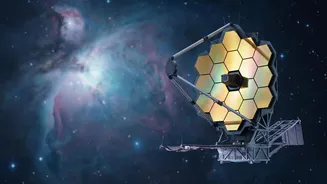
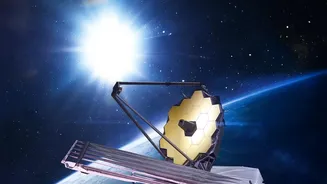
Finding water beyond Earth is a monumental step in the search for life. While it doesn't mean we've discovered extraterrestrial organisms, the presence of water is a critical prerequisite for life as we know it. The JWST is providing astronomers with
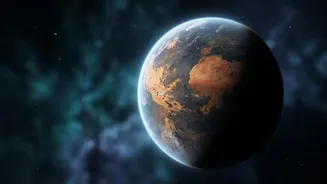
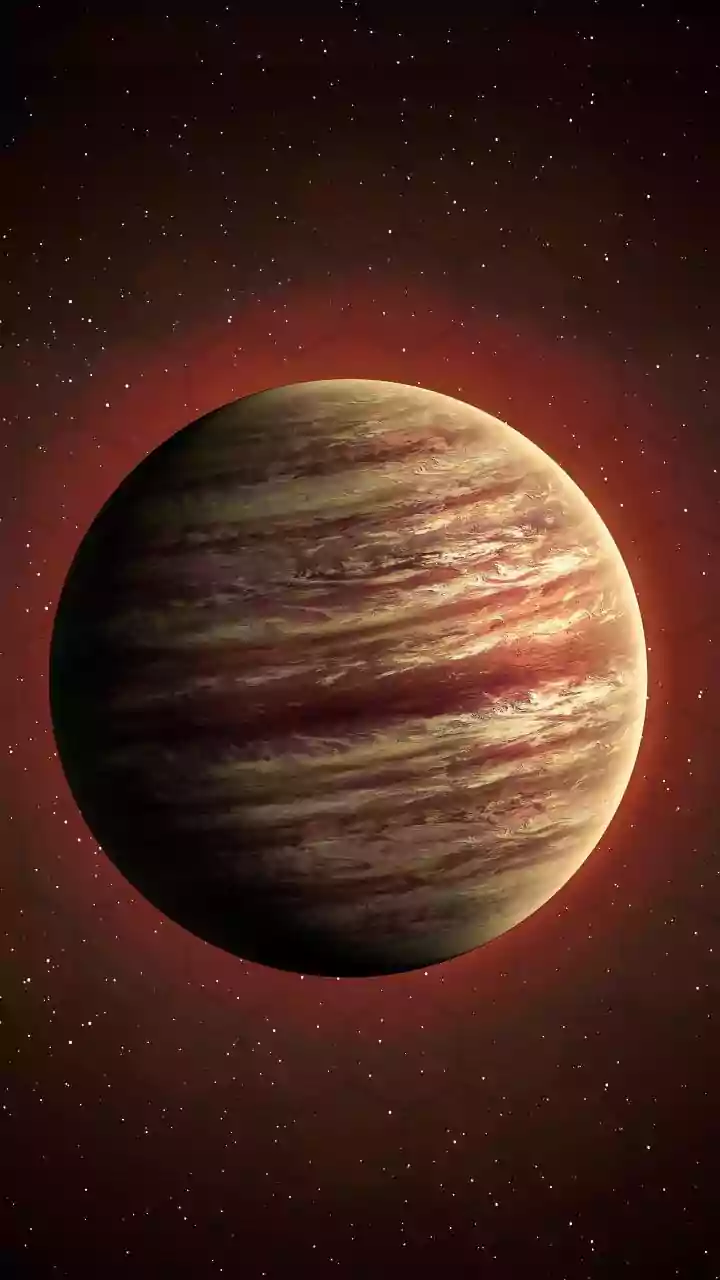
unprecedented views into the atmospheres of exoplanets—planets orbiting stars other than our Sun. One of the most detailed observations to date came from the hot gas giant WASP-96 b, located 1,150 light-years away. The telescope captured the unmistakable signature of water in its atmosphere, alongside evidence of clouds and haze, a level of detail that was previously impossible. These findings represent a giant leap forward in our quest to characterize worlds that could potentially harbour life.
The Technology That Makes It Possible
So, how does the JWST peer into the air of a planet hundreds of light-years away? The technique is called transmission spectroscopy. When an exoplanet passes in front of its host star from our perspective, a tiny fraction of the starlight filters through the planet's atmosphere. The powerful instruments aboard the JWST, like its Near-Infrared Spectrograph (NIRSpec), can capture this light and break it down into a spectrum, which is like a chemical fingerprint. Different molecules absorb light at specific wavelengths, leaving behind dark lines in the spectrum. By analysing these patterns, scientists can identify the gases present, including water vapour, methane, and carbon dioxide. This method allows astronomers to understand the composition of alien atmospheres with stunning precision.
Spotlight on a 'Hycean' World
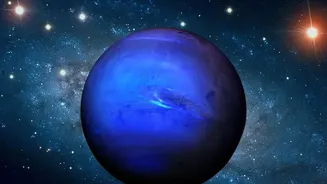
One of the most tantalising targets for JWST has been K2-18 b, an exoplanet 8.6 times more massive than Earth, located 124 light-years away. What makes K2-18 b special is that it could be a 'Hycean' planet—a theoretical type of world with a hot, water ocean beneath a hydrogen-rich atmosphere. Observations have revealed methane and carbon dioxide in its atmosphere, which supports the Hycean hypothesis. The detected abundance of these molecules, combined with a shortage of ammonia, strongly suggests the presence of a vast ocean. While Hubble first spotted water vapour here in 2019, JWST's more detailed analysis is providing a clearer picture of this strange and potentially water-covered world. Scientists are cautiously optimistic, as these are the kinds of environments that could be promising places to search for biosignatures.
Managing Expectations
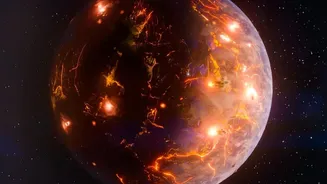
While these discoveries are thrilling, scientists are careful to manage expectations. In some cases, like with the rocky exoplanet GJ 486 b, it's difficult to determine if the detected water vapour is from the planet's atmosphere or from its host star. Cool spots on a star can also contain water vapour, creating a signal that could be mistaken for a planetary atmosphere. Furthermore, the presence of water doesn't automatically mean habitability. Planets like WASP-18 b and GJ 486 b are incredibly hot, with surface temperatures reaching hundreds of degrees Celsius, making them inhospitable to life as we understand it. The goal of these initial observations is not to find life directly, but to identify the most promising candidates for future, more in-depth study and to refine our understanding of how planetary systems form and evolve.