


Self-driving ships are no longer science fiction, but how do you test a giant autonomous vessel without risking disaster? IIT Madras has an answer: a sophisticated virtual world to ensure these 'ghost ships' are safe before they hit the waves.
A Digital Twin for the High Seas
Imagine
a highly realistic video game, but instead of for entertainment, it's designed to prevent maritime catastrophes. That's the essence of SeaNav, a groundbreaking platform developed by the Department of Ocean Engineering at IIT Madras. Officially, it's a 'digital twin' platform. This means it creates a highly accurate, real-time virtual replica of the maritime environment. Built on the powerful Unity3D engine, SeaNav can simulate everything a ship encounters: complex ocean waves, vessel movements, and the bustling traffic of a busy port. This isn't a simple animation; it's a high-fidelity world calibrated with data from real vessels, including a 320-meter-long benchmark tanker, ensuring the virtual results mirror real-world physics and operations.
The Billion-Dollar Testing Problem
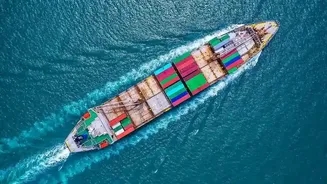
The global push for autonomous shipping is immense. With over 80% of world trade moving by sea, the promise of more efficient and safer transportation through autonomy is a powerful driver. Self-piloted vessels could reduce fuel consumption, lower carbon emissions, and critically, minimize accidents, an estimated 60% of which are caused by human error. But there's a huge catch: testing. You can't just unleash a 400-meter-long container ship with a new, unproven navigation algorithm into the English Channel. The risks are too high, and the costs are astronomical. Real-world testing is complex, dangerous, and time-consuming, creating a major bottleneck in developing the very technology meant to make shipping safer.
How SeaNav Charts a Safer Course
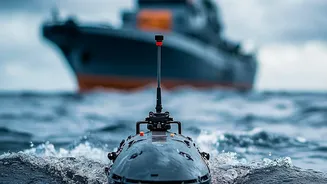
SeaNav provides the solution by creating a risk-free sandbox. It allows developers to test, validate, and train their autonomous navigation systems in countless virtual scenarios. According to Dr. Suresh Rajendran, an Associate Professor at IIT Madras's Department of Ocean Engineering, the platform combines digital twins, AI, advanced sensor fusion, and even virtual reality. This allows engineers to see how an autonomous system would react to a sudden storm, a crowded harbour, or another vessel on a collision course, all without endangering lives, cargo, or the environment. It creates a safe, efficient training ground for both the AI systems and the human operators who will eventually oversee them.
Bolstering India's Maritime Vision
This innovation from IIT Madras is more than just a clever piece of software; it's a strategic asset for India. The development aligns perfectly with national initiatives like the 'Sagarmala Programme' and 'Maritime India Vision 2030', which heavily emphasize the adoption of digital technologies and the development of smart ports. By creating indigenous technology like SeaNav, India reduces its reliance on foreign systems, saves costs, and builds domestic expertise. The platform's capabilities can strengthen safety at major Indian ports like Chennai, Mumbai, and Kochi by supporting the creation of AI_assisted navigation systems that reduce the risk of collisions and groundings. IIT Madras has been a hub for such innovation, with its National Technology Centre for Ports, Waterways and Coasts (NTCPWC) and Center for Marine Autonomous Systems (CMAS) leading research in this domain.
Beyond Commerce: A Tool for National Security
The applications of SeaNav extend well beyond commercial shipping. Its ability to simulate multiple vessels in a coordinated fashion makes it a valuable tool for national security and public safety. The platform has potential applications in crucial areas like coastal surveillance, where it can be used to develop and test strategies for monitoring vast coastlines. It can also be adapted for planning complex search–and–rescue operations or for training naval personnel in various maritime defence scenarios. This versatility demonstrates that SeaNav is not just a verification tool, but a foundational technology that can enhance multiple facets of India's maritime operations.