






The Foundation of Good Design
Think of a rug as the foundation of a room. It’s not just an accessory; it’s the element that pulls a seating group together and defines a specific zone, especially in open-plan homes. A common mistake is choosing a rug that is too small. A tiny rug floating
in the middle of a room, with no furniture touching it, will make the space feel disjointed and smaller. Conversely, a rug that is too large and touches the walls can make a room feel cramped. The goal is to find a size that frames your furniture, leaving a border of bare floor around the edges—typically between 12 to 18 inches. When in doubt, a larger rug is almost always the better choice.
Living Room: The Classic Sofa and Chairs
For a standard living room with a sofa and accompanying chairs, the most reliable and visually pleasing rule is 'front legs on'. This means the rug is large enough for the front legs of your sofa and any armchairs to rest comfortably on it, connecting them into a single, cohesive conversational area. This approach anchors the furniture without requiring a massive, room-sized rug. For a typical 84-inch sofa, an 8x10 foot rug is often the perfect size, allowing the rug to extend beyond the sofa by about 18 inches on each side. This creates a sense of balance and provides a proper foundation for the seating arrangement. Avoid the 'floating rug' look where only the coffee table sits on the rug; it usually makes the rug appear like an afterthought.
Living Room: The Sectional Solution
Sectional sofas demand larger rugs to avoid looking out of proportion. Because of their substantial footprint, a small rug can look comically undersized. The same 'front legs on' rule applies here, but it must be consistent for all parts of the sectional. You want a rug that is large enough to slide under the front legs of the entire piece, including the chaise. For most standard L-shaped sectionals, a 9x12 foot rug is the most common and effective choice. A larger U-shaped sectional will likely require a 10x14 foot rug or even bigger to properly ground the space. The key is to ensure the rug connects all elements of the seating area.
Dining Room: Function Over Form
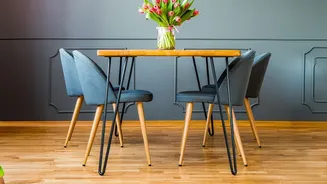
In the dining room, the primary rule for rug sizing is purely functional. The rug must be large enough for the chairs to be pulled out completely without their back legs catching on the edge. This is a non-negotiable rule for comfort and safety. As a guideline, the rug should extend at least 24 inches beyond the edge of the table on all sides. For a more generous and comfortable feel, an extension of 30 inches is even better. To find the right size, measure your table and then add 48 to 60 inches to both the length and width. For a standard six-person table, an 8x10 foot rug is usually the minimum, while an eight-person table often requires a 9x12. It's also best to match the shape of the rug to the shape of your table—a rectangular rug for a rectangular table, and a round rug for a round one.
Bedroom: A Soft Place to Land
In the bedroom, a rug provides warmth, texture, and a soft surface for your feet. The most common and balanced placement is to position the rug under the bottom two-thirds of the bed, perpendicular to it. The rug should start just in front of your nightstands and extend beyond the foot of the bed. It should also be wide enough to extend 18 to 24 inches on either side of the bed, giving you a comfortable place to step when you get up in the morning. For a queen bed, an 8x10 foot rug is a great choice, while a king bed is better suited to a 9x12 foot rug. If you have a very large room, you can place the entire bed, nightstands, and a bench at the foot of the bed on the rug for a luxurious, unified look.