
The Ultimate Insurance Policy
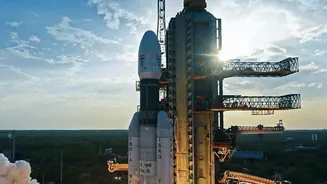
Spaceflight is inherently risky, especially during the launch phase when rockets are packed with explosive propellants. The most critical safety feature of any crewed mission is the ability to get astronauts away from a failing rocket in seconds. This
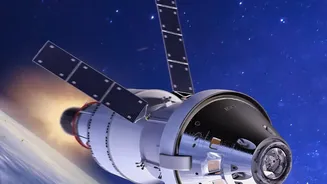
is the job of the Crew Escape System (CES), a powerful, quick-acting mechanism designed to be the ultimate insurance policy. For the Gaganyaan mission, ISRO has developed a 'puller' type CES. This is a tower-like structure fixed to the top of the crew module. In an emergency, solid-fuel motors fire with immense force, pulling the entire capsule and its occupants clear of the malfunctioning launch vehicle. This system must be flawless, ready to activate automatically within milliseconds of a detected problem, from the launchpad to high altitudes.
Milestone 1: Safety on the Launchpad
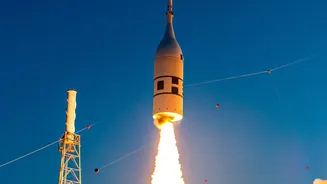
The first major hurdle is ensuring safety before the rocket even leaves the ground. An emergency during fueling or just after engine ignition requires an immediate escape. To validate this capability, ISRO successfully conducted a Pad Abort Test (PAT) in July 2018. This test simulated a worst-case scenario at zero altitude. Using a boilerplate crew module, ISRO demonstrated that the CES could ignite, pull the capsule up and away from the launch area, and deploy parachutes for a safe landing just a few kilometres away in the Bay of Bengal. The entire sequence lasted only a few minutes but was a foundational step, proving the core escape concept worked as designed.
Milestone 2: Surviving Supersonic Speeds
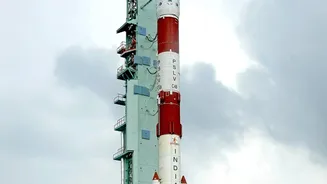
Once the rocket is in the air, the challenges change. One of the most dangerous moments is during transonic flight—when the vehicle is pushing past the speed of sound (Mach 1). This is when the rocket experiences maximum aerodynamic pressure, or 'Max Q'. A structural failure here would be catastrophic. To prove the CES could handle such a high-stakes scenario, ISRO conducted the Test Vehicle Abort Mission-1 (TV-D1) in October 2023. For this test, a specially designed single-stage liquid rocket carried a full-scale unpressurised crew module to an altitude of about 17 km. At a speed of Mach 1.2, the abort sequence was deliberately triggered. The CES fired perfectly, separating the module from the rocket and pulling it to safety.
From Separation to Splashdown
Successfully escaping the rocket is only half the battle. After the TV-D1 abort was triggered, the crew module continued its journey, reaching an altitude of around 17 km before beginning its descent. A complex, autonomous sequence then took over. First, the Crew Escape System itself jettisoned from the capsule. Then, a series of parachutes deployed in stages to slow the module's descent, starting with smaller drogue chutes for stabilisation, followed by the large main parachutes. This carefully choreographed sequence ensured the capsule slowed to a safe velocity for a soft splashdown in the Bay of Bengal, about 10 km from the coast, where it was recovered by the Indian Navy. The test validated the entire end-to-end abort sequence, from high-speed escape to recovery.
The Integrated Safety Net
The Pad Abort Test and the TV-D1 mission are just two of several abort scenarios ISRO is preparing for. The CES is designed to function across various flight phases, using different motors like the Low-altitude Escape Motor (LEM) and High-altitude Escape Motor (HEM) depending on the situation. Beyond the CES, ISRO has also been testing other critical safety components. This includes the Crew Module Uprighting System, which uses gas-based flotation devices to ensure the capsule stays upright after splashing down in the ocean. Other tests have verified the systems for parachute deployment and the mechanisms that disconnect the crew module from the service module before re-entry. Each successful test adds another layer of confidence, building a comprehensive safety net to protect India's future Vyomanauts.