






Imagine a farm that harvests not just crops, but also sunlight. This is the promise of agrivoltaics, a technology that pairs solar panels with agriculture, offering a dual solution to rural India's energy and economic challenges.
What is Agrivoltaics?
At its core, agrivoltaics
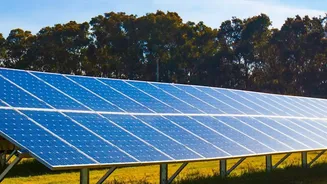
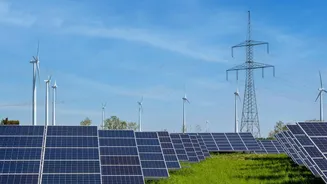
is the practice of using the same piece of land for both solar power generation and agriculture. Instead of choosing between a field of crops or a field of solar panels, this approach combines them. Solar panels are installed on structures elevated high enough—typically 3 to 5 metres—to allow farming activities, including the movement of machinery, to continue underneath. This innovative land-use strategy avoids the conflict between expanding renewable energy and preserving precious agricultural land, a critical issue for a country where land is a finite resource. The goal is to create a symbiotic system where food and energy production can coexist and even benefit one another.
A Mutually Beneficial Relationship
The relationship between the panels and plants is more than just sharing space. The solar panels provide partial shade, which can be a significant advantage in India's hot climate. This shading protects crops from intense sunlight and heat stress, reduces water evaporation from the soil, and can lead to more efficient water use. For certain crops, this can even boost yields. In return, the crops create a cooler microclimate through transpiration (the process of releasing water vapour). This cooling effect can actually improve the efficiency and electricity output of the solar panels, which tend to perform less optimally in extreme heat. It’s a win-win that enhances agricultural resilience and energy production simultaneously.
From 'Annadata' to 'Urjadata'
The most transformative aspect of agrivoltaics is its potential to turn farmers into energy producers, or 'urjadatas'. The electricity generated can first be used to power farm operations like irrigation pumps, reducing reliance on diesel and erratic grid supply. Any surplus power can then be sold directly to the local grid. This creates a stable, additional source of income for farmers, diversifying their earnings beyond crop sales alone and potentially increasing annual income per acre significantly. For the wider community, this decentralized model means more reliable power for homes and small businesses, strengthening rural energy security and reducing the load on the national grid, which is often weak in remote areas.
The Indian Landscape and Government Push
India has an immense potential for agrivoltaics, with estimates suggesting that a significant portion of the country's cropland is suitable for such projects. The government is actively promoting this through policies like the PM-KUSUM scheme, which encourages solar energy in agriculture. As of late 2025, dozens of pilot projects were already operational across the country, testing the system with various crops and in different climates. Recognizing the opportunity, the government is working on a dedicated policy to scale up adoption, aiming to support farmers in making the transition and helping states with limited non-agricultural land meet their renewable energy targets.
Challenges on the Path to Widespread Adoption
Despite the promise, several hurdles remain. The primary challenge is the high upfront cost; agrivoltaic systems can be 25–40% more expensive than conventional ground–mounted solar projects due to the need for elevated structures. This is a major barrier for India's small and marginal farmers, who make up over 85% of the farming community. Furthermore, not all crops are suitable for growing in shade; while leafy greens and some vegetables thrive, staple crops like rice have not been found to be compatible. Technical issues like cleaning panels installed at a height and ensuring grid connectivity in rural areas also need to be addressed before agrivoltaics can be rolled out on a mass scale.