


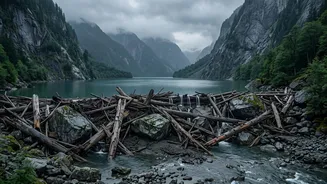
A Sudden, Unforeseen Surge
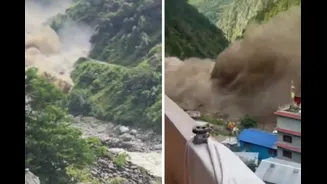
On the morning of August 26, 2026, communities along the Lhende and Bhotekoshi rivers in Nepal were hit by a massive flash flood. Unlike typical monsoon floods, this event occurred with little to no local rainfall, catching residents completely off guard.
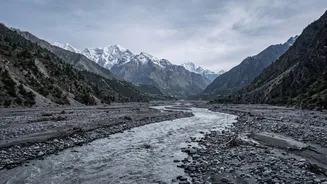
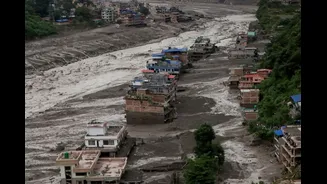
The flood appeared as a thick, churning mass of water and sediment, described as moving like liquid concrete, which gave it immense destructive power. It destroyed homes, bridges, and critical hydropower projects, burying entire sections of the landscape under metres of mud and boulders. The sheer speed and force of the surge indicated its origins were not from a simple downpour but from a far more dramatic event upstream.
The Real Trigger: A Massive Avalanche
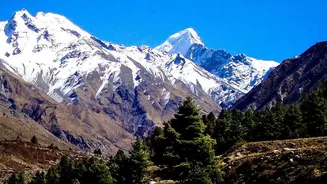
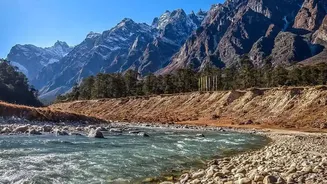
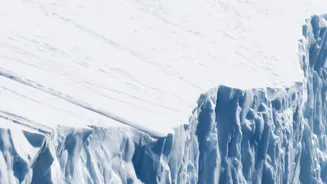
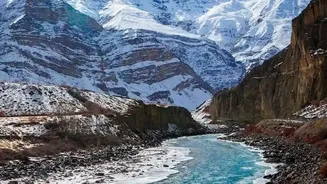
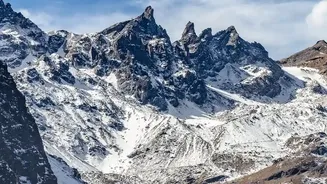
Scientific analysis quickly pointed to a single, cataclysmic event high in the mountains near the Nepal-Tibet border. A massive ice-rock avalanche from a glacier collapsed. The collapse was so enormous that its impact registered on seismographs as a magnitude 5.2 event, initially leading to confusion about a possible earthquake. However, the US Geological Survey and other experts confirmed the seismic waves were generated by the landslide itself, not by tectonic activity. This colossal mass of ice and rock plummeted down the steep terrain, crashing directly into the narrow gorge of the Lhende River, a tributary of the Bhotekoshi.
How Ice and Rock Became a Flood
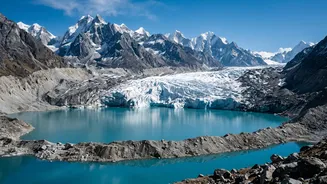
The disaster unfolded in a deadly two-step process. First, the avalanche acted as a temporary, natural dam, blocking the Lhende River's flow. Water quickly began to accumulate behind this unstable barrier of ice, stone, and debris. Second, as the pressure mounted, the dam failed catastrophically. This breach released the impounded water in a sudden, violent outburst. The flood wave was not just water; it was a debris flow, carrying with it the remnants of the avalanche and scouring the riverbed for more rock and soil, which significantly increased its volume and destructive capability. This type of event, sometimes linked to a Glacial Lake Outburst Flood (GLOF), is a known but difficult-to-predict hazard in the Himalayas.
A Symptom of a Warming Himalayas
While this specific flood was triggered by an avalanche, it highlights a growing danger in the region directly linked to climate change. The Himalayas are warming faster than the global average, causing glaciers to recede and become more unstable. This accelerated melting not only increases the number and size of potentially dangerous glacial lakes but also makes the surrounding rock and ice formations more prone to collapse. Experts note that such extreme events are becoming more frequent. The Lhende Khola corridor itself had experienced a similar, albeit smaller, flood just 14 months prior, underscoring the persistent and escalating risk to downstream communities in Nepal and even India.