







The Familiar Grind of Planning
Every teacher knows the drill: hours spent drafting lesson outlines, creating worksheets, finding relevant videos, and tailoring materials for a classroom of diverse learners. This administrative load, while crucial, eats into time that could be spent on mentoring
students or developing more creative teaching strategies. The pressure to create engaging, differentiated, and curriculum-aligned lessons is immense, often leading to teacher burnout. Traditional one-size-fits-all methods are proving inadequate, and the manual effort required to personalise learning can be overwhelming for even the most dedicated educator.
How AI Steps in as an Assistant
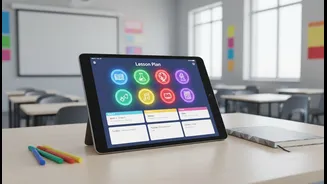
Artificial intelligence tools designed for education are not about replacing teachers, but augmenting their abilities. Think of them as a highly efficient assistant. A teacher can input a topic, such as 'photosynthesis for Class 7', specify the curriculum (like CBSE), and an AI tool can generate a structured lesson plan in minutes. These tools can draft objectives, suggest activities, create quizzes, and even find supplementary materials. For classrooms with varied learning levels, some AI can adapt a single text into multiple reading levels with just a few clicks, a task that would otherwise take hours. This automation frees teachers from repetitive work, allowing them to shift their role from content creator to that of an editor and facilitator of learning.
Popular Tools Making an Impact
A variety of AI platforms are gaining traction. Tools like MagicSchool AI and Brisk Teaching are popular for bundling numerous functions into one toolkit, from generating rubrics to drafting parent emails. Others like Diffit specialise in differentiation, making it easy to create materials for students with different needs. In the Indian context, platforms such as Teachmint are being adopted for their classroom management features and support for regional languages. Even familiar tools like Google for Education and Microsoft Teams are integrating AI assistants like Copilot to help educators directly within the ecosystems they already use.
Beyond Just Saving Time
The most significant benefit of AI in lesson planning extends beyond mere efficiency. By handling the structural groundwork, AI empowers teachers to focus more on the art of teaching. It can spark creativity by suggesting novel activities or approaches a teacher might not have considered. More importantly, it facilitates personalised learning at a scale that was previously impossible. AI can analyze student data to highlight learning gaps, enabling teachers to intervene more effectively. This shift allows for more time spent on fostering critical thinking, leading classroom discussions, and providing one-on-one support to students who need it most.
Navigating the Hurdles in India
Despite the promise, widespread adoption in India faces significant challenges. The digital divide remains a major barrier, with many students and schools in rural areas lacking the necessary internet connectivity and devices. The cost of implementing these technologies can be prohibitive for budget-constrained government schools. Furthermore, there is a critical need for comprehensive teacher training to ensure educators can use these tools effectively and ethically. Concerns about data privacy, algorithmic bias, and an over-reliance on technology that could hinder students' critical thinking are also valid and require careful consideration and policy-making.