


The Psychology of a Line
Before we dive into application, it’s useful to understand why stripes work. Our eyes are naturally drawn to follow lines. A vertical stripe leads the eye upward, creating a sense of height and grandeur, making it perfect for rooms with low ceilings.
Horizontal stripes, on the other hand, guide the eye from side to side, making a narrow room feel wider and more expansive. By simply introducing a pattern of lines, you are creating a path for the eye to travel, which the brain perceives as movement and energy, instantly preventing a space from feeling flat or one-dimensional.
Start with Textiles
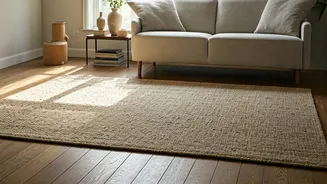
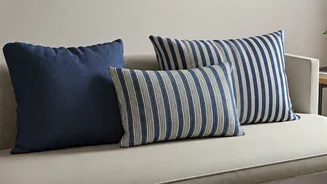
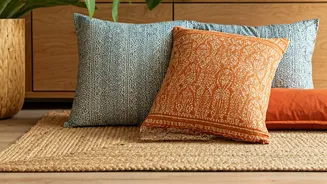
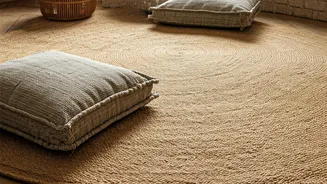
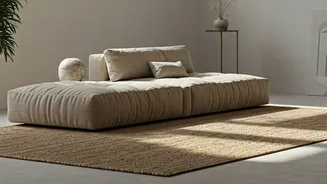
If you're hesitant to commit to painting stripes on a wall, textiles are your best friend. A bold, striped area rug can anchor a living room, defining the space while adding a powerful graphic element. Consider a classic navy and white for a timeless nautical feel, or multi-coloured stripes for a bohemian vibe. Similarly, striped curtains can do wonders. Long drapes with vertical stripes will draw the eye upwards, making your windows appear taller and the ceiling higher. Even smaller items like throw pillows, bed linens, or a simple striped dhurrie can introduce this dynamic energy on a smaller, more manageable scale.
The Statement Accent Wall
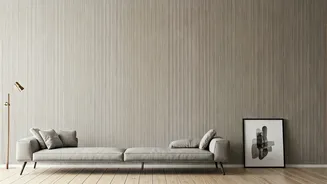
For those ready to make a bigger commitment, a striped accent wall is a classic for a reason. It provides maximum impact with focused effort. The key is to choose the right wall—typically the one your eyes land on when you first enter the room, such as the wall behind a sofa or the headboard of a bed. For a subtle, sophisticated look, opt for a tone-on-tone stripe, where two shades of the same colour are used. For a bold, energising effect, high-contrast combinations like black and white or complementary colours work beautifully. Remember to consider the scale: wide stripes feel modern and bold, while thin, pinstripe-style patterns can feel more traditional and delicate.
Upholstery and Furniture
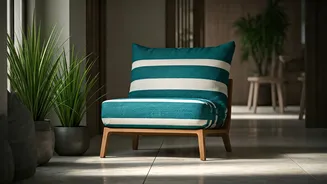
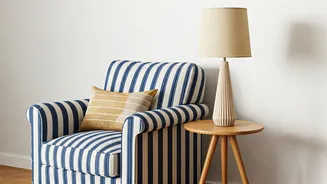
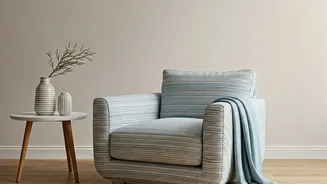
Don't overlook your furniture as a canvas for stripes. A single armchair or a small ottoman upholstered in a smart striped fabric can become the focal point of a quiet corner. It adds personality and visual interest without overwhelming the room's calm aesthetic. This approach works particularly well when the rest of the furniture is in solid, neutral colours. A striped piece can break the monotony and tie together different colour elements in the room. For outdoor or semi-outdoor spaces like a verandah, striped upholstery on cane or wooden furniture evokes a perpetually relaxed, holiday feel.
Accessorise with Lines
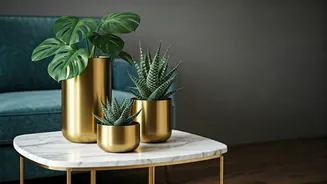
The power of stripes can be harnessed even in the smallest details. Think about grouping a set of striped ceramic vases on a console table, or hanging a series of framed art pieces that feature linear patterns. Even the spines of books arranged on a shelf can create an interesting striped effect. These small touches work cumulatively to build a sense of rhythm and cohesion throughout the space. This is the easiest, most budget-friendly, and least permanent way to experiment with the trend. You can swap them out with the seasons or as your taste evolves.
Mix, Match, and Master
Once you're comfortable, you can begin to layer different types of stripes. The key to successfully mixing striped patterns is to vary their scale. For instance, you could pair a rug with wide, bold stripes with cushions that have a fine, delicate pinstripe. As long as they share a common colour palette, the contrast in scale will create a look that is dynamic and sophisticated, not chaotic. You can also mix stripes with other patterns, like florals or geometrics. In this case, the stripe often acts as a neutral, grounding the busier pattern and providing a sense of order.