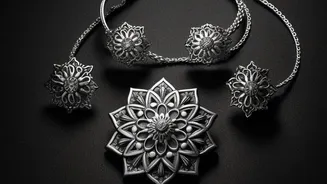







In the heart of Karnataka lies a craft that turns dark metal into a canvas for shimmering silver. Bidriware is a testament to centuries of artistry, where a unique soil magically transforms a humble alloy into a piece of stark, dramatic beauty.
From Persian Courts to the Deccan
The story
of Bidriware begins not in India, but in Persia. The intricate art of metal inlay is believed to have travelled to the subcontinent in the 14th century with artisans in the entourage of Sufi saint Khwaja Moinuddin Chisti. It truly found its home in Bidar, Karnataka, under the patronage of the Bahmani Sultans. Sultan Ahmed Shah Bahmani, a great patron of the arts, invited craftsmen from Iran to decorate his palaces. These artisans, working with local craftsmen, blended Persian, Turkish, and Arabic artistic styles with native Indian traditions, giving birth to this unique craft. While Persian work often involved inlaying silver and gold onto steel or copper, the artisans in Bidar pioneered the use of a zinc and copper alloy, which would become the signature of Bidriware.
The Alchemy of Art
The creation of a Bidriware piece is an eight-step process, a delicate dance of metallurgy and artistry. It starts with a mould made from soil, castor oil, and resin. Into this, a molten alloy, primarily of zinc with a small amount of copper, is poured. Once cast and cooled, the piece is smoothed and polished. To prepare for the design, the surface is coated with a solution of copper sulphate, which gives it a temporary black colour, making it easier for the artisan to etch the design. With a sharp metal stylus, the artist draws the intricate pattern freehand. Then, using small chisels, they carefully engrave the lines and shapes, creating grooves to hold the inlay. Fine wires or thin sheets of pure silver are then painstakingly hammered into these engraved channels.
The Magic Soil of Bidar
The most crucial and almost magical step is the final one: oxidation. This is what gives Bidriware its signature deep black, matte finish that makes the silver pop. Artisans use a special soil sourced from specific, centuries-old ruins within the Bidar Fort, where it has been shielded from rain and sunlight for hundreds of years. This soil, which artisans sometimes identify by taste, has unique oxidizing properties. It is mixed with ammonium chloride and water to create a paste. When this paste is applied to the heated Bidri piece, a chemical reaction occurs. The zinc-copper alloy body turns a permanent, rich black, while the inlaid pure silver remains completely unaffected, shining brightly against the dark backdrop. A final rub with oil deepens the colour, and the masterpiece is complete.
A Legacy in Silver Lines
The motifs seen in Bidriware are a reflection of its diverse heritage. Early designs featured classic Persian floral patterns, such as the poppy plant, and intricate geometric lattices. Over time, local influences introduced motifs like the lotus flower. Common patterns include the 'asharfi-ki-booti' (a floral coin pattern) and vine creepers. Originally, the craft was used to create luxury items for royalty, such as hookah bases, vases, and boxes for 'paan'. Today, the repertoire has expanded to include a wide range of decorative and functional items like bowls, earrings, trays, and modern décor pieces. To protect its authenticity and heritage, Bidriware was granted a Geographical Indication (GI) tag in 2006, formally recognising its origins in the Bidar region.