


What Are Meteor Showers?
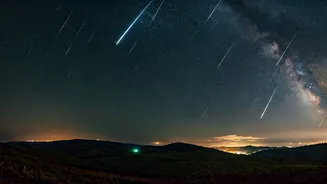
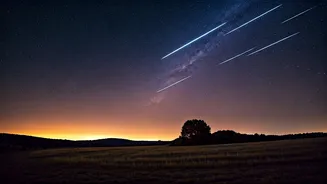
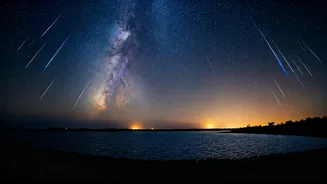
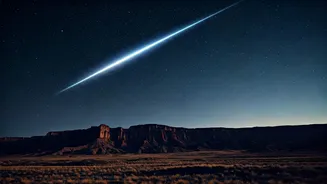
Often called 'shooting stars', meteors are not stars at all. They are tiny bits of space debris, usually no bigger than a grain of sand, left behind by comets or asteroids. As Earth orbits the sun, it sometimes passes through these dusty trails. When
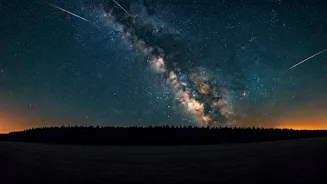
these particles enter our atmosphere at incredible speeds, they burn up due to friction, creating brilliant streaks of light across the sky. These events are called meteor showers, and they happen annually around the same dates as Earth crosses a specific debris stream.
The Late-July Double Feature
July marks the beginning of the action with two meteor showers peaking around the same time: the Southern Delta Aquariids and the Alpha Capricornids. Both are active in late July and peak around July 30-31, 2026. The Delta Aquariids are known for producing up to 20 faint, medium-speed meteors per hour in ideal conditions. The Alpha Capricornids are less frequent, with about five meteors per hour, but are famous for their slow, bright fireballs. However, 2026 presents a challenge for this dual event: a bright, nearly full moon will be present on the peak nights, washing out all but the most brilliant meteors. For a chance to see them, your best bet is to look during the moon-free pre-dawn hours in the week leading up to the peak, roughly between July 21 and July 26.
The Main Event: The Perseids in August
The Perseid meteor shower is arguably the most famous and anticipated shower of the year, and 2026 is set to be spectacular. Peaking on the night of August 12-13, the shower coincides with a new moon, meaning the sky will be perfectly dark for optimal viewing. Caused by debris from Comet Swift-Tuttle, the Perseids are known for being fast, bright, and plentiful, capable of producing 50 to 100 meteors per hour in a dark sky. Many leave persistent, glowing trails. The main challenge for viewing in India is the monsoon season, which often brings heavy cloud cover. But don't lose hope; clear spells are still possible, especially in certain regions.
Your Guide to a Perfect Meteor Watch
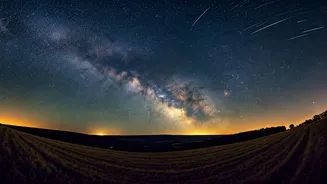
You don’t need any special equipment to enjoy a meteor shower—your eyes are the best tool. The key is to find a location as far away from city lights as possible. Light pollution drastically reduces the number of visible meteors. Once you're at your dark spot, give your eyes at least 20-30 minutes to fully adjust to the darkness; avoid looking at your phone screen. Get comfortable in a reclining chair or lie on a blanket and simply look up. The best viewing time is typically between midnight and dawn, as this is when our side of the Earth faces directly into the meteor stream.
Best Stargazing Spots in India
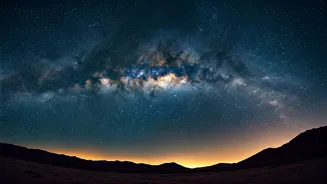
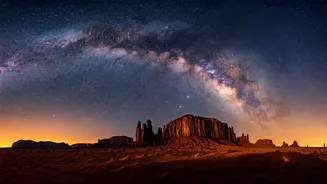
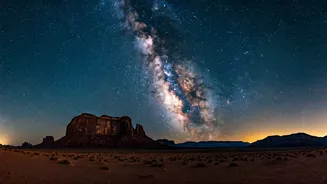
To escape both city lights and monsoon clouds, certain locations in India are ideal. The high-altitude deserts of Ladakh and Spiti Valley in Himachal Pradesh are premier destinations, offering clear, dry skies and minimal light pollution. Hanle in Ladakh is even home to India's first official Dark Sky Reserve. Other excellent options include the Rann of Kutch in Gujarat, where the vast, flat salt desert provides an unobstructed view of the horizon. In the south, places like Coorg in Karnataka and areas in the Western Ghats like Bhandardara can offer clear nights away from urban centres.