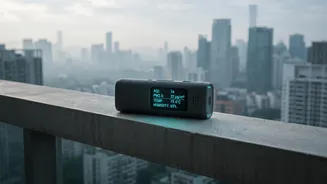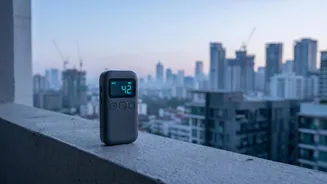








As winter approaches in India, so does the annual battle with air pollution. For fitness enthusiasts, this poses a serious dilemma: how do you maintain your workout routine without compromising your health? This guide helps you navigate the smog.
Why Exercising in Polluted Air is a Risk
When
you exercise, your breathing rate increases significantly. At rest, you might inhale about 12 litres of air per minute, but during a strenuous workout, this can jump to 100 litres or more. This means you're inhaling a much larger volume of airborne pollutants. Furthermore, people often switch to mouth-breathing during intense activity, which bypasses the natural filtration system of your nasal passages. This allows harmful microscopic particles, particularly PM2.5, to travel deep into your lungs and even enter your bloodstream. This exposure can lead to respiratory issues, cardiovascular stress, and reduced athletic performance. Studies have shown that while the benefits of exercise often outweigh the risks in low to moderate pollution, this is not the case when the air quality becomes severely poor.
Your Toolkit for Real-Time AQI Updates
Staying informed is your first line of defence. Fortunately, several reliable apps and websites provide real-time Air Quality Index (AQI) data across India. Government-backed platforms are a great starting point. The 'Sameer' app from the Central Pollution Control Board (CPCB) and 'SAFAR-Air' from the Ministry of Earth Sciences offer credible data for major cities. Sameer provides hourly updates from a wide network of monitoring stations, while SAFAR is excellent for forecasts in Delhi, Mumbai, Pune, and Ahmedabad. Popular third-party apps like IQAir AirVisual and AQI.in often provide a more user-friendly interface, hyperlocal data, and additional features like health recommendations and global maps. Even Google Maps has integrated an AQI layer, making it easy to check conditions at a glance.
Decoding AQI Levels for Your Workout Plan
Understanding what the numbers mean is crucial for making safe decisions. The AQI is a colour-coded scale from 0 to 500 that measures major pollutants. Here’s a simple breakdown for exercise planning:
- 0-50 (Good - Green): Air quality is excellent. It's safe for all outdoor activities.
- 51-100 (Satisfactory/Moderate - Yellow): Generally safe for most healthy adults. However, people who are unusually sensitive might consider reducing prolonged or heavy exertion.
- 101-150 (Unhealthy for Sensitive Groups - Orange): This is a critical threshold. Healthy adults should consider reducing the intensity and duration of outdoor workouts. Sensitive groups, including those with asthma or heart conditions, should move their exercise indoors.
- 151-200 (Unhealthy - Red): Everyone is at risk of health effects. It is strongly recommended to avoid all outdoor exercise.
- 201+ (Very Poor to Severe - Purple/Maroon): Outdoor exercise is not an option. Stay indoors as much as possible.
Smart Strategies for Outdoor Exercise
If the AQI is in the acceptable range (ideally below 100) and you choose to work out outdoors, a few strategies can minimise your exposure. Timing is everything. Contrary to popular belief, early mornings are often one of the worst times for pollution in many Indian cities due to a phenomenon called temperature inversion, which traps pollutants near the ground. The air quality generally improves as the sun warms the ground, making late morning or early afternoon a better window. Also, try to avoid exercising during rush hours and near heavy traffic. If you must be outdoors when the AQI is moderately high, consider wearing a mask specifically designed to filter pollutants, such as an N95 or N99 mask, and opt for lower-intensity activities like brisk walking instead of high-intensity running.
Effective Indoor Workout Alternatives
On days when the AQI is flashing red, bringing your workout indoors is the safest bet. You don’t need a gym membership to stay active. Bodyweight exercises, high-intensity interval training (HIIT), and yoga are all highly effective workouts you can do from the comfort of your home. Activities like Zumba or Pilates are also excellent for maintaining cardiovascular health and flexibility without stepping outside. While indoors, it’s also important to manage your indoor air quality, as pollutants can easily seep in. Keep windows and doors closed, and if possible, use an air purifier with a HEPA filter in the room where you exercise to ensure the air you're breathing is as clean as possible.