




Archery's Recurve Revolution
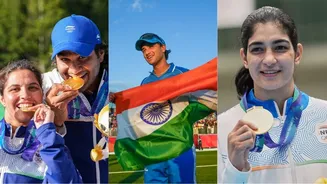
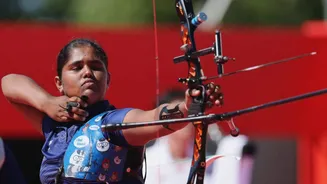
For years, Indian archery's global success was powered by its compound archers, while the prestigious recurve category, an Olympic discipline, remained dominated by powerhouses like South Korea. That narrative was rewritten in Nagoya. The 17-year-old
sensation Kumkum Mohod etched her name in history by clinching the nation's first-ever women's individual recurve archery gold at the Asian Games. This wasn't just a personal victory; it was a seismic event for Indian archery, shattering a long-standing glass ceiling and securing an Olympic quota place. This breakthrough, coupled with the women's recurve team also winning gold for the first time, signals that India is now a formidable force across all forms of the sport, ready to challenge the old guard on the world's biggest stages.
Glory on the Golf Course
At the Hangzhou Games in 2023, Aditi Ashok's silver was a landmark moment, giving India its first-ever medal in women's golf. In Aichi-Nagoya, Pranavi Urs took that achievement one giant leap further. She delivered a masterful performance to become the first Indian woman to win an individual gold medal in golf at the Asian Games. Her triumph ended a 24-year wait for an individual golf gold for India. The victory was twofold, as Urs, alongside Aditi Ashok and Diksha Dagar, also secured India's first-ever women's team medal, a silver. This shows a growing depth of talent in a sport where India is now proving it can produce champions.
Hockey's Historic Double Gold
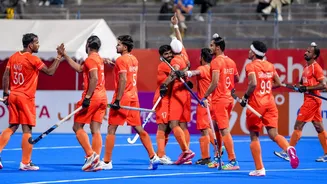
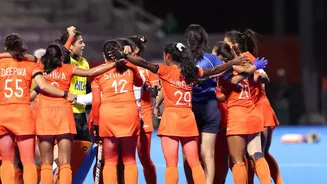
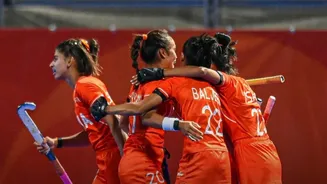
While the men's hockey team successfully defended its gold medal and secured a direct spot for the 2028 Los Angeles Olympics, the real story of the Games was the women's team. After finishing with a bronze in Hangzhou, the Indian women's team ended a staggering 44-year wait for a gold medal, defeating defending champions China in a tense final. This victory also booked their ticket to the LA Olympics. More significantly, for the first time in Asian Games history, both the Indian men's and women's hockey teams won gold at the same edition, a truly monumental achievement for the national sport.
A New Chapter in Wrestling
After failing to secure a single gold medal in wrestling at the Hangzhou Games, the Indian contingent roared back in Nagoya. Aman Sehrawat, who won bronze at the Paris Olympics, upgraded his previous Asian Games medal to a gold in the men's 57kg category. He was joined at the top of the podium by Sujeet Kalkal, who triumphed in the men's 65kg event. These victories were not just about redemption but re-establishing India's dominance in a sport that is a traditional medal-winner for the country. The two golds marked a significant turnaround and one of the best overall performances for the wrestling squad in recent memory.
Consolidating a Sporting Superpower
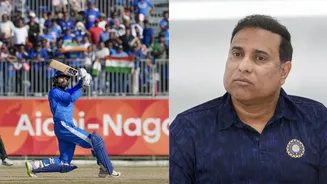
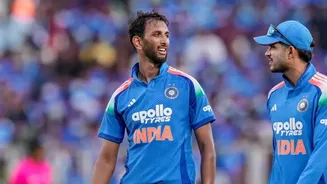
While India's final tally of 85 medals—comprising 21 gold, 27 silver, and 37 bronze—was lower than the record-breaking 106 from Hangzhou, the Aichi-Nagoya Games told a different story. The narrative was less about sheer volume and more about the quality and breadth of the victories. The campaign was defined by winning in new frontiers, with late surges in boxing and archery boosting the final count. Predictable golds in men's and women's cricket and kabaddi provided a strong foundation, with both sports seeing India defend its titles. The overall performance cemented India's position as a top-four nation in Asian sports, proving that the success of the previous games was no fluke but the new standard for a rising sporting power.