





What Exactly Is Gaganyaan?
At its core, the Gaganyaan programme is the Indian Space Research Organisation's (ISRO) pioneering mission to demonstrate the capability for human spaceflight. [6] The primary objective is to launch a crew of three Indian astronauts into a 400-kilometre
Low Earth Orbit (LEO) for a mission lasting three days. [3] After the mission, the crew will be brought back safely to Earth, with a planned splashdown in Indian sea waters. [3] This project will make India only the fourth country in the world—after the United States, Russia, and China—to independently send humans into space, a major milestone in the nation's space journey. [4, 12]
The Anatomy of a Historic Mission
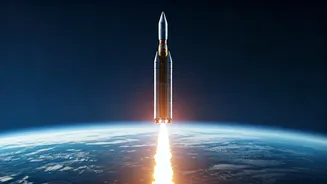
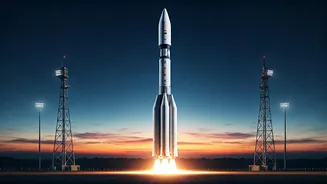
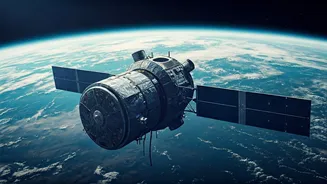
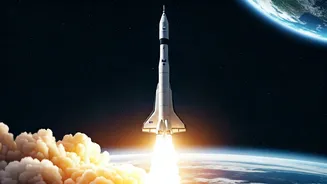
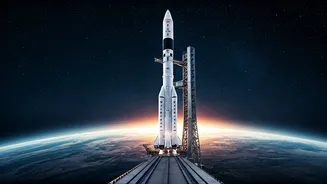
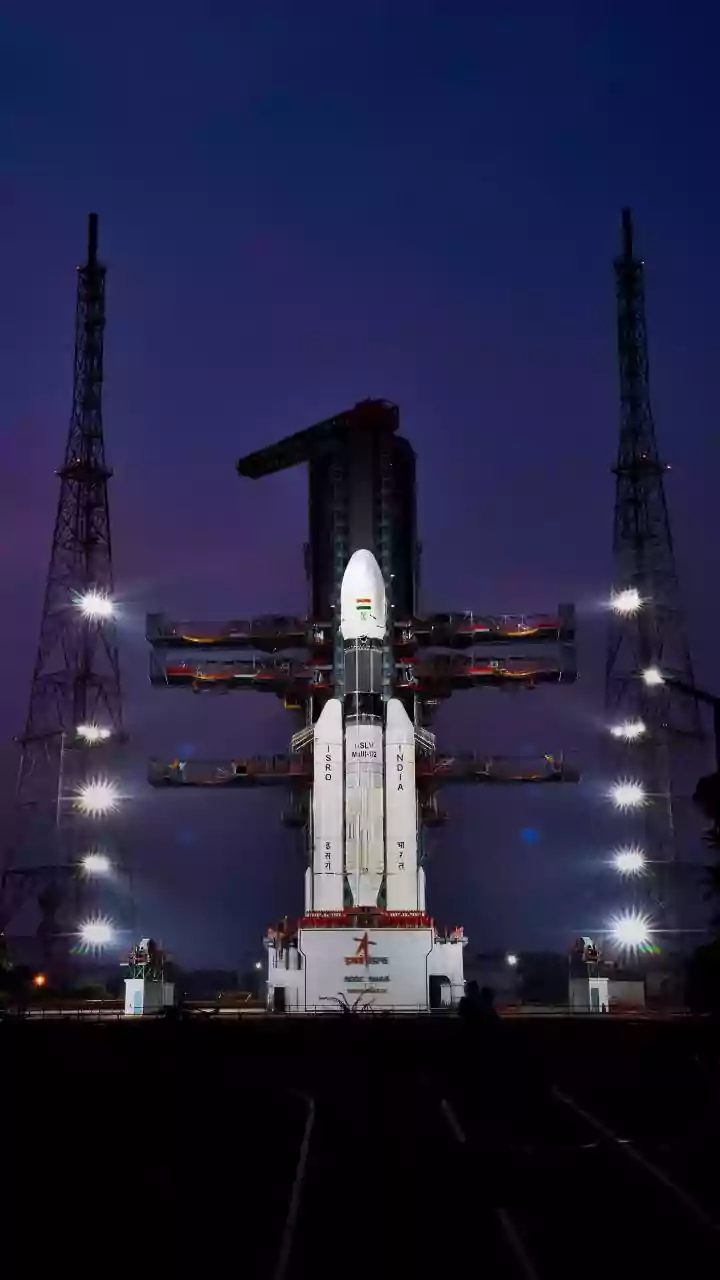
Making human spaceflight a reality requires a symphony of advanced technologies working in perfect harmony. Gaganyaan's backbone is the human-rated LVM3 rocket (HLVM3), a modified version of ISRO's reliable heavy-lift launch vehicle. [3] This powerful rocket will carry the Orbital Module, which consists of two main parts. The Crew Module is the pressurised, habitable space where the astronauts will live, complete with life support systems to provide an Earth-like environment. [3, 21] Attached to it is the Service Module, an unpressurised structure that houses the propulsion systems, power, and other essential equipment needed to support the Crew Module in orbit. [3, 21] A critical component is the Crew Escape System, designed to safely jettison the crew away from the rocket in case of any emergency during launch. [4, 19]
Milestones on the Path to Space
Before astronauts embark on this journey, ISRO is conducting a series of meticulous tests to ensure absolute safety and reliability. [3] The programme includes two uncrewed missions before the final crewed flight. [6] These precursor missions are designed to validate the performance of all systems, from the launch vehicle to the capsule's re-entry and recovery. [4, 6] One unmanned mission will carry "Vyommitra," a female-looking humanoid robot, to study how the flight environment affects the human body. [4] A final test flight carrying Vyommitra is planned for later this year, with the first crewed mission targeted for 2027. [15, 17] Numerous successful tests have already been completed, including parachute system demonstrations, propulsion system hot tests, and pad abort tests to verify the crew escape system. [19]
The Human Element: India’s Vyomanauts
At the heart of this technological endeavour are the chosen astronauts, or 'Vyomanauts' (from the Sanskrit word 'Vyoma' for space). Four Indian Air Force pilots have been selected: Group Captains Prasanth Balakrishnan Nair, Ajit Krishnan, Angad Pratap, and Wing Commander Shubhanshu Shukla. [4] These candidates have undergone generic spaceflight training in Russia and are now undergoing mission-specific training in India. [16] This rigorous preparation involves everything from classroom learning and physical fitness to complex simulations using virtual reality and life-sized mock-ups of the crew module. [16, 20] The training covers flight procedures, microgravity familiarisation, and emergency survival techniques to prepare them for every conceivable scenario. [16, 24]
More Than a Mission: A National Catalyst
Gaganyaan is far more than a single flight; it's a catalyst for national progress. The mission is expected to create 15,000 new employment opportunities and will involve sourcing nearly 60% of its equipment from the Indian private sector, giving a significant boost to domestic industries. [5, 10] It fosters a deeper collaboration between ISRO, academia, and industry, driving research in fields like materials science and space medicine. [5, 6] Furthermore, successfully launching a crewed mission enhances India's global standing and geopolitical influence, opening doors for future international collaborations, including a role in global space station development. [6, 12] Ultimately, it lays the groundwork for a sustained Indian human space exploration programme, including ambitions for a Bharatiya Antariksh Station (Indian Space Station) by 2028 and future lunar missions. [7, 14]