




In a world of volatile markets, investors constantly seek stability. The claim that gold has delivered positive returns for most of the last half-century offers a compelling narrative. But what does this track record mean for your money today?
Understanding the Golden Years
The headline's
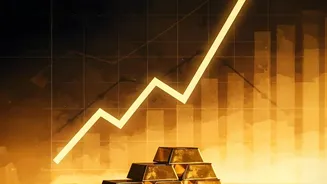
claim refers to the era after 1971, the year the US officially decoupled its dollar from gold, ending the Bretton Woods system. This move allowed gold's price to be determined by market forces of supply and demand for the first time in decades. Since then, its performance has become a key indicator for investors. Data shows that from the end of 1970 through 2025, gold has indeed finished the year with a positive return in 36 out of 55 years. This consistency, with positive outcomes roughly two-thirds of the time, has cemented its reputation as a reliable long-term asset. While the average annual growth is impressive, it's the resilience across different economic climates that makes investors pay attention.
The Psychology of a 'Safe Haven'
Why do investors flock to gold during uncertain times? The answer lies in its role as a 'safe haven' asset. Unlike currencies, which can be devalued by government printing, or stocks, which are tied to corporate performance, gold is a tangible asset with a finite supply. Its value is not dependent on any single government or financial institution, meaning it carries no risk of default. During periods of geopolitical tension, high inflation, or stock market crashes, investors often move their money into gold, seeking to preserve their wealth. This flight to safety increases demand and typically drives up the price, providing a hedge against losses in other parts of a portfolio. This pattern has repeated itself through numerous crises, from the stagflation of the 1970s to the financial crisis of 2008 and the COVID-19 pandemic.
The Years Gold Lost Its Shine
To get a balanced picture, it's crucial to look at the years gold failed to deliver positive returns. The metal has had losing streaks, including a notable period in the 1980s and 1990s. Gold's worst annual performance was in 1981, when it fell by over 32%. These downturns are often linked to specific economic conditions. For instance, in the early 1980s, central banks raised interest rates to historic highs to combat inflation. When interest rates are high, non-yielding assets like gold become less attractive compared to bonds or even savings accounts that offer a solid return. The lesson is that gold's performance is not guaranteed, and its price can be negatively affected by strong economic growth, high real interest rates, and low inflation.
Gold in a Modern Indian Portfolio
For Indian investors, gold holds both cultural and financial significance. The demand during festival and wedding seasons is a major domestic driver of price. However, modern investment strategies have evolved beyond physical jewellery and coins. Today, investors can choose from several digital options. Gold Exchange Traded Funds (ETFs) are mutual funds that invest in pure gold and trade on the stock exchange, offering high liquidity. Sovereign Gold Bonds (SGBs) are government securities denominated in grams of gold. While new issues have been paused since early 2024, they remain a popular long-term option on the secondary market, offering a fixed interest of 2.5% per year on top of the gold price appreciation and tax-free capital gains for original subscribers who hold to maturity. Each option serves different needs, with ETFs favouring flexibility and short-term trades, while SGBs are better suited for long-term, patient investors seeking additional income.