





Why We Need an Alternative to Lithium
Lithium-ion batteries have been a revolutionary technology, but their dominance comes with a catch. Lithium itself is not particularly rare, but mining and processing it into battery-grade material is concentrated in just a few countries. This creates
supply chain vulnerabilities and price volatility. Furthermore, many lithium-ion battery chemistries rely on other costly and ethically problematic materials like cobalt. As the demand for electric vehicles and large-scale grid storage explodes, the pressure is on to find a cheaper, more abundant, and more sustainable alternative. This is where sodium enters the conversation, not necessarily as a replacement for lithium, but as a powerful complement.
Introducing Sodium: The Abundant Contender
At its core, a sodium-ion or sodium-metal battery works on the same principle as its lithium-ion cousin: it moves ions back and forth between a positive and negative electrode to charge and discharge energy. The key difference is the charge carrier is a sodium ion instead of a lithium ion. The appeal is obvious: sodium is the sixth most abundant element in the Earth's crust, found everywhere in rock salt and seawater. This makes it incredibly cheap and geopolitically stable. What distinguishes a sodium-metal battery is its use of a pure, metallic sodium anode, which theoretically offers a higher energy capacity than the carbon-based anodes typically used in sodium-ion batteries.
The Good: Cost, Safety, and Cold Weather
The most significant advantage of sodium-based batteries is cost. The abundance of raw materials means they have the potential to be significantly cheaper to produce than lithium-ion cells. They also boast an impressive safety profile. Sodium chemistries are generally more stable and less prone to thermal runaway—the chain reaction that can cause battery fires. This makes them particularly attractive for stationary energy storage, where thousands of battery packs are stacked together. Another key benefit is their performance in the cold. While lithium-ion batteries see their performance degrade significantly in low temperatures, sodium-ion batteries perform much better, making them a viable option for EVs in colder climates.
The Challenge: Energy Density and Durability
If sodium is so great, why aren't all batteries made with it? The primary hurdle is energy density. A sodium ion is larger and heavier than a lithium ion, which means sodium batteries currently store less energy for the same weight. Today's commercial sodium-ion cells offer an energy density of around 160-175 Wh/kg, while many lithium-ion cells can exceed 250 Wh/kg. For an EV, this lower density translates to a heavier battery pack or a shorter driving range. Furthermore, sodium-metal batteries in particular have historically struggled with durability. The highly reactive sodium metal can form tiny, spiky structures called dendrites during charging, which can grow to pierce the battery and cause a short circuit.
What About That Four-Minute Charge?
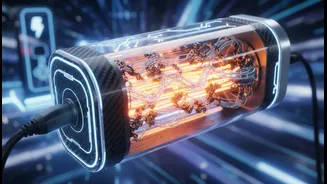
The promise of ultra-fast charging is one of the most exciting frontiers in sodium battery research. A recent lab study in July 2026 made headlines by demonstrating a sodium-metal battery design that could charge in just four minutes. The breakthrough came from a new type of quasi-solid gel electrolyte that successfully suppressed the formation of harmful dendrites even at high charging speeds. However, it is crucial to put this into context. These results were achieved in a small, experimental coin cell under laboratory conditions. When the researchers built a larger pouch-cell prototype closer to what would be used in a real device, the performance was significantly lower. This shows the immense potential, but commercial application in an EV is still many years and several research milestones away.
The Road to Commercialization
Despite the challenges, momentum is building fast. Major battery manufacturers like CATL and BYD are already producing sodium-ion batteries commercially. For now, the primary applications are not high-performance, long-range EVs. Instead, the technology is finding its footing in stationary energy storage systems for power grids, where weight is not a concern, and in smaller, more affordable electric vehicles designed for shorter commutes. Companies like Peak Energy and Tiamat are pioneering these efforts in the US and Europe. Some companies are even developing hybrid battery packs that combine the fast-charging and cold-weather benefits of sodium cells with the high energy density of lithium cells.