



India's rich historical tapestry has received a significant nod, with Chhattisgarh's Sirpur Cultural Landscape being added to UNESCO's Tentative List. This crucial first step brings the ancient capital one step closer to global recognition.
A Major Step for Indian Heritage
In a moment
of national pride, three Indian sites have been added to the UNESCO World Heritage Tentative List. Alongside two natural wonders in the Andaman and Nicobar Islands—the Karst-mud-volcano Complex of Baratang and the Andaman Subduction Volcanoes—stands the Sirpur Cultural and Archaeological Landscape in Chhattisgarh. Getting on this list is the mandatory first stage for any site aspiring to earn the coveted World Heritage Site tag. It is essentially an inventory of properties that a country intends to nominate in the coming years, signalling a formal commitment to pursuing the prestigious recognition. For Sirpur, this is the start of a long but rewarding journey onto the world stage.
Unveiling the Treasures of Sirpur
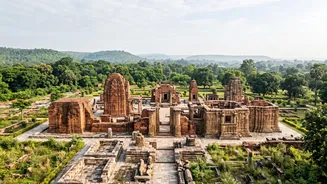
Nestled on the banks of the Mahanadi river, Sirpur was once the glorious capital of the Panduvanshi and Somavamshi kings of Dakshina Kosala from the 5th to the 12th centuries. Historically known as 'Shripur', or the city of wealth, it was a bustling urban centre of commerce and culture. What makes Sirpur truly exceptional is its rare blend of religious harmony, with an extensive collection of Hindu, Buddhist, and Jain monuments coexisting in a single urban fabric. Excavations since the 1950s, and especially after 2000, have unearthed a breathtaking array of structures: 22 Shiva temples, 5 Vishnu temples, 10 Buddhist Viharas (monasteries), and 3 Jain Viharas. Among its most celebrated monuments is the 7th-century Lakshmana Temple, one of the finest and best-preserved brick temples in India.
The Journey to World Heritage Status
So, what happens next? Inclusion on the Tentative List is just the beginning. Now, the Archaeological Survey of India (ASI) and the Sirpur Special Area Development Authority (SSADA) will prepare a comprehensive nomination dossier. This detailed file must provide exhaustive proof of Sirpur's 'Outstanding Universal Value', demonstrating its unique significance to humanity. Once the dossier is complete, it will be submitted to the World Heritage Centre for a rigorous evaluation by advisory bodies like the International Council on Monuments and Sites (ICOMOS). This body will assess the site's authenticity, integrity, and the legal protections in place for its conservation before making a final recommendation to the World Heritage Committee, which meets annually to decide which sites make the final cut.
Why This Recognition Matters
Achieving World Heritage status would be transformative for Sirpur and Chhattisgarh. The global recognition would significantly boost tourism, drawing history enthusiasts and travellers from around the world to this lesser-known gem. This influx would, in turn, stimulate the local economy. More importantly, the UNESCO tag brings with it a framework for enhanced conservation and management, ensuring that this irreplaceable heritage is protected for future generations. It validates the site's historical importance on a global scale, celebrating the region's rich past, marked by architectural brilliance and a spirit of religious syncretism. Efforts are already underway to improve infrastructure, such as connecting pathways and introducing battery-operated vehicles to preserve the site's sanctity.
Andaman's Unique Natural Wonders
While Sirpur stands out for its cultural legacy, the two new entries from the Andaman and Nicobar Islands highlight India's geological marvels. The Karst-mud-volcano Complex of Baratang features unique limestone caves and active mud volcanoes, which locals call 'Jalki'. The second site, the Andaman Subduction Volcanoes, includes Barren Island—home to South Asia's only confirmed active volcano—and Narcondam Island. These sites offer a rare window into the planet's tectonic processes and the evolution of unique ecosystems in relative isolation. Their inclusion on the tentative list underscores the diverse natural and cultural heritage India hopes to share with the world.