


The humble trouser waistband is a silent battleground in every wardrobe, pitting structured formality against pull-on comfort. But the choice between an elasticated and a fixed waist is about more than just feel; it's a tale of two philosophies.
The Core Difference: Structure vs. Flexibility
At its
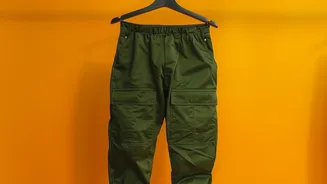
most basic, the distinction lies in construction. A fixed waistband is a structured band of fabric, often reinforced with an inner lining called interlining, that is cut to a specific measurement. It has no natural give and relies on fasteners like buttons, hooks, and a zip fly to close. This rigid design provides a clean, flat front and is the foundation of traditional tailoring. In contrast, an elasticated waistband incorporates a flexible band that allows the garment's waist to expand and contract. This can be a fully elastic loop hidden inside a fabric 'casing', or partial elastic panels, sometimes just at the back or sides, to offer a blend of structure and comfort.
The Comfort and Fit Equation
Comfort is the most celebrated benefit of an elasticated waist. It adapts to your body's movements—bending, sitting, and walking—without pinching or digging in. This style is also far more forgiving of minor fluctuations in waist size, offering a flexible fit that remains secure throughout the day. However, comfort isn't exclusive to elastic. A well-tailored fixed waistband, cut to your precise measurements, can feel just as comfortable because it sits correctly on the body without applying uneven pressure. The key difference is tolerance; a fixed waist demands an exact fit, whereas an elastic waist provides a range, making it a popular choice for travel and everyday wear.
Styling for the Occasion
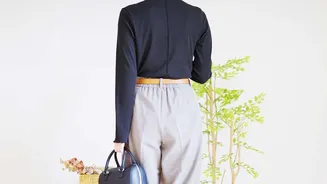
Historically, the fixed waist has reigned supreme in formal and professional settings. Its clean, sharp lines are essential for dress trousers meant to be worn with tucked-in shirts, blazers, and belts. The structured silhouette conveys a sense of polish and intention. Elasticated waists, long associated with loungewear and athletic apparel, were seen as inherently casual. However, these lines have blurred dramatically. Today, many brands offer 'smart' trousers with elasticated or drawstring waists in premium fabrics like wool, linen, and twill. These can be styled for business-casual environments, often with a blazer or a smart knit top, offering a modern blend of professionalism and ease.
A Question of Silhouette
The type of waistband directly influences a trouser's overall shape. A fixed waist provides a stable anchor from which the rest of the trouser hangs, allowing for precise tailoring in the seat and legs, whether it's a slim, straight, or wide-leg cut. The fabric falls smoothly from a defined waistline. Elasticated waists, by their nature, involve gathering or 'ruching' of fabric. While designers have become adept at minimising this, it can create a softer, less defined silhouette around the hips. For this reason, tops are often worn untucked with more casual elastic-waist styles. However, with modern hybrid designs featuring flat fronts and elasticated backs, tucking in a shirt is now a common styling choice.
The Rise of the Hybrid Trouser
The modern wardrobe no longer forces a binary choice. The most significant trend in recent years is the hybrid trouser, which seeks to offer the best of both worlds. These garments often feature a flat, structured front with a zip fly, giving the appearance of a traditional dress pant, but incorporate hidden elastic panels at the sides or across the back of the waistband. Some even pair a tailored look with a drawstring. This innovation allows for the sharp aesthetic of a fixed waist while providing the adaptive comfort and flexibility that modern life demands, making them a versatile staple for work, travel, and leisure.