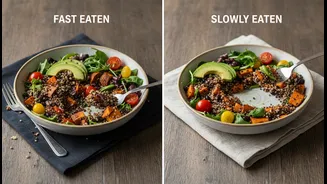









The Science of Speed Eating
Numerous studies have drawn a clear line connecting fast eating with a higher risk of being overweight or obese. A large meta-analysis of 23 studies found that fast eaters had a significantly higher Body Mass Index (BMI) compared to their slower-eating
counterparts. In fact, one study suggested that fast eaters are more than twice as likely to experience obesity. Research conducted in Gujarat, India, specifically found that fast eaters had a notably higher BMI and more visceral fat, the dangerous fat that surrounds internal organs. This link isn't just a coincidence; it's rooted in the complex communication between your gut and your brain.
Your Brain on a Time Delay
It takes approximately 20 minutes for your brain to receive and process the signals from your stomach that you are full. When you eat quickly, you can easily consume more calories than your body needs before your brain gets the message to stop. This is a hormonal conversation. Eating triggers the release of satiety hormones like peptide YY (PYY), cholecystokinin (CCK), and glucagon-like peptide-1 (GLP-1), which tell your brain you're full. Simultaneously, it suppresses ghrelin, the 'hunger hormone'. Eating slowly gives these hormones time to work, allowing you to recognise fullness cues more accurately and potentially reducing your overall calorie intake.
More Than Just Body Weight
The implications of eating speed extend beyond BMI. Studies show that eating fast is associated with a larger waist circumference and less favourable fat distribution. A 2022 study found that eating slowly was linked to lower total body fat and a better ratio of android (waist) to gynoid (hip) fat, especially in younger adults. Furthermore, rapid eating has been linked to a higher risk of developing metabolic syndrome, which is a cluster of conditions including high blood pressure, high blood sugar, and abnormal cholesterol levels that increase your risk of heart disease and diabetes. A slower pace may lead to a more gradual rise in blood sugar, promoting better long-term metabolic health.
It's Not a Race: Embracing Mindful Eating
Understanding the science is one thing, but putting it into practice is another. The key is to view slowing down not as a diet rule, but as a component of mindful eating. Mindful eating is about paying full attention to the experience of eating, without distraction. It helps you reconnect with your body's natural hunger and satiety signals, distinguishing true physical hunger from emotional or environmental triggers. Rather than wolfing down a meal while watching TV or scrolling on your phone, mindful eating encourages you to savour the experience, which can naturally lead to a slower pace and greater satisfaction with your food.
Simple Steps to Slow Your Pace
Slowing down your eating doesn't have to be complicated. Start with small, manageable changes. Try putting your fork or spoon down between bites. Focus on chewing each mouthful thoroughly, perhaps aiming for 15-30 chews per bite, which aids digestion and naturally extends mealtime. Eliminate distractions by turning off the television and putting your phone away during meals. Sipping water can also help you pause and slow down. Some experts even suggest setting a timer for 20 minutes and trying to make your meal last that long. The goal is to make eating a deliberate, enjoyable act rather than a race to the finish.