




First, What Exactly Are ‘Free Sugars’?
To compare honey and sugar properly, we first need to define our terms. According to the World Health Organization (WHO), 'free sugars' include any sugars added to food by a cook, manufacturer, or consumer. Crucially, this definition also includes sugars naturally
present in honey, syrups, and fruit juices. These are different from 'intrinsic sugars', which are found within the cellular structure of whole fruits and vegetables. Your body processes free sugars differently, and health bodies recommend limiting their intake, regardless of their origin. So, despite its natural source, honey falls squarely into the free sugar category, just like table sugar.
Sugar vs. Honey: A Tale of Two Sweeteners
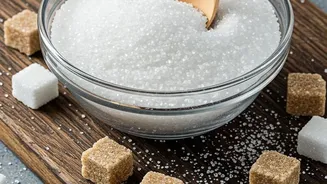
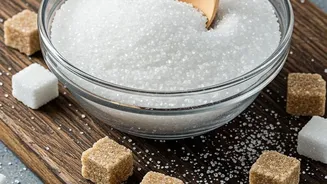
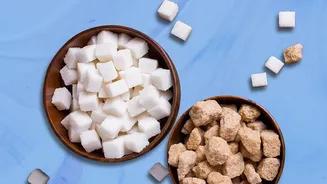
Table sugar, or sucrose, is a simple molecule made of 50% glucose and 50% fructose bonded together. It is typically extracted from sugar cane or sugar beets and refined into the pure white crystals we know. It offers sweetness and energy but contains no vitamins, minerals, or other beneficial compounds. Honey, on the other hand, is more complex. It's also composed mainly of fructose and glucose, but they exist as separate molecules. Honey is roughly 80% sugar and 17% water, with the remaining portion containing trace amounts of vitamins, minerals, pollen, and, most notably, antioxidants like flavonoids. The exact composition can vary depending on the flowers the bees visited.
The Calorie and Sweetness Conundrum
It might surprise you to learn that, spoon for spoon, honey contains more calories than sugar. A teaspoon of honey has about 21 calories, while a teaspoon of sugar has around 16. This is because honey is denser than granulated sugar, so a teaspoon of it weighs more. However, honey is also slightly sweeter than sugar due to its higher fructose content. This means you might use less of it to achieve the same level of sweetness, which could potentially offset the calorie difference. Ultimately, both are calorie-dense sweeteners that should be used in moderation.
Impact on Blood Sugar Levels
The Glycemic Index (GI) measures how quickly a food raises blood sugar levels. Here, honey has a slight edge. Table sugar has a GI of around 65, while honey's GI is typically a bit lower, ranging from about 45 to 64 depending on the variety. The higher fructose content in honey contributes to this slower release of sugar into the bloodstream. For this reason, honey may cause a more gradual rise in blood sugar compared to the sharper spike from table sugar. However, this difference is modest, and for people managing diabetes, both must be consumed with caution as they still significantly impact blood glucose.
What About Those Extra Nutrients in Honey?
This is where honey’s reputation as a healthier choice comes from. Raw and darker varieties of honey are known to contain antioxidants, such as phenolic acids and flavonoids, which are absent in refined sugar. These compounds have anti-inflammatory properties and may offer some health benefits, such as supporting heart health. However, it's important to keep this in perspective. The amount of these beneficial compounds in a typical serving of honey is very small. While it's an advantage over sugar's 'empty calories', you would need to consume a large amount of honey to get a significant dose of these nutrients, which would also mean consuming excessive sugar and calories.