






A New Frontier: What is Chandrayaan-4?
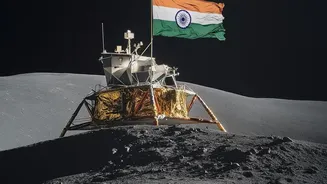
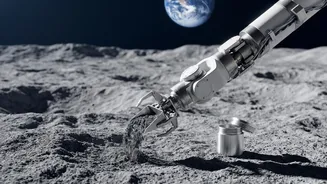
At its core, Chandrayaan-4 is a lunar sample-return mission. Its primary goal is to land on the Moon, collect several kilograms of rock and soil (regolith), and bring them back to Earth for scientific analysis. This represents a monumental leap in technological
capability. While Chandrayaan-3 successfully demonstrated a soft landing and rover operations, Chandrayaan-4 involves a round trip. If successful, India would become only the fourth country in the world to accomplish this feat, joining an elite club with the United States, the former Soviet Union, and China. The mission is a clear signal of India's rising ambitions in space exploration and is seen as a crucial stepping stone towards even bigger goals, such as sending an Indian astronaut to the Moon by 2040.
The Anatomy of Ambition: How It Works
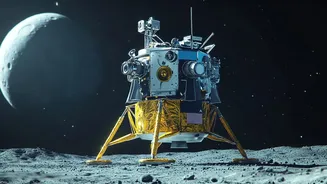
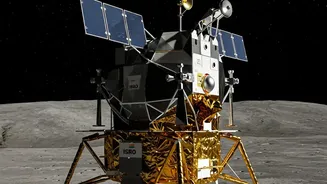
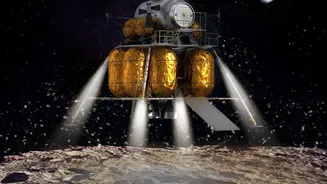
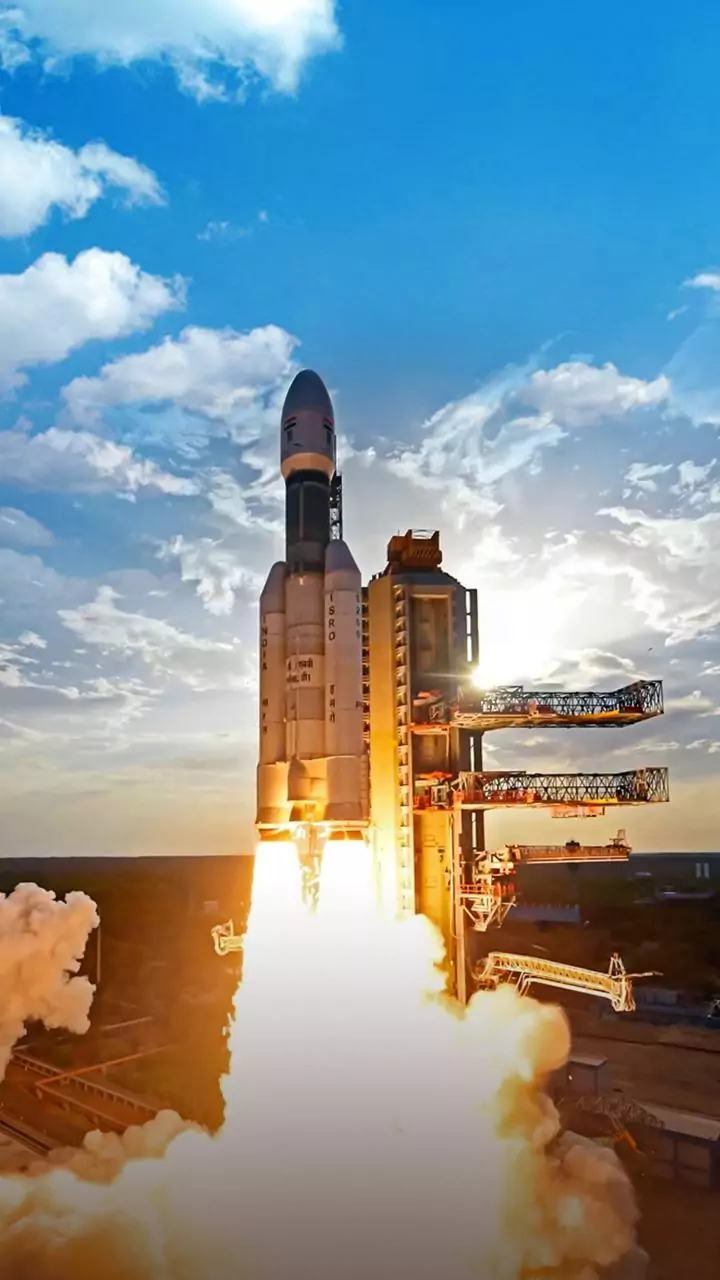
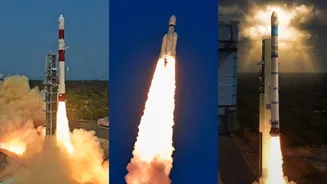
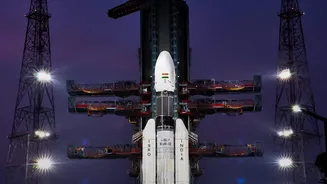
The complexity of Chandrayaan-4 is staggering, requiring a level of space choreography ISRO has never before attempted. The mission is so heavy that it will require two separate launches using India's most powerful rocket, the LVM3. The spacecraft itself is composed of five distinct modules: a Propulsion Module to travel towards the Moon, a Descender Module for the landing, an Ascender Module to lift off from the lunar surface with the samples, a Transfer Module, and a Re-entry Module to bring the precious cargo safely back to Earth. The mission profile involves multiple critical stages: launching two rockets, having modules dock in Earth's orbit, landing on the Moon, collecting samples with a robotic arm and drill, launching off the Moon, docking again in lunar orbit to transfer the samples, and finally, a high-speed re-entry through Earth's atmosphere. This complex sequence of events makes it ISRO's most challenging lunar endeavor to date.
Building on a Legacy of Success
Chandrayaan-4 does not exist in a vacuum. It stands firmly on the shoulders of its predecessors. The triumphant landing of Chandrayaan-3 in the Moon's south polar region in 2023 provided ISRO with invaluable experience in precision landing, a technology that is fundamental to the new mission. That success proved India's capability to safely reach the lunar surface. Furthermore, ISRO has been methodically testing other key technologies. A critical step was the Space Docking Experiment (SPADeX), which successfully demonstrated the autonomous rendezvous and docking capabilities essential for Chandrayaan-4's complex orbital maneuvers. Each previous mission has served as a building block, de-risking the technologies needed for this next giant leap and showcasing a mature, step-by-step approach to deep space exploration.
The Prize: Why Bring Back Moon Rocks?
While rovers and orbiters can perform incredible science remotely, there is no substitute for studying pristine samples in a laboratory on Earth. Instruments on Earth are far more powerful, precise, and larger than anything that can be packed onto a spacecraft. Scientists will be able to analyse the composition, mineralogy, and age of the lunar material with unparalleled detail. Since Chandrayaan-4 is targeting the geologically diverse and scientifically intriguing south pole, these samples could hold clues to the history and evolution of the Moon and our solar system. A key focus will be the search for and analysis of water ice, which Chandrayaan-1 first helped discover. Understanding this resource is critical for planning future sustained human presence on the Moon. Furthermore, these samples can be preserved and re-analysed for decades to come with future technologies, yielding new discoveries long after the mission is over.
India's Giant Leap in Lunar Exploration
Chandrayaan-4 is more than just a scientific mission; it's a statement of intent. Successfully returning lunar samples will solidify India's position as a top-tier space-faring nation and a key player in the new global race to the Moon. It also serves as a crucial technology demonstrator for the nation's broader ambitions, including the Gaganyaan human spaceflight program and the goal of establishing an Indian space station by 2035. The mission runs in parallel with other efforts, such as the LUPEX (Lunar Polar Exploration) mission, a joint project with Japan's space agency (JAXA) to explore the polar regions with an advanced rover. While Chandrayaan-4 is a national mission, its success would provide India with significant leverage for international collaboration and scientific exchange, potentially allowing for the sharing of its unique polar samples with other nations.