




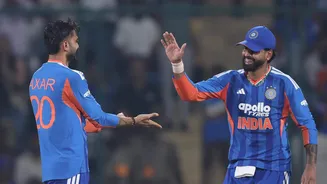
The Scene: A Tense Final Over
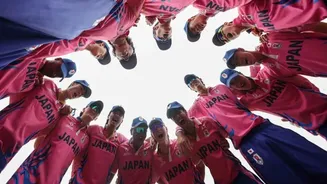
After a lengthy rain delay, the much-anticipated one-off T20I at the Sano International Cricket Ground was reduced to a five-over shootout. India, batting first, struggled against disciplined Japanese spin bowling on a tricky surface, posting a modest
total of 32 for 4. In response, Japan fought valiantly, giving the world champions a genuine scare. The equation came down to the final over, with Japan needing eight runs for a historic victory and India needing to defend a small total to avoid an upset. Axar Patel was handed the ball for the final six deliveries, with the pressure mounting on both sides in a contest that had defied all expectations.
The Delivery and the Initial 'Wide' Call
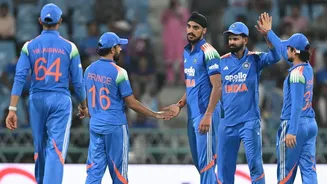
With the game on a knife's edge, Axar Patel bowled a delivery down the leg side to Japan's Alexander Shirai-Patmore, who attempted a reverse sweep and missed. The on-field umpire promptly signalled a wide. This decision was met with immediate frustration from the Indian team, particularly bowler Axar Patel and wicketkeeper Sanju Samson. An extra run and, crucially, an extra delivery would have significantly tilted the odds in Japan's favour. The initial call seemed straightforward, but the Indian players were convinced the umpire had made an error.
How the Decision Was Overturned
What followed was a rare and pivotal moment. Indian captain Shreyas Iyer approached the square-leg umpire, Chris Brown, to discuss the call. This prompted a conference between the two on-field umpires. Unlike situations involving the Decision Review System (DRS) for dismissals, this was a consultation between the officials on the field of play. After a brief discussion, they decided to reverse the original call. The signal was revoked, and the delivery was officially ruled a dot ball instead of a wide. This meant Japan was not awarded the extra run, and the number of deliveries remaining in the over was reduced, significantly altering the context of the final moments.
The Rules: Can Umpires Change Their Mind?
While player reviews for wides and no-balls have been trialled in franchise leagues like the IPL, they are not standard in all international cricket. However, the laws of cricket do allow umpires to revoke a decision under certain circumstances. According to MCC Law 22.3, an umpire can revoke the call of 'Wide ball' if the ball makes contact with the striker's bat or person. Furthermore, Law 22.4 states a delivery should not be adjudged a wide if the striker moves and brings the ball within reach. In this instance, the umpires likely conferred and concluded that the batter's movement—the reverse sweep attempt—brought the ball into a position where it could have been hit, thus negating the wide. The reversal was based on their collective judgement and interpretation of the batter's action, a power they hold without needing to resort to a third umpire, who was not in use for this match.
The Aftermath: A Two-Run Victory for India
The overturned decision proved to be decisive. With one less run to score and one less ball to face, the pressure on Japan mounted. Axar Patel held his nerve for the remainder of the over, and India ultimately clinched a dramatic two-run victory, finishing their five overs on 30 for 3. While India avoided what would have been a monumental upset, the conversation quickly shifted to the controversial decision. Had the wide call stood, the outcome of the match could very well have been different. The incident highlighted the immense pressure on umpires in high-stakes moments and sparked debate among fans and commentators about the process and the final call.