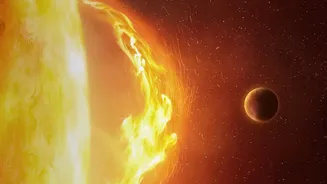


In a landmark collaboration, scientists from India’s ISRO and the European Space Agency have peered deep into the Sun’s volatile atmosphere, capturing the very first whispers of its most violent storms, known as coronal mass ejections (CMEs).
Our Turbulent Star
The Sun,
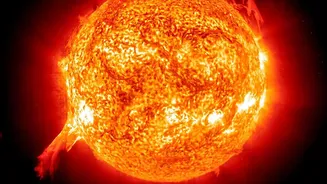
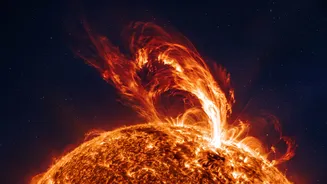
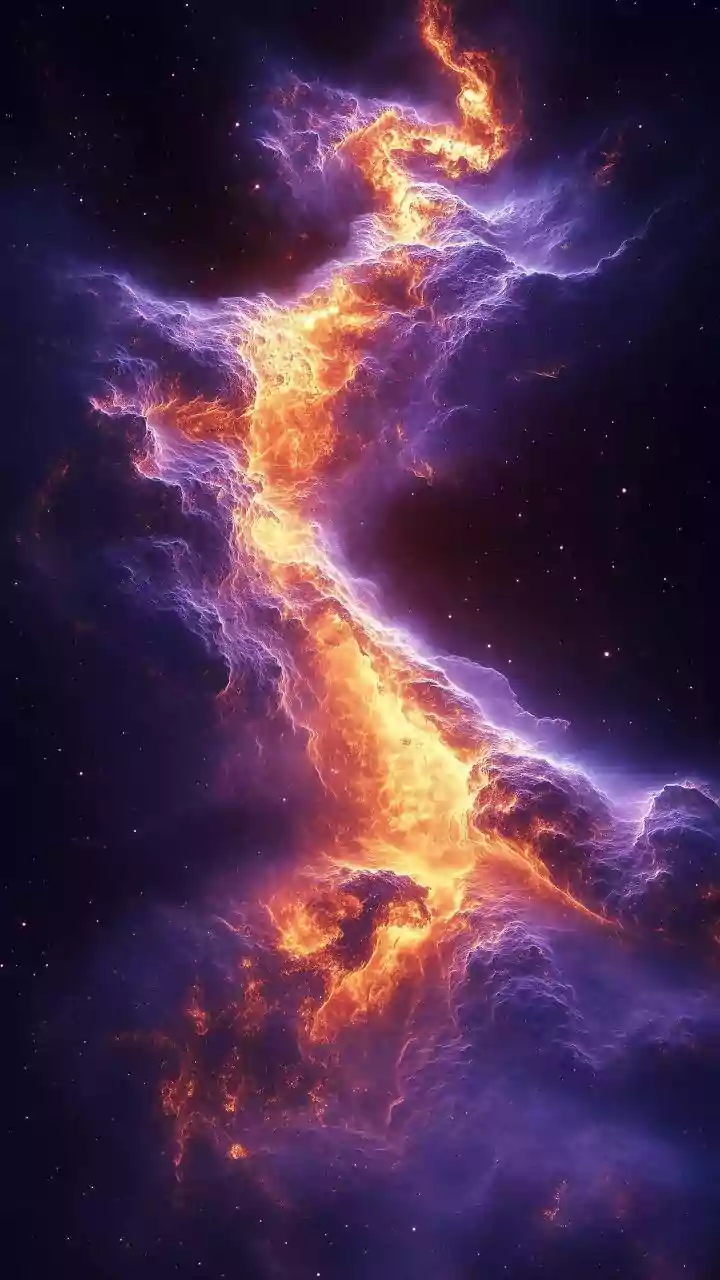
the life-giving star at the centre of our solar system, is not always calm. It periodically unleashes colossal explosions of plasma and magnetic fields called Coronal Mass Ejections, or CMEs. These solar storms hurl billions of tonnes of material into space at incredible speeds, capable of reaching Earth in a matter of hours or days. While they are responsible for the beautiful auroras, they also pose a significant threat. An Earth-directed CME can disrupt the planet's magnetic field, potentially damaging critical satellites used for communication and navigation, overloading power grids, and endangering astronauts. For decades, scientists have worked to forecast these events, but they could only see the storm once it had already begun. Predicting their formation has remained one of the biggest challenges in solar physics.
A Tale of Two Missions
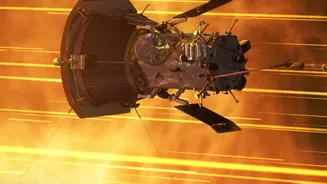
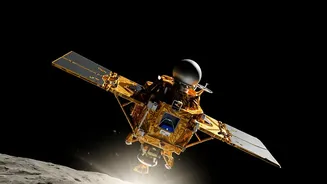
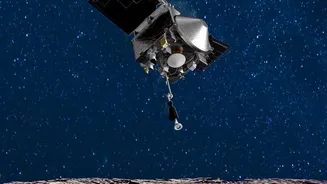
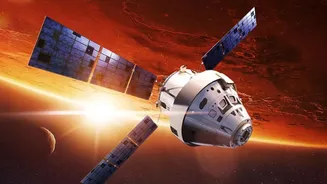
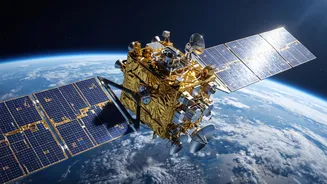
This new breakthrough was made possible by combining the unique talents of two very different space missions: India’s Aditya-L1 and the European Space Agency's (ESA) Proba-3. Aditya-L1, an ISRO observatory stationed 1.5 million kilometres from Earth, maintains a constant, uninterrupted watch on the Sun. Its instruments are designed to study the Sun's atmosphere and monitor the solar wind, giving it a wide-angle view of solar activity. Proba-3, on the other hand, is a feat of precision engineering. It consists of two satellites flying in perfect formation, about 150 meters apart. One satellite acts as an 'occulter', blocking the main body of the Sun to create a perfect, long-lasting artificial eclipse for the other satellite's coronagraph. This allows Proba-3 to see the Sun’s faint corona closer to the solar surface than ever before, a region typically blinded by the Sun's intense glare.
Seeing the Spark Before the Fire
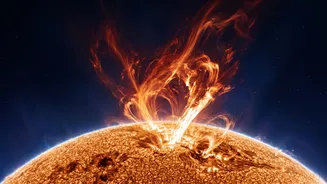
The joint study focused on combining the strengths of these two missions. While observing a seemingly quiet region of the Sun, Proba-3’s ultra-precise view detected subtle, rapid fluctuations in the magnetic field structure very close to the solar limb—the 'edge' of the Sun. These flickers were too small and too close to the surface to be seen by previous observatories. On their own, they could have been dismissed as minor disturbances. However, scientists cross-referenced this data with simultaneous observations from Aditya-L1. ISRO’s observatory, with its broader perspective, detected faint, corresponding ripples in the upper corona. The combination of data confirmed that the tiny spark seen by Proba-3 was, in fact, the very first stage of a magnetic restructuring event that, an hour later, erupted into a full-blown CME. It’s the solar equivalent of seeing the first hairline crack appear in a dam wall long before it bursts.
A New Era in Space Weather Forecasting
This discovery is a game changer for space weather prediction. Current warning systems, which often rely on satellites like DSCOVR at the L1 point, can typically provide only 15 to 60 minutes of notice before a solar storm hits Earth's magnetic field. By identifying the precursor signals hours before an eruption, this new method promises to significantly extend that warning window. A longer lead time is invaluable. It provides satellite operators more time to put their spacecraft into a protective safe mode and allows power grid managers to take preventative measures to safeguard our electrical infrastructure from destructive power surges. For India, which operates a large and growing fleet of satellites crucial for communication, weather monitoring, and national security, this enhanced predictive capability is a significant national asset. This achievement underscores the success of ISRO’s vision for Aditya-L1 and strengthens its position as a key player in global space science. The collaboration with ESA further highlights the importance of international partnerships in tackling complex scientific challenges.