



A Tantalizing Hint of Life
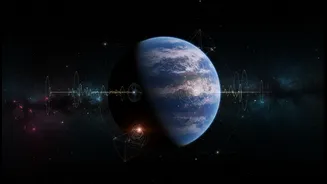
Lying 124 light-years away, K2-18b captured the world's imagination. Observations from the James Webb Space Telescope (JWST) detected key molecules like methane and carbon dioxide, suggesting it could be a 'Hycean' world: a planet with a vast liquid water
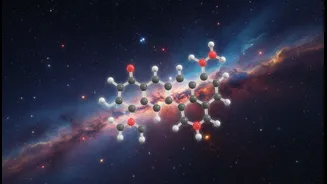
ocean beneath a hydrogen-rich atmosphere. Even more exciting was a faint, tentative signal of dimethyl sulfide (DMS). On Earth, DMS is almost exclusively produced by life, particularly marine phytoplankton, making its potential presence a blockbuster finding. The hint, though not statistically conclusive, was one of the strongest yet that we might not be alone. This catapulted K2-18b from an object of scientific interest to a prime candidate in the search for extraterrestrial biology.
The Specter of a False Alarm
In science, extraordinary claims require extraordinary evidence. The potential DMS signal on K2-18b was met with both excitement and intense scrutiny from the scientific community. The core problem is the risk of a 'false positive'—a signal that mimics a sign of life but is actually produced by non-biological processes. Researchers began questioning whether the DMS signal was statistically significant at all, with several independent teams re-analyzing the JWST data and concluding the evidence was insufficient. Others pointed out that even if DMS was present, abiotic (non-living) processes, such as geological activity or specific chemical reactions in its unique atmosphere, could potentially produce it. This scientific debate is not a failure but a crucial part of the process, ensuring that any eventual claim of life is built on an unshakeable foundation.
A Different Kind of Telescope
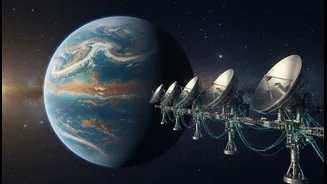
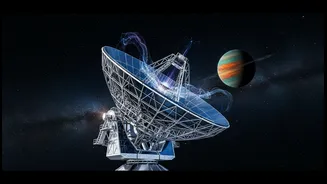
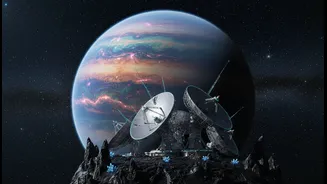
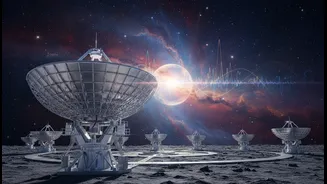
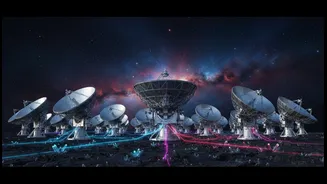
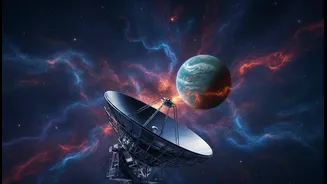
This is where radio telescopes enter the story. While JWST is a master of infrared light, powerful radio arrays like the Very Large Array (VLA) and MeerKAT offer a different way of seeing the universe. A recent search used these telescopes to scan K2-18b, not for atmospheric chemicals, but for 'technosignatures'—radio signals that could indicate technology. While this specific search for artificial signals came up empty, it demonstrated the power of radio astronomy to provide a new layer of data. Radio telescopes can detect different molecules and phenomena than infrared ones. For atmospheric analysis, arrays like the Atacama Large Millimeter/submillimeter Array (ALMA) can provide extremely high-resolution data on specific molecules, complementing JWST's broader view and helping to distinguish between ambiguous signals.
Filtering for the Truth
The latest radio data provides a powerful filter for the initial, exciting claims about K2-18b. By using powerful software to analyze millions of potential signals, astronomers can methodically eliminate interference from Earth and other cosmic sources, zeroing in on signals originating from the planet itself. In the hunt for atmospheric biosignatures, this multi-faceted approach is key. For example, if a planet has active volcanoes that could be producing sulfur compounds and mimicking a biosignature, radio telescopes might detect other volcanically-produced gases that JWST might not see as clearly. This allows scientists to build a more complete chemical inventory. Finding a gas like sulfur dioxide, for instance, alongside a potential DMS signal would provide a strong, plausible geological explanation, marking the DMS as a likely false positive. This cross-verification between different types of telescopes is how we move from speculation to certainty.