






Swap Heavy Melons for Lighter Berries
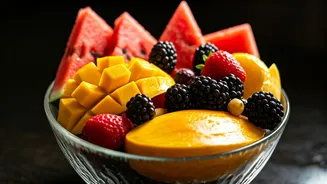
Nothing says summer like a huge slice of watermelon, and while it's incredibly hydrating, its high water content can sometimes feel heavy and lead to bloating for some people, especially when the air is already thick with humidity. Traditional wisdom
often suggests lighter foods during damp seasons to ease the burden on your digestive system. Instead, reach for a bowl of mixed berries like blueberries, raspberries, and strawberries. They offer hydration in a smaller package, but their real power lies in their high fiber and antioxidant content. Fiber helps keep your digestion moving smoothly, while antioxidants support your immune system, which can be under extra stress when the weather is ripe for germs. Berries are a vibrant, flavorful way to get your fruit fix without feeling weighed down.
Trade Tropical Mangoes for Peaches and Plums
Mangoes are the king of tropical fruits, but they are also quite dense and sweet. In some wellness philosophies, they are considered a “heating” food, which may not be what you crave on an already sweltering day. While delicious, they can sometimes feel a bit much for a system already working hard to stay cool.
This is the perfect time to embrace local stone fruits like peaches, plums, and nectarines. These fruits are at their peak during the American summer, meaning they’re fresh, flavorful, and packed with nutrients. They provide a wonderful sweetness and juiciness but are generally considered lighter and easier to digest. Plus, choosing local, seasonal produce often means better flavor and a smaller environmental footprint.
Choose Pears and Apples Over Bananas
A banana is the ultimate convenience food, packed with potassium and energy. However, its dense, starchy texture can slow down digestion for some, contributing to that sluggish feeling common on humid days. While a great pre-workout snack, it might not be the best choice for a light afternoon refresher.
For a crisp, refreshing alternative, turn to pears and apples. Both are fantastic sources of pectin, a type of soluble fiber that supports a healthy gut and aids digestion. They provide a satisfying crunch and a more cleansing, less heavy form of sweetness. An apple or a pear feels hydrating and invigorating, helping to cut through the day's humidity.
Opt for Cherries Instead of Grapes
A bunch of grapes is an easy snack, but their thin skins and tendency to grow in tight clusters can make them susceptible to mold and spoilage in high humidity. They can also trap moisture and pesticides, requiring extra-careful washing.
Instead, take advantage of cherry season. Cherries are a summer powerhouse, known for their anti-inflammatory properties, which can help your body deal with seasonal stresses. They are also rich in vitamins and have a more robust structure than grapes, making them slightly more resilient. Their season is fleeting, so enjoying them during the height of summer makes them a special, healthful treat.
Pick Whole Fruits Over Pre-Cut Packages
This isn't a fruit-for-fruit swap, but rather a crucial habit for muggy weather. The convenience of pre-cut fruit is tempting, but high humidity and warm temperatures create the ideal breeding ground for bacteria. Once a fruit's skin is broken, its shelf life shortens dramatically, and the risk of contamination rises.
During the stickiest months, make it a habit to buy your fruits whole. A fruit's natural skin is its best defense against spoilage and contaminants. Wash your produce thoroughly right before you plan to eat it and cut it yourself. This simple step significantly improves food safety and ensures you're getting the freshest, most vibrant taste and texture from your summer produce.