




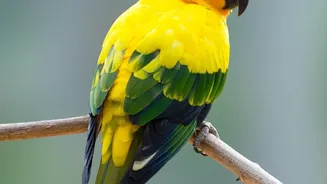

An Exclusive Club of Vocal Learners
A parrot’s ability to imitate human speech places it in a very exclusive group in the animal kingdom known as 'vocal learners'. This means that, like humans, dolphins, and a few other species, they learn to produce sounds by hearing and imitating them,
rather than being born with a fixed set of calls. Wild parrots use this skill to create unique calls within their flocks, helping them identify members and communicate. When a parrot lives with humans, it naturally begins to mimic the sounds of its new 'flock'—which happens to be our chatter. This is driven by their highly social nature and their desire to bond with their companions.
The Secret in the Syrinx
Unlike humans, who use a larynx (voice box) to speak, parrots produce sound using a unique organ called the syrinx. Located deep in their chest where the trachea splits into the lungs, the syrinx is a marvel of biological engineering. Air passing through it vibrates highly elastic membranes, generating sound. Parrots can precisely control the muscles around the syrinx, allowing them to modulate pitch and tone with incredible accuracy. This unique anatomy, combined with a thick, flexible tongue to shape sounds, enables them to replicate the complex frequencies of human words despite lacking vocal cords and lips.
A Uniquely Wired Brain
The real secret to a parrot's talking prowess lies in its brain. Scientists have discovered that parrot brains are structured differently from those of other birds, even other vocal learners like songbirds. They possess a specialized 'song system' with a unique 'core' and 'shell' structure. Research led by Duke University suggests these shell regions, which are larger in species known for their impressive mimicry, are crucial for their advanced ability to copy novel sounds. This complex neural wiring gives them the significant brainpower required to process auditory information and coordinate the precise muscle movements needed for speech imitation.
The Line Between Mimicry and Meaning
The most compelling question is whether parrots understand what they are saying. For a long time, their speech was dismissed as mere mimicry. However, decades of research, most famously with an African Grey parrot named Alex, have challenged this idea. Working with researcher Dr. Irene Pepperberg, Alex learned a vocabulary of over 100 words and could identify objects, colours, shapes, and quantities up to six. He could even combine words creatively. Alex demonstrated that some parrots can make a connection between a word and its meaning, using language to communicate desires and observations. While they don't grasp grammar or syntax like humans, this ability to use words in context points to a higher level of cognitive function than simple imitation.
Not All Parrots Talk the Talk
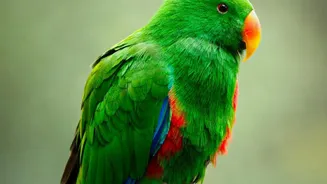
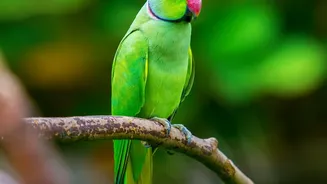
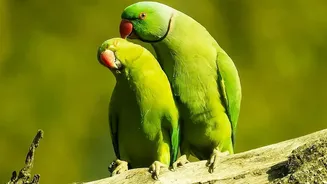
While many parrots have the potential to talk, some species are more gifted than others. The African Grey parrot is widely considered the undisputed champion of speech, known for its extensive vocabulary and clarity. Amazon parrots, such as the Yellow-naped and Blue-fronted varieties, are also renowned for their clear voices and even their ability to sing. Other proficient talkers include the Eclectus parrot, Indian Ringneck Parakeet, and even the small Budgerigar (budgie). However, ability can vary greatly by individual bird, and training requires significant patience and repetition. A parrot's desire to talk is deeply linked to its social bond with its owner.