




A Critical Safety Milestone
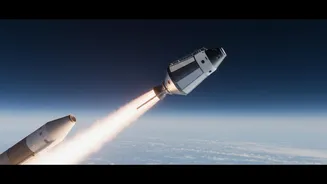
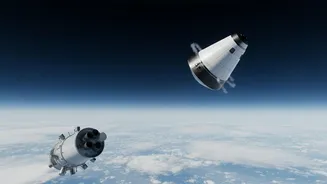
In its relentless pursuit of a successful crewed space mission, ISRO has successfully conducted a high-altitude test of the Crew Escape System (CES) for its Gaganyaan spacecraft. This system is essentially a high-tech lifeboat for astronauts. Its sole
purpose is to pull the Crew Module—the capsule where the astronauts will be seated—away from the main rocket in the event of a catastrophic failure during launch or ascent. The recent test simulated an emergency scenario at a significant altitude, verifying that the escape system can function flawlessly under the extreme stresses of high-speed flight. This is not the first such trial; ISRO has previously conducted a Pad Abort Test in 2018, which simulated an emergency on the launch pad itself. Each test validates a different, but equally crucial, phase of a potential emergency.
The Anatomy of an Escape
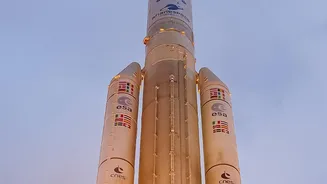
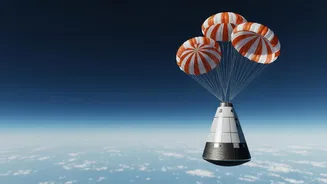
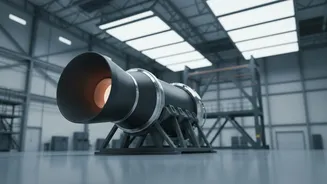
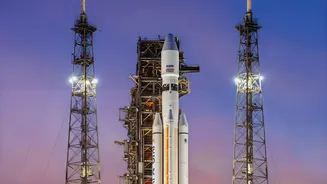
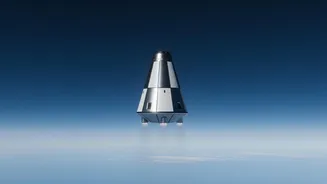
The Gaganyaan Crew Escape System is a marvel of engineering designed for one thing: speed. It is a 'puller' type system, mounted at the very top of the powerful LVM3 rocket. It consists of a set of quick-acting solid motors that fire in an instant to yank the 5.3-tonne Crew Module away from danger. These are not ordinary rocket motors; they use high burn-rate propellants designed to generate immense acceleration, pulling the crew to a safe distance in mere seconds. An advanced onboard computer network, the Integrated Vehicle Health Management system, will monitor the rocket's parameters in real-time. If it detects a critical anomaly, it automatically triggers the CES. Once clear of the launch vehicle, the system deploys a sequence of parachutes to slow the capsule for a safe splashdown in the sea, where recovery teams will be waiting.
High Stakes, High Altitude
Testing the escape system on the ground is one thing; proving it works high up in the atmosphere is another challenge altogether. The atmospheric phase of a rocket launch is one of its most critical stages. The vehicle is accelerating rapidly, pushing against immense aerodynamic forces. A high-altitude abort test, like the one just conducted, is designed to simulate a failure under these precise, punishing conditions. For example, one key test flight aimed to simulate an abort at Mach 1.2, or 1.2 times the speed of sound, at an altitude of about 17 kilometres. Such tests are vital because solid-fuel boosters, like the ones used on the LVM3 rocket, cannot be shut down once ignited. If something goes wrong, the only option is to get the crew away, and this system is their only guarantee of survival.
The Road to Gaganyaan
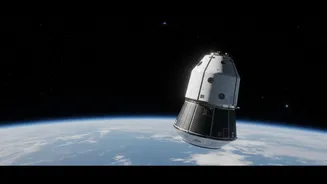
This successful test is another crucial piece of the puzzle for the Gaganyaan mission, which aims to send a crew of three astronauts into an orbit of 400 kilometres for a mission of up to three days. Before that historic flight can happen, ISRO must complete a comprehensive series of qualification tests for every single component. Recently, the agency also successfully conducted tests on the Crew Module's Uprighting System, which ensures the capsule stays upright after a sea landing, and the umbilical separation system, which ensures a clean break from the service module before re-entry. These precursor missions and ground tests are all designed to prove the technology is ready and reliable. Each successful trial, from parachute deployments to engine firings and escape system demonstrations, builds the confidence needed to finally place Indian astronauts, or 'Vyomanauts', into orbit and bring them back safely.