






The High Cost of Overpacking
Before diving into the hacks, it's crucial to understand what's at stake. Most domestic Indian airlines strictly enforce a 15 kg check-in and 7 kg carry-on limit. Exceeding this can cost you dearly, with fees often starting around ₹600 to ₹700 per extra
kilogram at the airport counter. That means just a few extra items can quickly add up to thousands of rupees, turning a budget-friendly trip into an expensive lesson. The goal isn't just to save money, but also to embrace the freedom of travelling light—no waiting at the baggage carousel and no stress about lost luggage.
Build a Capsule Wardrobe
The secret to packing light for four days is not about having fewer clothes, but about having more versatile ones. This is the essence of a 'capsule wardrobe'. Choose a base colour (like navy, grey, or beige) and build around it. A simple formula like the 5-4-3-2-1 method can be a lifesaver: 5 sets of socks/underwear, 4 tops, 3 accessories, 2 bottoms, and 1 pair of shoes. For a four-day trip, this translates to packing two versatile bottoms (like jeans and chinos), four tops that can be mixed and matched, and one layering piece like a light jacket or sweater. This ensures you have multiple outfit options without the bulk.
Master the Art of Rolling
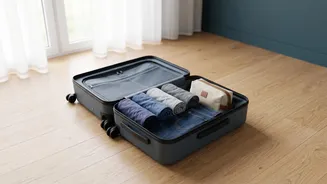
Folding clothes might be the standard at home, but when it comes to carry-on packing, rolling is a game-changer. Tightly rolled clothes not only save a significant amount of space but are also less prone to deep-set wrinkles compared to folded items. This technique works best for soft garments like t-shirts, synthetic fabrics, and trousers. For stiffer materials like starched cotton shirts or blazers, a neat fold remains the better option. By rolling the majority of your items, you'll be surprised at how much extra room you can create.
Embrace Packing Cubes
If you aren't using packing cubes, you're missing out on the single greatest packing innovation of the last decade. These zippered fabric containers help you compartmentalise and compress your clothing, creating neatly organised blocks that fit together like a puzzle in your suitcase. Use one cube for tops, another for bottoms, and a smaller one for underwear. Compression packing cubes go a step further, featuring an extra zipper that squeezes out excess air, reducing the volume of your clothes even more. They turn a chaotic suitcase into a model of efficiency.
Navigate the Liquids Rule Like a Pro
The 100 ml liquid rule is non-negotiable for both domestic and international flights departing from India. All your liquids, aerosols, and gels must be in containers of 100 ml or less, and all of these containers must fit into a single, transparent, re-sealable one-litre plastic bag. Don't get caught out by a half-full 150 ml shampoo bottle; the container size is what matters. The easiest way to comply is to buy travel-sized toiletries or decant your favourite products into smaller, reusable bottles. Better yet, consider solid toiletries like shampoo bars, conditioner bars, and solid perfumes to bypass the liquid restrictions entirely.
Wear Your Weight
This is one of the oldest tricks in the book because it works. Identify your heaviest and bulkiest items and wear them on the plane. This includes your heaviest pair of shoes (like boots or sneakers), your jacket, and any bulky sweaters or hoodies. Airlines don't weigh the clothes on your back. A jacket can also serve as a makeshift pillow or blanket on a cold flight, and its pockets can hold heavy items like a power bank or phone, further lightening your carry-on load. Once you're on board, you can simply take the jacket off and place it in the overhead bin.