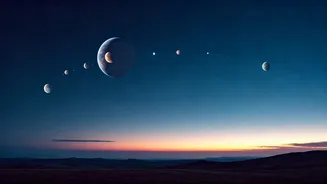




Understanding the Celestial Dance
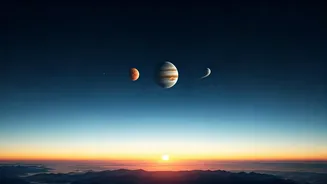
When we talk about planetary alignments, it’s not that the planets are actually forming a perfectly straight line in space. Instead, from our vantage point on Earth, they appear to gather closely in a small patch of the night sky. This beautiful optical
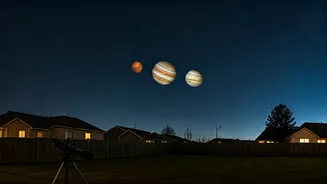
illusion is called a conjunction. These events offer a fantastic opportunity for even casual sky-watchers to identify multiple planets at once. Over the coming months, several such noteworthy conjunctions are visible from India, turning your backyard into an observatory. These are slow-moving, grand events, unfolding over days or weeks, giving you plenty of chances to look up and feel connected to the grand scale of our solar system.
The Main Event: Mars and Jupiter's Close Pass
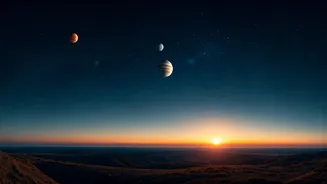
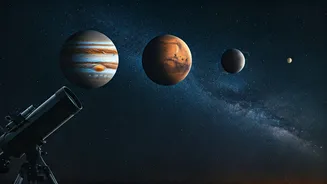
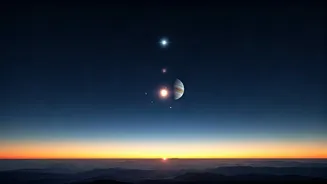
The most anticipated pairing this year is the close conjunction of Mars and Jupiter. Mark your calendars for mid-August 2024. On the morning of August 14th, these two planets will appear incredibly close to each other in the pre-dawn sky. To see them, you'll need to wake up early and look towards the eastern horizon about an hour before sunrise. Jupiter will be the brighter of the two, shining with a steady, brilliant white light. Mars will be nearby, identifiable by its distinct reddish-orange hue. While they will be at their closest on the 14th, you can watch them draw nearer in the days leading up to the event and drift apart in the days following. This celestial meeting is easily visible to the naked eye, making it a perfect spectacle for everyone.
Gear Guide: From Naked Eye to Telescope
You don’t need a sophisticated observatory to enjoy this show. Each level of equipment unlocks a new layer of detail.
**Naked Eye:** You can easily spot Jupiter and Mars as bright 'stars' that don't twinkle. Their proximity in the sky during the conjunction will be obvious and impressive on its own.
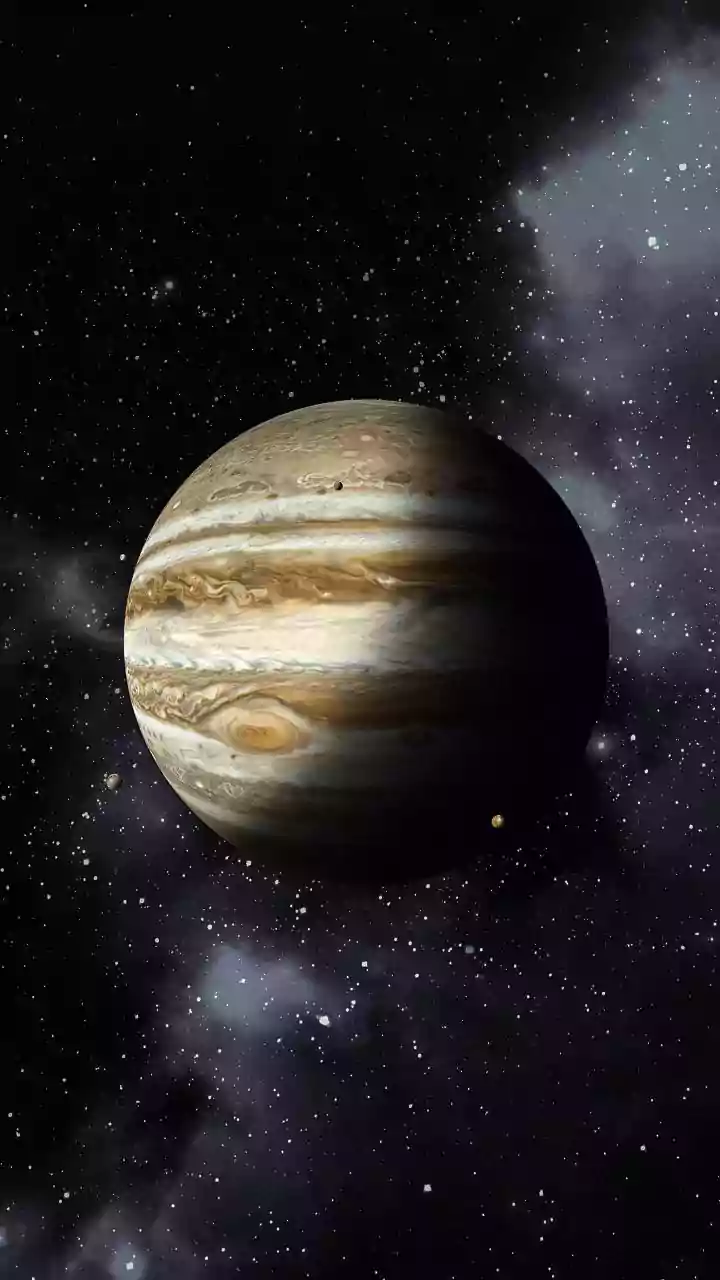
**Binoculars:** A standard pair of binoculars (7x50 or 10x50 are ideal) will dramatically enhance the view. You'll not only see the colour difference between the planets more clearly but might also glimpse Jupiter's four largest moons—Io, Europa, Ganymede, and Callisto—appearing as tiny pinpricks of light in a line around the planet.
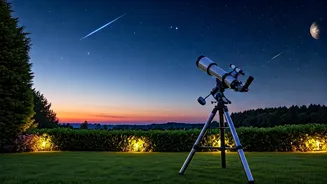
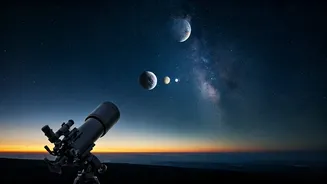
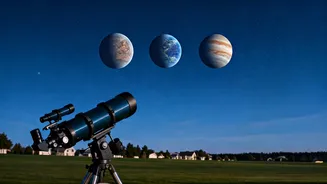
**Backyard Telescope:** This is where the magic truly happens. Even a small beginner's telescope will reveal more detail. You may be able to make out Jupiter's faint cloud bands and the distinct disc shape of Mars. It turns the planets from points of light into tangible worlds.
A Preview of More Alignments
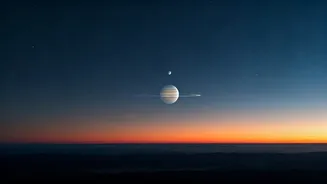
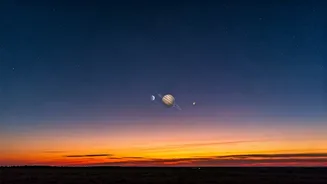
While the Mars-Jupiter event is a duo, the 'triple' alignment experience often comes from seeing multiple planets in the same sky, even if they aren't huddled together. Looking ahead, keep an eye on early 2025. There will be wonderful opportunities to spot Mercury, the fleet-footed messenger planet, in the evening or morning twilight. Often, during these periods, other bright planets like Saturn or Venus might also be visible in different parts of the sky, creating a beautiful planetary showcase. Using a simple stargazing app on your phone can help you identify which planets are visible each night, turning your sky-watching from a one-off event into a regular hobby.
Tips for the Best Viewing Experience
To make the most of these celestial events, a little preparation goes a long way. First, find a location with a clear view of the horizon, away from the direct glare of streetlights. The less light pollution, the better. Second, give your eyes time to adapt. It takes about 15-20 minutes for your eyes to become fully dark-adapted, which will allow you to see fainter objects. Third, check the weather forecast. Clouds are the ultimate enemy of the astronomer. Finally, for pre-dawn viewing, dress warmly, even in summer, as early morning hours can be surprisingly chilly. Bring a flask of chai or coffee to make the experience even more enjoyable.