






A Changing of the Guard
Meta's longtime head of infrastructure, Santosh Janardhan, is set to depart in early 2027. Janardhan, a veteran who joined the company back in 2009 when it was still just Facebook, has been a central figure in building the global network of data centers
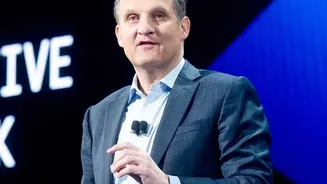
that supports its family of apps. He will be succeeded by David Brown, a former Amazon Web Services (AWS) senior vice president who joined Meta in July 2026. Brown is stepping in to not only lead the infrastructure division but also serve as the Chief Technology Officer of the 'Meta Compute' initiative, a massive undertaking to scale the company's hardware for the AI era. Janardhan will stay on through the first quarter of 2027 to ensure a smooth transition, moving into an advisory role.
Why This Role Is So Critical
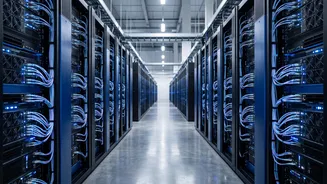
Leading Meta's infrastructure is no longer just about keeping servers online for social media. It's about building the foundation for what CEO Mark Zuckerberg hopes will be the world's most advanced artificial intelligence. This division is at the heart of a staggering capital expenditure plan, with Meta projecting spending of $135 billion to $145 billion in 2026 alone, much of it on data centers and custom AI chips. The person in this role oversees the literal construction of Meta's AI future, from designing custom silicon to building 'AI factories' so power-hungry they require dedicated energy deals, including nuclear power contracts. Success or failure in the AI race depends directly on the success of this infrastructure build-out.
The AWS Playbook Comes to Meta
The appointment of David Brown is a significant strategic signal. Brown comes from AWS, the undisputed leader in building and operating cloud infrastructure at a global scale. His nearly two decades of experience at Amazon, focusing on compute, cloud, and AI, suggests Meta is bringing in expertise honed at the highest level of hyperscale operations. This move reflects a broader industry trend where tech giants are poaching cloud veterans to manage their increasingly complex and expensive AI build-outs. The challenges are immense, moving beyond traditional IT to heavy industrial engineering, involving extreme power density, advanced liquid cooling systems, and physical construction hurdles. Brown's background indicates a focus on disciplined execution and scaling strategies learned at AWS.
A High-Stakes, High-Pressure Game
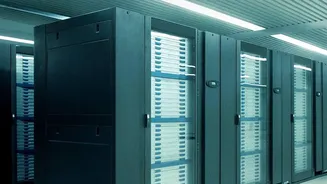
The leadership change comes at a moment of intense pressure. Meta is pouring capital into AI infrastructure with no guaranteed immediate return, a strategy that has attracted scrutiny from investors. Building these AI supercomputers is extraordinarily complex; the technology evolves faster than the teams managing it, and the biggest risk is underestimating the non-technical challenges like cooling, power grids, and finding specialized talent. Companies are facing long waits for essential components like power transformers and are even having to redesign data centers mid-construction to handle the heat and weight of new AI hardware. The departure of a veteran leader and the installation of a new one highlights the brutal demands placed on the executives tasked with turning these colossal investments into functional AI capacity.