







A strong, resilient back is the foundation of a healthy posture and powerful physique. But in the quest for a sculpted back, many gym-goers load up the seated row machine and make a crucial error: prioritising weight over form.
Why This Exercise Matters
The seated cable row is
a powerhouse exercise for developing the muscles of the upper and middle back. It primarily targets the latissimus dorsi (the large 'wing' muscles), the rhomboids (between the shoulder blades), and the trapezius. These muscles are vital for good posture, helping to counteract the slumped shoulders many develop from long hours at a desk. A strong back not only looks impressive but also provides stability for your shoulders, improves your performance in other lifts like pull-ups and deadlifts, and supports countless daily activities, from carrying groceries to pulling open a heavy door. Unlike some free-weight exercises, the seated row offers constant tension and a stable, supported position, making it an excellent and safe choice for both beginners and experienced lifters.
Your Setup and Starting Position
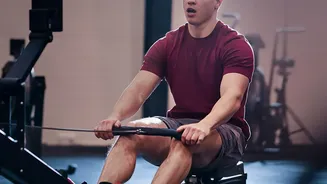
Proper execution begins before you even pull the weight. First, select an appropriate weight; it should be challenging but allow you to maintain control. Sit on the bench and place your feet firmly on the footplates with a slight bend in your knees. Your back should be straight and upright, not rounded. Grasp the handle and extend your arms fully without letting your shoulders slump forward. Engage your core by bracing your abdominal muscles, and pull your shoulders down and back, away from your ears. This 'proud chest' position is your stable base and must be maintained throughout the exercise. Avoid leaning too far forward or backward; your torso should be nearly vertical.
The Perfect Pull: A Step-by-Step Guide
With your posture set, you're ready to row. The movement should be initiated by your back, not your arms. Begin by pulling your shoulder blades together as if you're trying to pinch a pencil between them. This is the most crucial part of the exercise. Once your shoulder blades are retracted, continue the movement by driving your elbows back, keeping them close to the sides of your body. Pull the handle towards your lower abdomen or navel area. As you reach the peak of the movement, squeeze your back muscles hard for a second. The return is just as important. Slowly extend your arms, resisting the pull of the weight stack until your arms are nearly straight, allowing for a good stretch in your back muscles before starting the next repetition. This controlled negative phase is where much of the muscle-building stimulus happens.
Common Mistakes and How to Fix Them
The most common error is using too much weight, which leads to a cascade of other problems. Many people use momentum, rocking their torso back and forth to move the weight instead of using their back muscles. Keep your torso stable. Another frequent mistake is rounding the lower back, which puts your spine at risk. Always maintain a neutral spine. Shrugging the shoulders up toward the ears is also common; this engages the neck and upper traps instead of the target muscles. The fix is to consciously keep your shoulders down and back. Finally, people often pull with their biceps, turning it into an arm exercise. To correct this, focus on the mind-muscle connection: think about driving your elbows back and squeezing your back muscles, not just bending your arms.
When to Add Heavier Weights
The goal is to build strength through proper movement, not just to lift the heaviest weight possible. You are ready to increase the weight only when you can perform all of your target repetitions (for example, 3 sets of 10–12 reps) with impeccable form. This means no swinging, no shrugging, and maintaining a controlled pace with a distinct squeeze at the back of each rep. If you find your form breaking down on the last couple of reps, you've found a good working weight. If you're jerking the weight from the very first rep, it's too heavy. Reduce the load, perfect your technique, and the strength gains will follow in a much safer and more effective manner.