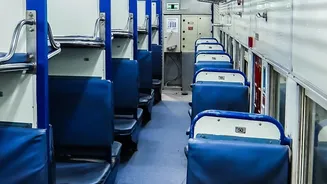







Every regular train traveller knows the slight dread of the final berth allocation. Will it be the convenient lower berth or a nightly climb to the top? Thankfully, you have more control than you think.
Understanding the Berth Allocation System
The Indian Railways Catering and Tourism Corporation
(IRCTC) uses a complex algorithm to assign berths. This automated system doesn't just work on a first-come, first-served basis; it also prioritises keeping groups together and balancing weight across the train's coaches. Furthermore, it carves out specific quotas for different groups of passengers. For most travellers in general quota, simply selecting 'Lower' as your berth preference is just that—a preference. It informs the system of your choice, but doesn't guarantee it if a lower berth isn't available when you book.
The Power of Special Quotas
Indian Railways has a dedicated lower berth quota for specific passengers to make travel more accessible. This includes male senior citizens (aged 60 and above), female passengers (aged 45 and above), and pregnant women. When you enter the correct age and gender details, the system automatically considers you for this quota. In Sleeper, 3AC, and 2AC coaches, a set number of lower berths are earmarked for this purpose. For example, a Sleeper coach typically has six to seven lower berths reserved under this quota. Provided there is availability, these passengers are given automatic preference for a lower berth, even if they don't specifically select it.
Your Strongest Tool: Conditional Booking
Perhaps the most underutilised feature on the IRCTC platform is the conditional booking option. During the booking process, you will find checkboxes with powerful instructions for the system. One of the most effective is 'Book only if at least one lower berth is allotted'. By selecting this, you tell the system to only proceed with the booking if it can assign a lower berth to at least one of the passengers. If it cannot, the transaction will fail, and your money will not be deducted. This is the closest you can get to ensuring a lower berth, but it comes with a risk: if no lower berths are available on that train, you won't get a ticket at all.
Booking Strategy for Families and Groups
How you book for a group can drastically affect your chances. The senior citizen lower berth algorithm works best when the eligible person is travelling alone or with just one other eligible passenger on the same ticket. If you book a senior citizen along with several younger, non-eligible family members on the same PNR, the system may treat it as a general group booking and ignore the lower berth priority. A smarter strategy is to book the senior citizens on a separate ticket to maximise their chances under the quota. For the rest of the group, using the 'Book only if all berths are allotted in the same coach' option can prevent your party from being scattered across the train.
What to Do If You Still Get an Upper Berth
Even with the best-laid plans, you might end up with a middle or upper berth. Don't lose hope. Your first point of contact after boarding should be the Travelling Ticket Examiner (TTE). Indian Railways rules authorise TTEs to re-allocate any vacant lower berths—resulting from no-shows or cancellations—to eligible passengers already on the train, such as senior citizens, persons with disabilities, or pregnant women. Politely make your request soon after the journey begins. Often, a simple and friendly request to fellow passengers can also work, as many younger or solo travellers prefer the relative privacy of an upper berth and are willing to swap.