

Why Yoga for Posture?
Poor posture often stems from a combination of weak core and back muscles, along with tightness in the chest and hips. This imbalance pulls the spine out of its natural alignment, leading to strain and discomfort. Yoga addresses these root causes directly.
It is a low-impact practice that strengthens overlooked stabilising muscles, increases flexibility in tight areas, and enhances body awareness. Unlike other forms of exercise that can stress the joints, yoga is adaptable for most fitness levels, providing a gentle way to retrain your body for better postural habits both on and off the mat.
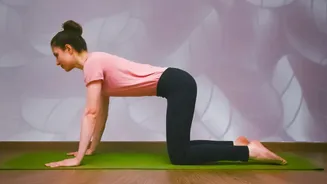
1. Marjaryasana-Bitilasana (Cat-Cow Pose)
This foundational movement is perfect for warming up the spine and releasing tension. By moving between the two positions, you improve spinal mobility and stretch your back and neck. Start on your hands and knees with wrists under shoulders and knees under hips. Inhale as you drop your belly and look up, arching the back for Cow Pose. Exhale as you round your spine, tucking your chin to your chest for Cat Pose. Flow between these two for 10 breaths.
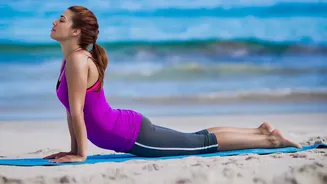
2. Bhujangasana (Cobra Pose)
Cobra Pose is a gentle backbend that strengthens the spine and back muscles, opens the chest and shoulders, and can help counteract the effects of slouching. Lie on your stomach with your legs extended and the tops of your feet on the floor. Place your hands under your shoulders, hugging your elbows to your body. Inhale and gently lift your head, chest, and shoulders off the floor, keeping your lower ribs on the ground. Hold for a few breaths before releasing.
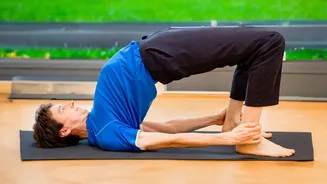
3. Setu Bandhasana (Bridge Pose)
Bridge Pose is excellent for strengthening the glutes, hamstrings, and lower back, all of which are crucial for supporting proper posture. Lie on your back with your knees bent and feet flat on the floor, hip-width apart. Keep your arms alongside your body with palms down. Press into your feet and lift your hips toward the ceiling. Clasp your hands underneath your back and roll your shoulders under you to open the chest. Hold for 30 seconds before slowly rolling down.
4. Tadasana (Mountain Pose)
Though it looks simple, Mountain Pose is a powerful tool for teaching proper body alignment from the ground up. It builds awareness of how you stand and carry your weight. Stand with your big toes touching and heels slightly apart. Distribute your weight evenly across your feet. Engage your thigh muscles and gently tuck your tailbone. Relax your shoulders down and back, away from your ears, and lengthen your neck. Hold this active pose for up to a minute, focusing on your alignment.
5. Parsva Balasana (Thread the Needle Pose)
This restorative pose provides a deep stretch for the shoulders, upper back, and chest, relieving tension that builds up from hunching. Start on all fours. On an exhale, slide your right arm under your left, with your palm facing up. Rest your right shoulder and cheek on the floor. Keep your hips lifted and centered. To deepen the stretch, you can walk your left fingertips forward or wrap your left arm around your back. Hold for 30 seconds to a minute on each side.
6. Garudasana Arms (Eagle Arms)
You don't need to do the full balancing pose to get the benefits for your shoulders. This arm variation is a fantastic stretch for the upper back and the muscles between the shoulder blades. Sitting or standing, extend your arms forward. Cross your right arm over your left at the elbows. Bend the elbows and bring the backs of your hands together, or if you have the flexibility, wrap again so the palms touch. Lift the elbows and gently move the hands away from your face. Hold for several breaths, then switch sides.