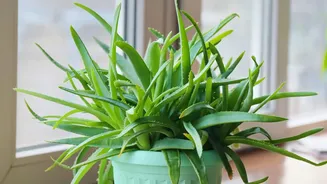






Ever notice your favorite houseplant starting to lean, as if trying to get a better look out the window? This isn't your imagination. It's a natural, hormone-driven process that you can manage with one simple trick: rotating the pot.
The Irresistible Pull of Light
The most visible reason
plants lean is their quest for light. This response, known as phototropism, is a fundamental survival instinct. Plants need light for photosynthesis, the process of converting light into energy. When a light source, like a window, is consistently on one side, the plant will dedicate its resources to growing towards it. This results in the classic lopsided look: lush, full growth facing the window and a sparser, weaker side facing the room. The plant isn't being picky; it's simply doing what it evolved to do—maximize its access to its primary energy source. Stems and leaves show positive phototropism, meaning they grow toward light.
Meet Auxin, the Growth Hormone in Charge
The biological mechanism behind this lean is controlled by a powerful plant hormone called auxin. Produced in the tips of stems and roots, auxins are chemical messengers that regulate where and how quickly cells elongate. When light hits one side of a stem, auxins migrate to the shaded side. This higher concentration of auxin on the dark side stimulates the cells there to grow longer and faster than the cells on the illuminated side. This differential growth is what causes the stem to physically bend and curve towards the light. It's a remarkably precise system that allows a plant to orient itself for optimal light absorption without a brain or nervous system.
More Than Just Good Looks
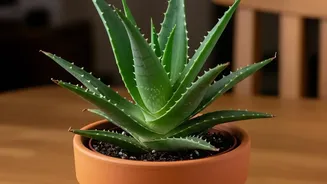
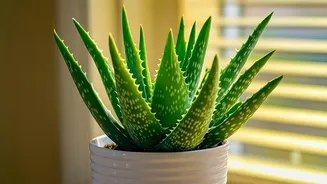
Rotating your plant does more than just create a symmetrical, visually pleasing shape. It promotes overall health and structural integrity. When a plant grows evenly, it develops stronger stems all around, making it more robust and stable. A quarter turn every time you water is a common and easy-to-remember schedule. This simple action ensures that all leaves get their turn in the sun, maximizing the plant's total capacity for photosynthesis. Furthermore, regular rotation improves air circulation around the entire plant, which can help prevent issues like pests or fungal diseases that thrive in stagnant, shaded areas.
The Hidden Influence of Gravity
While light is the primary driver for a leaning stem, plants are also responding to another invisible force: gravity. This response is called gravitropism. Stems naturally grow upwards, against the pull of gravity (negative gravitropism), while roots grow downwards, with gravity (positive gravitropism). This is also regulated by auxins. If a plant is knocked on its side, auxins will concentrate on the lower side of the stem, stimulating upward growth, and on the lower side of the roots, inhibiting growth to cause a downward curve. By keeping your plant upright and rotating it, you help it maintain this natural orientation without spending excess energy correcting a severe lean, allowing it to focus on healthy, balanced growth instead.
Putting Rotation into Practice
So, how often should you rotate your plants? A good rule of thumb is to give the pot a quarter-turn every week or two, or each time you water. For plants in lower light, more frequent rotation might be beneficial, while those in very bright, ambient light may need it less often. Consistency is key. The goal is to prevent a major lean from developing in the first place. If a plant is already severely lopsided, you can turn its neglected side to face the light to encourage new growth, but a gradual correction with quarter-turns is often gentler on the plant. Some exceptions exist, such as flowering plants like orchids, which may drop their buds if moved after they've set. For most leafy houseplants, however, regular rotation is one of the easiest ways to ensure they grow strong, healthy, and beautiful from every angle.