






From Clouds to Crops
For farmers across India, the weather forecast is more than just small talk; it's a critical business tool. The predictions from bodies like the India Meteorological Department (IMD) directly influence some of the most fundamental decisions in agriculture.
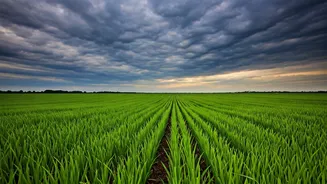
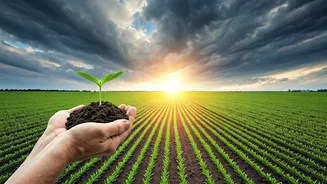
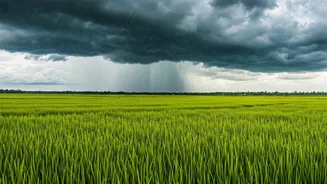
An accurate forecast for the monsoon, for instance, helps a farmer decide when to prepare the land, which crops to sow, and how much to invest in seeds and fertilisers. Studies have shown that access to reliable long-range forecasts allows farmers to align their plans with expected conditions. If an early monsoon is predicted, they might opt for higher-value cash crops that require a longer growing season. Conversely, a forecast for a delayed or weak monsoon might lead them to plant less water-intensive, hardier crops to minimize potential losses. This decision-making process, guided by meteorology, is the first step in a long chain that determines both the quantity and type of food that eventually reaches the market.
The Market Reacts in Minutes
Long before crops are harvested, commodity traders are already reacting to weather news. Agricultural commodities like wheat, rice, pulses, and sugar are traded on markets where prices fluctuate based on anticipated supply and demand. A forecast predicting a drought or a poor monsoon can send futures prices soaring, as traders bet on future scarcity. Conversely, a forecast for a bumper crop can lead to a drop in prices due to expected oversupply. This volatility is not just abstract market movement; it sets the baseline price for raw agricultural goods. Millers, food processors, and large retailers who buy these commodities must then factor these costs into their own pricing, creating a ripple effect that travels all the way to the consumer. In essence, the financial markets place a bet on the weather, and that bet helps determine the price of your next meal.
When Extreme Weather Hits
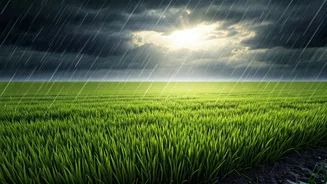
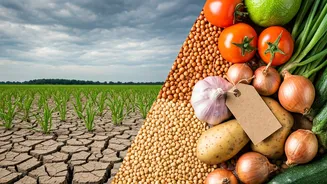
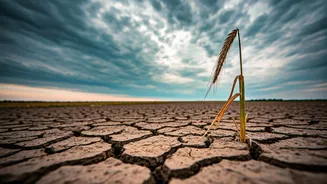
While forecasts guide planning, the reality of extreme weather events is what ultimately creates sharp price shocks. In recent years, India has seen how unseasonal rains, heatwaves, and floods can devastate key crops, leading to dramatic inflation. For example, excessive rains and hailstorms in Maharashtra have previously damaged onion production, causing prices to spike. Similarly, heatwaves and rainfall deficits have impacted tomato and potato crops, staples in the Indian kitchen, driving vegetable inflation to alarming levels. These events disrupt supply chains, damage crops both in the field and in transit, and lead to significant post-harvest losses. The result is a sudden shortage that sends wholesale and retail prices climbing, hitting household budgets directly.
The Climate Change Complication
Climate change is making the forecaster's job both harder and more essential. Increased frequency of extreme weather events, from intense heatwaves to erratic monsoons, adds a layer of unpredictability to agriculture. Scientists project that rising temperatures could significantly decrease yields for staple crops like wheat and rice in the coming decades. This growing volatility makes farmers more cautious, sometimes leading to underinvestment to avoid risk, which can impact overall food production. As weather patterns become less reliable, the demand for more accurate, long-range forecasting technology grows. Reliable predictions are seen as a key tool to help farmers adapt to these new climate realities and maintain stability in the food supply chain.