






Aviate, Navigate, Communicate
The moment a warning light flashes or an unusual sound is heard, a pilot’s training kicks in, guided by a simple but critical mantra: “Aviate, Navigate, Communicate.” This principle dictates the order of priorities. Before anything else, the pilots focus
on flying the airplane. Their first and most important job is to maintain control of the aircraft—managing its speed, altitude, and stability. Studies have shown that pilots can become so engrossed in troubleshooting a problem that they neglect their primary duty of flying. This framework ensures that the most life-critical task is always handled first, keeping the plane safe while they assess the situation.
Analyzing the Problem and Running Checklists
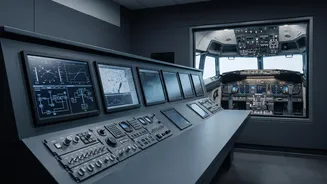
Once the aircraft is in a stable state, the crew works to understand the exact nature of the problem. Is it a mechanical issue, an electrical failure, a medical situation, or adverse weather? Pilots are trained to handle a wide range of scenarios, from engine trouble to cabin depressurization. They rely on detailed emergency checklists, both from memory for time-critical actions and from the aircraft’s manuals for more complex issues. These checklists are designed to be methodical, ensuring no step is missed in the high-stress environment of a cockpit emergency. Depending on the issue, this may involve attempting to restart an engine, shutting off a fuel supply to an engine fire, or rerouting around a storm.
Declaring the Emergency
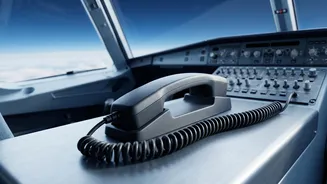
With the plane under control and a plan forming, the next step is to communicate. Pilots will contact Air Traffic Control (ATC) using specific terminology. A “Mayday” call, typically repeated three times, signifies a distress situation where the aircraft is in grave and imminent danger and requires immediate assistance. An urgency call, “Pan-Pan,” also repeated three times, indicates a situation that is serious but not immediately life-threatening. The pilots will state their aircraft type, position, the nature of the emergency, their intentions, and the number of people on board. This declaration gives them priority over all other air traffic.
The Team on the Ground Springs into Action
As soon as an emergency is declared, a coordinated effort begins on the ground. Air Traffic Control becomes a vital part of the flight crew's team. They will clear the airspace around the aircraft, vectoring other planes out of the way to give the emergency flight a direct and clear path to the nearest suitable airport. Controllers provide pilots with crucial information on weather, runway conditions, and airport facilities. Simultaneously, the chosen airport's emergency services are put on high alert. Fire and rescue vehicles are moved into position near the runway, and medical teams are placed on standby, ensuring that help is ready the moment the plane touches down.
Preparing the Cabin for Landing
While the pilots handle the technical aspects, the cabin crew prepares the passengers. Their primary role in an emergency is safety. They are trained first responders who must manage passenger anxiety while giving clear, assertive instructions. The lead flight attendant communicates with the cockpit to understand the situation and the time available before landing. The crew will then move through the cabin, instructing passengers on the proper brace position, ensuring seatbelts are tight, and securing all loose items. Their calm professionalism is crucial for keeping passengers focused and ready for a potential evacuation.
The Final Approach
In the final phase, the pilots are completely focused on the landing. Depending on the emergency, this could involve unique procedures. For instance, if the aircraft is overweight, they may need to circle to burn off fuel or even jettison it as an added safety precaution. They will run through final landing checklists, confirming the status of flaps, landing gear, and other systems. Throughout this process, they maintain constant communication with ATC. The goal is to fly the airplane all the way to the ground, touching down at a safe speed and bringing it to a controlled stop on the runway where emergency crews are waiting.