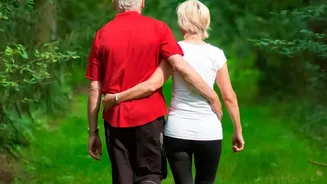







The Science of the Post-Meal Walk
When you consume a meal, particularly one rich in carbohydrates, your body breaks it down into glucose, which enters your bloodstream. This causes your blood sugar levels to rise. In response, your pancreas releases insulin to help your cells absorb this
glucose for energy. However, a large, rapid influx of glucose can lead to a 'spike,' followed by a 'crash,' which causes feelings of fatigue. A walk after eating provides a simple solution. Physical activity requires energy, and your muscles can pull glucose directly from your bloodstream to fuel their movement. This process helps blunt the sharp rise in blood sugar, leading to more stable energy levels. Studies show that walking even for just 10 to 15 minutes shortly after a meal can have a significant and positive effect on managing post-meal glucose levels.
Finding the Right Rhythm and Timing
You don’t need an intense power walk to reap the benefits. In fact, a gentle, leisurely pace is ideal. The goal is to stimulate your muscles without placing too much stress on a full stomach. Experts suggest that a walk lasting anywhere from 10 to 30 minutes is effective. The timing is also crucial. For the best blood sugar-stabilising effects, it's recommended to start your walk within 30 minutes of finishing your meal. This window aligns with the period when glucose from your food begins to enter the bloodstream. If you experience any discomfort like cramps or reflux, it's perfectly fine to wait 10 to 15 minutes for your stomach to settle before you start walking. The key is consistency; turning this into a daily habit after your main meals can yield long-term health advantages.
A Tool for Active Recovery
The benefits of a gentle stroll extend beyond blood sugar regulation, tying into the concept of 'active recovery'. After a strenuous workout, muscles can feel tight and sore, a condition often called delayed onset muscle soreness (DOMS). While complete rest might seem logical, light movement can often be more beneficial. Active recovery involves low-intensity exercise that helps increase blood flow to tired muscles. This enhanced circulation delivers oxygen and nutrients that aid in repair while helping to clear away metabolic waste products, like lactic acid, that contribute to soreness and stiffness. A gentle walk is one of the best and most accessible forms of active recovery. It doesn't add significant strain to your body but is enough to promote these restorative processes.
Preventing Soreness and Aiding Repair
By incorporating a post-meal walk on a workout day, you’re essentially multi-tasking. You’re managing your glucose response from your meal while also giving your muscles a gentle recovery session. This low-impact activity can help reduce muscle pain, improve flexibility, and lubricate joints. A 20 to 40-minute walk at a conversational pace is considered an effective duration for active recovery. This gentle movement prevents muscles from tightening up, which can happen if you remain sedentary for a long period after exercise. By promoting blood flow and reducing inflammation, these strolls can help you feel less sore and better prepared for your next workout, making your fitness routine more sustainable and enjoyable.