




An Industry Built on Smallholders
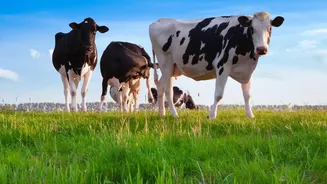
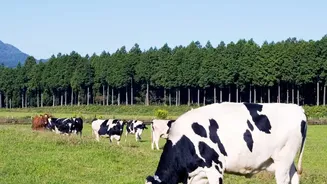
India is the largest milk producer in the world, accounting for nearly a quarter of global output. This remarkable achievement is not built on massive corporate farms, but on the backbone of more than 80 million smallholder dairy farmers. For these rural
households, a few cows or buffaloes represent a crucial source of daily income, nutritional security, and financial stability. Unlike seasonal crop farming, dairy provides a steady cash flow. This makes the sector’s health vital not just for national food security, but for the economic resilience of a significant portion of India's population. Any threat to milk production is a direct threat to these livelihoods.
The Science of Heat Stress
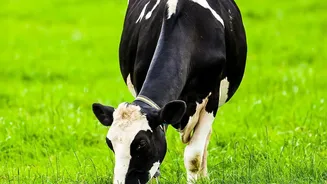
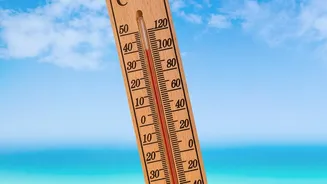
Cattle, particularly high-yielding crossbred cows and buffaloes, are sensitive to their environment. They are most comfortable within a specific temperature range. When high temperatures combine with high humidity, animals struggle to dissipate body heat. This condition is measured by the Temperature-Humidity Index (THI). Once the THI value crosses a threshold of 72, cattle begin to experience heat stress. Their bodies divert energy away from milk production and towards thermoregulation—processes like panting and sweating to stay cool. This results in reduced feed intake, hormonal imbalances, and a direct drop in milk output, which can be as high as 20-30% during periods of intense heat.
More Than Just Less Milk
The consequences of heat stress extend far beyond a simple drop in volume. The quality of milk also suffers, with lower fat and protein content, which reduces the price farmers receive. Furthermore, stressed animals are more susceptible to diseases like mastitis, leading to increased veterinary costs for already struggling farmers. Reproductive health is also severely affected. Heat stress can disrupt hormonal cycles, reduce conception rates, and lead to a condition known as 'silent heat', where farmers cannot detect the optimal time for insemination, further impacting the herd's productivity. The combined effect is a vicious cycle of lower income, higher expenses, and diminished herd health.
A Mounting Economic Toll
The financial impact is staggering. One study estimated that heat-related stress already causes an annual national loss of 3.2 million tonnes of milk, valued at approximately ₹2,661 crore. Projections suggest this could escalate significantly, with some studies warning that unmitigated climate change could slash India's milk production by 25% by 2085. This threatens the self-sufficiency achieved through decades of effort. The problem is compounded by related climate impacts, such as fodder and water scarcity, which become more acute during prolonged heatwaves and droughts, driving up operational costs for farmers.
The Search for Resilience
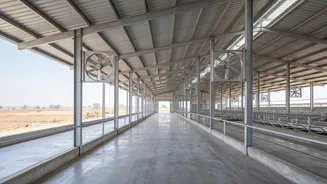
In response, a multi-pronged effort is underway to build a more climate-resilient dairy sector. Farmers are adopting low-cost solutions like providing adequate shade, which can significantly reduce an animal's heat load. More advanced methods include installing fans and water sprinklers or misters for evaporative cooling in animal sheds. Nutritional strategies are also key, such as adjusting feeding times to cooler parts of the day and providing high-quality, easily digestible feed to counteract reduced appetite. Looking ahead, government bodies and industry leaders are focusing on scalable solutions, from promoting thermo-tolerant indigenous breeds to developing financial tools that help farmers invest in these adaptive measures.