




The False Promise of AI Detectors
In the escalating battle against digital misinformation, AI image detectors were hailed as a silver bullet. The idea was simple: upload an image, and an algorithm would score its likelihood of being AI-generated. However, the reality is far more complex.
Studies and real-world use have shown these detectors to be surprisingly unreliable. They frequently produce 'false positives,' flagging human-made content as AI-generated, and 'false negatives,' missing sophisticated fakes entirely. Even OpenAI, a pioneer in generative AI, discontinued its own detection tool due to its low accuracy rate. The core problem is that AI image generators are evolving faster than the tools designed to detect them. This constant cat-and-mouse game means that for every new detection method, a new generation technique emerges that can bypass it. Researchers have found that results can vary wildly between different detection tools, with one platform flagging an image as 99% AI while another deems it 100% human. This inconsistency makes a simple detection score a shaky foundation for truth, especially in high-stakes fields like journalism and evidence verification.
Enter Provenance: The Digital Birth Certificate
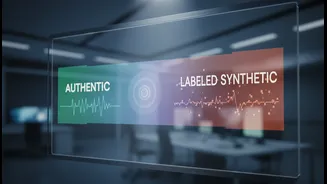
If detection is a flawed strategy, what's the alternative? The answer lies in 'provenance'—a concept that focuses on certifying authenticity at the moment of creation rather than trying to spot fakes later. Think of it as a tamper-evident, digital birth certificate for an image or video. The leading standard in this space is C2PA (Coalition for Content Provenance and Authenticity), an initiative backed by major tech and media companies like Adobe, Microsoft, Google, and the BBC. C2PA works by embedding a cryptographically signed record, called 'Content Credentials,' directly into a media file. This record contains details about who created the content, when it was made, and with what tools or AI models. Any subsequent edits are also logged. If the file is altered in a way that breaks the cryptographic signature, it becomes immediately apparent to anyone inspecting its credentials. This creates a secure chain of custody, proving the image’s origin and history.
Why Source Matters More Than a Score
The shift towards provenance fundamentally changes how we approach digital trust. Instead of asking a tool, "Is this fake?", we should be asking, "Where did this come from?" A high score from an unreliable detector offers a false sense of security, while a verifiable source offers tangible trust. For newsrooms and journalists, C2PA provides a powerful way to prove a photo was taken by their photojournalist at a specific time and place. In India, where AI-generated misinformation has become a significant concern, especially during elections, this ability to verify legitimate sources is critical. The prevalence of deepfakes and manipulated media has made the public increasingly skeptical, and a verifiable origin helps audiences distinguish between credible reporting and malicious fabrications. However, it's important to note that provenance is not a synonym for 'truth'. An image with valid Content Credentials proves it hasn't been tampered with since creation, but it doesn't verify that the scene wasn't staged or the caption isn't misleading. This is where human critical thinking remains indispensable.
Your Toolkit for the Misinformation Age
While C2PA adoption is growing, with camera manufacturers like Leica and platforms like Adobe Photoshop integrating it, most images online still lack these credentials. So, what can the average person in India do today? The answer is to adopt the principles of source checking. Before you share a viral image, become a digital detective. A simple but powerful tool is the reverse image search, available on Google and other search engines like TinEye. This lets you upload an image to see where else it has appeared online and when it was first published. Often, an image presented as new is actually from an old, unrelated event. Beyond tools, cultivate a healthy skepticism. Question the source of the content. Is it from a reputable news organization or an anonymous social media account? Look for corroboration from multiple trusted sources before accepting a claim. As AI makes it easier to create convincing falsehoods, our most reliable defense is not a new technology, but the timeless skill of critical media literacy.