







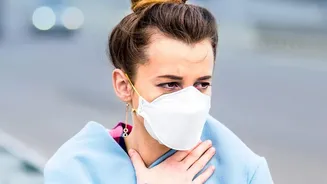
As smoggy skies become a familiar sight in many Indian cities, a parent's concern for their child's respiratory health is natural. This guide will help you navigate the confusing options and choose a mask that offers genuine protection.
Why Fit is More Important Than Anything
The single most
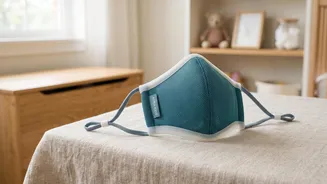
critical factor in a mask's effectiveness is its fit. A high-grade N95 mask is rendered nearly useless if polluted air can leak through gaps around the nose, cheeks, or chin. For children, whose facial structures are smaller and still developing, achieving a proper seal is both essential and challenging. A well-fitted mask should cover the nose, mouth, and chin completely, sitting snugly against the face without any visible gaps. An easy way to check for leaks is to see if your child's glasses fog up when they exhale, or if you can feel air escaping from the sides. Many masks designed for children come with adjustable nose clips and ear loops to help create a tighter seal. Remember, an imperfectly fitted high-rated mask can offer less protection than a lower-rated one that seals properly.
Decoding Mask Types: N95, KN95, and KF94
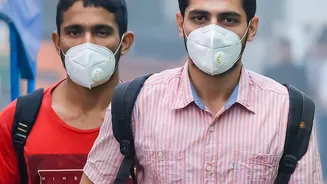
When it comes to filtering out the most dangerous fine particulate matter (PM2.5), not all masks are created equal. Basic cloth or surgical masks are largely ineffective against these tiny pollutants, as they are designed to block larger droplets and have a loose fit. For meaningful protection against pollution, you need to look at respirators. The most common certifications are N95, KN95, and KF94. N95 is the US standard, filtering at least 95% of airborne particles. KN95 is a Chinese standard with a similar 95% filtration goal, while KF94 is a Korean standard filtering at least 94% of particles. All three are considered highly effective for pollution. While N95 respirators are generally designed for adults, some smaller sizes might fit older children. KN95 and KF94 masks are more commonly available in specific child sizes, making them a practical choice for many parents.
Age-Specific Considerations
A child's age plays a crucial role in mask selection. Masks of any kind are not recommended for infants and toddlers under the age of two due to the risk of suffocation. For this age group, the only safe strategy is to avoid exposure and keep indoor air clean. For preschool and young school-aged children (ages 3-6), finding a mask that fits their smaller faces is paramount. Look for child-specific KN95 or KF94 models. Some paediatricians recommend N95 or KN95 masks for children above five or six years old, provided a good fit can be achieved. Older children and pre-teens may be able to wear small-sized adult N95 respirators, but it's essential to check the seal. Regardless of age, if a child complains of breathing difficulty, the mask should be removed.
How to Spot a Genuine Mask
With many counterfeit products on the market, it's vital to check for legitimacy. Look for certification markings printed directly on the mask itself. For N95 masks, look for the NIOSH approval number. For masks sold in India, a BIS certification with an ISI mark (under the IS 9473 standard) indicates it has been tested locally. European FFP2-rated masks are also considered equivalent and reliable. Be wary of masks that only feature logos of cartoon characters without any filtration rating stamped on them; design is not a substitute for protection. Another point to consider is whether to choose a mask with a valve. While valves can make it easier to exhale, they do not filter the wearer's exhaled air. For pollution protection, they are effective for the wearer, but some experts suggest avoiding them for children as they can lead to a poor fit on small faces.
Getting a child to wear a mask consistently can be a challenge. The best approach is to lead by example; when children see their parents wearing masks, they are more likely to accept them. Involve them in the process by choosing comfortable masks with adjustable straps. Educating them in simple, nonscary terms about how 'bad air' can make them cough and how the mask acts as a 'superhero shield' can also help. Normalising mask usage on days with high pollution helps build a lifelong awareness of air quality and health. However, it's crucial to remember that a mask is a tool to reduce exposure, not a license for prolonged activity in severely polluted air. On days when the Air Quality Index (AQI) is very high, the best course of action is always to limit outdoor time as much as possible.