





The Responsibility Gap Explained
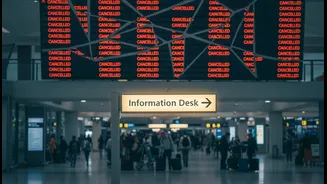
You found the perfect flight itinerary online. It’s a single booking, but the first leg is with one airline and the second with another. This is common, but it can create a 'responsibility gap' when things go wrong. If the first flight is delayed, causing
you to miss your connection, you might assume the airlines will sort it out. Unfortunately, passengers are often caught in the middle, with each carrier pointing fingers at the other. The airline that caused the delay is generally responsible for rebooking you, but getting assistance at a connecting airport can be a challenge, especially if that airline has no staff present. This frustrating scenario leaves travellers scrambling to make new arrangements, often at their own expense.
Single Ticket vs. Separate Bookings
The single most important factor determining your protection is how your flights were booked. If your entire journey, even with multiple airlines, is on one ticket with a single booking reference, you are generally protected. In this case, the airlines have an agreement to get you to your final destination. If a delay on one leg causes a missed connection, the carrier responsible for the delay is obligated to rebook you on another flight. However, if you booked two separate tickets—for example, one flight from Delhi to Dubai and another separate ticket from Dubai to London—the airlines treat them as two unrelated contracts. If the first flight is delayed, the second airline has no obligation to help you; you're simply considered a no-show for your second flight and will likely lose your ticket.
Understanding Airline Partnerships
To add another layer of complexity, airlines work together through different types of agreements. The two most common are 'codeshare' and 'interline' agreements. A codeshare is when one airline sells a seat on a flight that is actually operated by a partner airline. An interline agreement is a more basic partnership where airlines agree to handle passengers and their baggage for multi-airline journeys on a single ticket. Generally, a single ticket booked via these agreements offers more protection. For baggage, your bags are usually checked through to your final destination. If they get lost or delayed, the last carrier that handled your luggage is typically responsible for the claim. However, the specifics can be confusing, and during a disruption, the operating carrier (the one flying the plane) is usually the one you need to contact for help.
Know Your Rights: DGCA and Montreal Convention
For Indian travellers, passenger rights are outlined in the DGCA's Passenger Charter. These rules cover compensation for denied boarding and cancellations. For instance, if you miss a connecting flight booked on the same ticket due to a delay, the first airline is supposed to provide compensation. For international travel, the Montreal Convention provides a global standard. It establishes airline liability for delays, as well as for lost or damaged baggage. Liability for lost or damaged baggage on international flights is capped at a certain amount, around 1,288 Special Drawing Rights (SDRs) per passenger, which is roughly ₹1.5 lakh. For domestic flights in India, the liability limit is lower, often cited around ₹20,000. A bag is officially considered lost after 21 days, after which you can file a formal compensation claim.
How to Protect Yourself as a Traveller
The best way to avoid falling into a responsibility gap is through careful planning. First and foremost, always try to book your entire journey on a single ticket with one booking reference number. This creates a contract that obligates the airlines to get you to your final destination. Avoid booking separate tickets to create a 'self-connection', as this leaves you unprotected if the first leg of your journey is disrupted. When booking, pay attention to which airline is operating each flight. If a problem arises, you will likely need to deal with the operating carrier's staff at the airport. Finally, consider travel insurance, which can provide an essential safety net for costs incurred due to missed connections or lengthy delays that aren't covered by the airlines.