







The Triple Threat to Your Senses
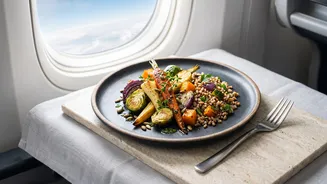
The reason your in-flight meal is so uninspiring is a combination of three main factors: low cabin pressure, constant engine noise, and, most importantly, extremely low humidity. At cruising altitude, an aircraft cabin is pressurised to the equivalent
of being 6,000 to 8,000 feet up a mountain. This lower pressure, combined with the dry air and noise, can reduce your perception of saltiness and sweetness by up to 30 percent. It's less about the food itself changing and more about your body's ability to perceive flavour being temporarily handicapped.
How Flavour Actually Works
Before we dive into the specifics of an airplane cabin, it helps to understand that what we call 'taste' is actually mostly 'smell'. Your tongue can only detect five basic tastes: sweet, salty, sour, bitter, and umami. The rich, complex notes that distinguish a paneer butter masala from a simple tomato curry are almost entirely thanks to your sense of smell. Volatile aroma molecules from your food travel up into your nasal cavity, where they are detected by olfactory receptors. These receptors send signals to your brain, which combines them with the basic tastes from your tongue to create the full experience of flavour. Without smell, food becomes one-dimensional.
The Dry Air Barrier
Here's the core of the problem. Airplane cabins are incredibly dry. The humidity level often drops below 20 percent, which is drier than the Sahara desert. For your sense of smell to work properly, your nasal passages need to be coated in a thin layer of mucus. Aroma molecules must first dissolve into this mucus layer before they can be detected by your olfactory receptors. In the bone-dry air of a plane, this mucus layer evaporates, leaving your nasal passages parched. As a result, fewer aroma molecules can successfully make the journey to your receptors. They fail to connect, and the flavour signals never get sent to your brain, making the food taste bland and uninteresting.
More Than Just a Dry Nose
The low humidity doesn't just impact your nose; it affects your mouth, too. Dry air reduces saliva production. Saliva is essential for taste because it helps dissolve food molecules so your taste buds can register them. Less saliva means less efficient flavour transmission on the tongue, further dulling your perception of sweet and salty tastes. Adding to this is the constant drone of the aircraft's engines. Studies have shown that loud, low-frequency background noise can suppress the brain's ability to perceive sweetness while enhancing the perception of umami, the savoury taste found in things like tomatoes and mushrooms. This helps explain why tomato juice is a famously popular drink in the air, even for people who don't drink it on the ground.
How Airlines Fight Back
Airlines and their catering companies are well aware of this sensory assault. They don't just put regular restaurant food on a plane; they engineer recipes specifically for altitude. Knowing that saltiness and sweetness are suppressed, they often increase the amount of salt, sugar, and intense spices in their dishes. They also lean heavily on ingredients that are rich in umami or have a strong acidic or spicy profile, as these flavours hold up much better in the harsh cabin environment. That's why you'll often find that curries, tomato-based sauces, and citrus-forward dressings taste more satisfying on a flight than a delicate, creamy dish might. They are specifically designed to cut through the sensory fog.