


A Factory in the Sky
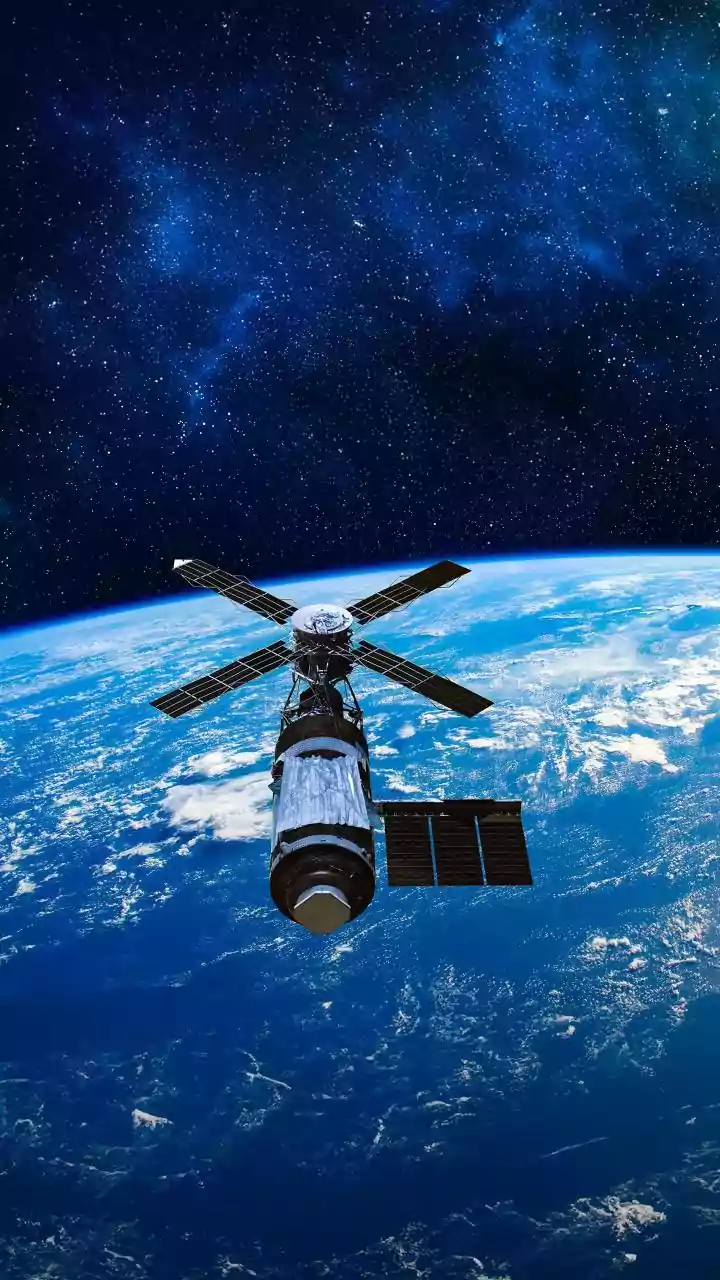
For decades, space has been the domain of exploration and research. But a major shift is underway towards commercialization, and one of the most promising frontiers is in-space manufacturing. The unique environment of Low Earth Orbit (LEO), specifically
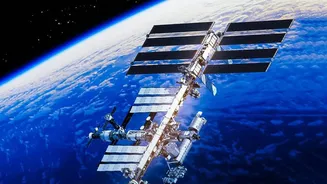
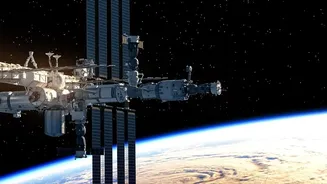
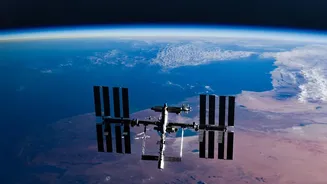
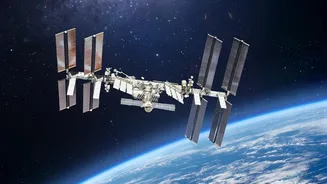
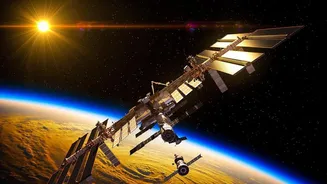
its microgravity, offers profound advantages that are impossible to replicate on Earth. In microgravity, the near absence of gravitational forces eliminates problems like sedimentation and convection. This allows for the creation of materials with near-perfect structures. Imagine fiber optic cables that are 100 times more efficient, flawless semiconductor crystals for next-generation electronics, and perfectly uniform protein crystals for developing life-saving drugs. These aren't science fiction concepts; they are tangible products that companies are actively pursuing. Research on the International Space Station (ISS) has already proven the potential of microgravity. The challenge has been scaling from small experiments to profitable, industrial-level production. This is where a new ecosystem of commercial space stations becomes essential.
More Than Just a Place to Sleep
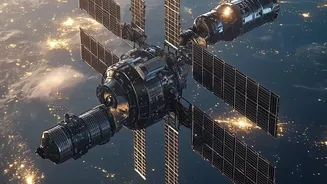
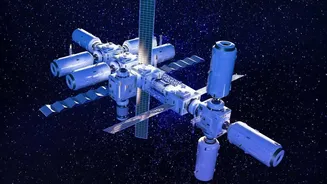
Next-generation habitation modules are the linchpin for this new orbital economy. To run a factory, you need infrastructure and a workforce. These commercial stations are being designed from the ground up to be mixed-use platforms, combining living quarters with dedicated research and manufacturing facilities. Companies like Axiom Space are building modules that will initially attach to the ISS before separating to become a fully independent commercial station. These stations will provide the essential utilities required for manufacturing: power, cooling, life support, and data connectivity. Crucially, they will also house the astronauts, scientists, and technicians needed to install, operate, and maintain the manufacturing equipment. An orbital habitat is not just a dormitory; it is the entire support system. It provides the laboratory space for research and development, the robotic arms for external tasks, and the pressurized volume needed for complex assembly and production lines that simply cannot be fully automated yet.
The Key Players in Orbital Real Estate
Several companies are racing to build the successors to the ISS. Axiom Space is a frontrunner, already building the first modules for its station, which will feature a dedicated research and manufacturing facility designed to produce everything from biologics to advanced materials. Another major approach involves expandable or inflatable habitats. Companies like Sierra Space and Max Space are developing modules made from high-strength, flexible materials. These habitats can be launched in a compressed state and then inflated in orbit to create voluminous living and working spaces—sometimes three stories tall. Sierra Space’s LIFE habitat, for example, is a key component of the planned Orbital Reef station, a collaboration with Blue Origin. These expandable modules offer a significant advantage by maximizing usable volume for a given launch mass, which is a critical cost driver in space operations. This makes building large, multipurpose facilities for habitation and manufacturing more economically viable.
A Symbiotic Relationship
The relationship between habitation and manufacturing in space is symbiotic. Without a place for people to live and work sustainably for long durations, large-scale manufacturing is impossible. Conversely, without the economic driver of high-value manufacturing, the business case for building and operating these expensive commercial habitats is much weaker. Companies like Varda Space Industries, which focuses on producing pharmaceuticals in orbit and returning them to Earth, represent the demand side of this new economy. They are the future tenants of the orbital real estate being developed by Axiom, Sierra Space, and others. The success of in-space manufacturing will drive the need for more modules, more power, more data, and more crew, creating a virtuous cycle of growth in the LEO economy. This vision extends to creating a more sustainable future, where certain resource-intensive or polluting manufacturing processes could eventually be moved off-planet.