



A Universe of Opportunity Opens Up
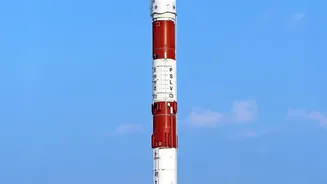
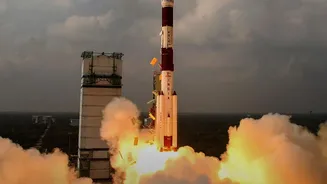
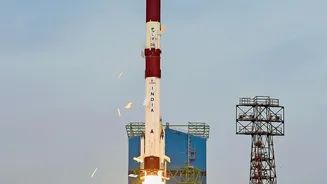
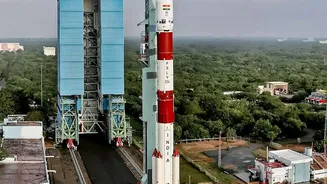
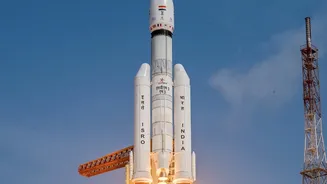
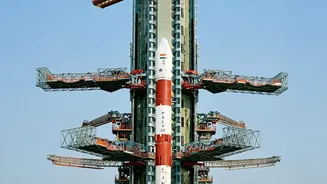
For decades, India's journey to the stars was piloted almost exclusively by the Indian Space Research Organisation (ISRO). From its first rocket parts transported on a bicycle to the triumphant Chandrayaan missions, ISRO built a world-class program on a foundation
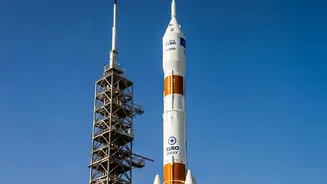
of government-led ingenuity. But a quiet revolution has been unfolding. In recent years, the government has strategically opened the sector, encouraging private companies to not just supply parts, but to build and launch their own space missions. Central to this change is the Indian National Space Promotion and Authorisation Centre (IN-SPACe), a single-window agency created to streamline approvals and facilitate collaboration between ISRO and private players. This policy shift has transformed the landscape, turning ISRO from the sole player into an anchor and mentor for a burgeoning private ecosystem.
The New Commercial Cosmos
The possibilities are vast, with startups now active across the entire space value chain. The Indian space economy, valued at around $8.4 billion, is projected to surge to over $40 billion within a decade. This growth is being driven by entrepreneurs venturing into several key areas. The most visible is launch services, with companies developing their own rockets to offer cost-effective rides to orbit for small satellites. Another major area is satellite manufacturing and operations. Startups are building constellations for everything from high-resolution Earth observation to broadband communications. Downstream applications represent a huge market, where companies use satellite data to provide 'decision intelligence' for sectors like agriculture, infrastructure, and climate monitoring.
Building Rockets in Hyderabad and Chennai
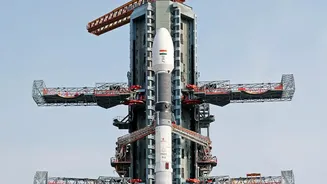
Two startups epitomise this new ambition. Hyderabad-based Skyroot Aerospace, founded by former ISRO scientists, made history in July 2026 by launching Vikram-1, India's first privately developed orbital rocket. This success, achieved on the first attempt, made India only the third country with private orbital launch capability and turned Skyroot into India's first space-tech unicorn, valued at over $1.1 billion. Meanwhile, Chennai's Agnikul Cosmos, incubated at IIT-Madras, is pushing the boundaries of advanced manufacturing with its 3D-printed rocket engines. After a successful suborbital test, the company is now planning a reusable rocket launch by early 2027, a move aimed at drastically lowering costs.
Eyes in the Sky, Data on the Ground
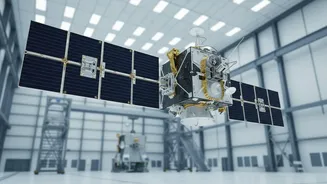
Beyond launch, companies like Bengaluru-based Pixxel are demonstrating the power of space-based data. Pixxel is deploying a constellation of high-resolution hyperspectral imaging satellites. Unlike normal cameras, these sensors capture light in hundreds of specific bands, revealing the chemical composition of what they see on the ground. This technology has profound applications, from detecting crop diseases and improving soil health to monitoring pollution and identifying mineral deposits. Having already launched its initial 'Firefly' satellites, Pixxel is now developing its next-generation 'Honeybee' constellation and leads a consortium to build India's first private national earth observation constellation.
Navigating the Challenges Ahead
The road to the stars is not without obstacles. Despite the recent boom, Indian space startups face significant challenges. Access to patient, long-term capital is a major hurdle, with funding in India still lagging behind global counterparts. While the Indian Space Policy 2023 provides a framework, a more comprehensive legislative act covering complex issues like liability is still needed to provide greater certainty for investors and operators. Furthermore, there is intense global competition from established players like SpaceX and a growing number of international startups. Overcoming these challenges will require sustained policy support, increased investment, and a continued focus on indigenous innovation to build a commercially sustainable industry.