
The Sun’s Invisible Threat
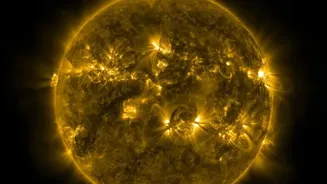
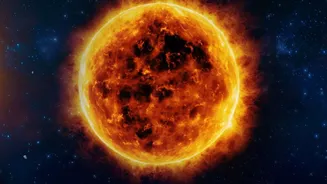
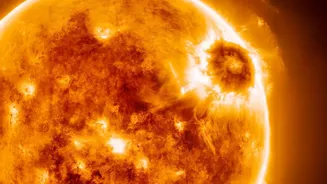
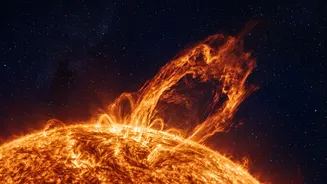
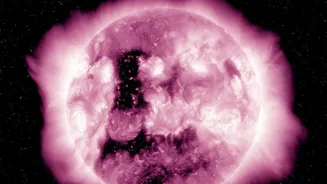
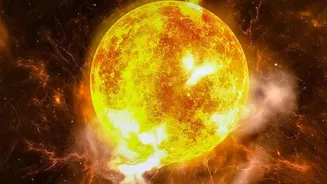
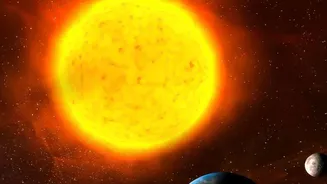
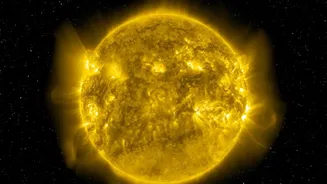
The sun, our source of life, has a violent side. It periodically releases enormous bursts of energy and charged particles, known as coronal mass ejections (CMEs). When these eruptions are aimed at Earth, they can trigger powerful geomagnetic storms. While
our planet's magnetic field protects us from most of this solar onslaught, a sufficiently strong storm can breach these defences. These events are not just beautiful light shows like the aurora; they pose a direct threat to the technological backbone of modern society. The most intense storm on record, the 1859 Carrington Event, set telegraph stations on fire. If a storm of that magnitude occurred today, the consequences would be catastrophic, causing widespread blackouts and crippling global communications.
A Risk to Our Digital Foundation
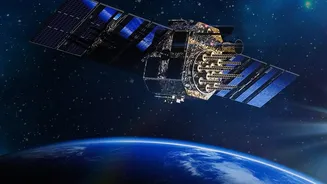
In an age of digital payments, constant connectivity, and GPS-guided logistics, the danger is immense. A severe solar storm can induce powerful electrical currents in power grids, potentially overloading transformers and causing continent-spanning blackouts that could last for weeks or months. Satellites, which are essential for everything from weather forecasting in India to international banking and mobile phone service, are particularly vulnerable. The intense radiation can damage their sensitive electronics, and the storms can heat the atmosphere, increasing drag and causing satellites to fall out of orbit. This isn't theoretical; in recent years, solar activity has already been blamed for the loss of dozens of commercial satellites. For a rapidly digitising nation like India, protecting this infrastructure is a matter of economic security.
The Old Challenge of Forecasting
For years, the biggest challenge has been prediction. While scientists could see a CME leaving the sun, determining its specific trajectory and how it would interact with Earth’s magnetic field was difficult. Early warning systems could often only provide very short notice, if any, before the storm’s impact. This left little time for power grid operators, satellite controllers, and airlines to take protective measures. Previous models that used AI could only offer forecasts for specific local areas, not a global picture, while non-AI models that provided global predictions were not timely enough to be truly useful. Getting a fast, accurate, and worldwide forecast remained a significant hurdle for space weather prediction.
Enter DAGGER: NASA’s AI Shield
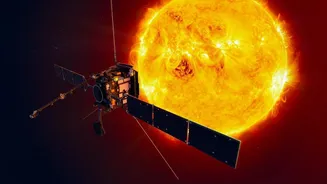
This is where NASA's new research changes the game. An international team at the Frontier Development Lab—a partnership including NASA and private tech companies—has developed an AI model called DAGGER (Deep Learning Geomagnetic Perturbation). DAGGER was trained using a method called deep learning, feeding it vast amounts of data from NASA’s solar-monitoring spacecraft and ground-based magnetic field measurements. The AI learned to identify the complex relationships between the solar wind conditions and the resulting geomagnetic disturbances on Earth. The result is a system that can predict the specific locations and intensity of a solar storm's impact across the globe with a 30-minute warning.
Why 30 Minutes Is a Game-Changer
A 30-minute warning might not sound like much, but in the context of planetary defence, it’s revolutionary. This window provides just enough time for critical actions that can prevent trillions of dollars in damage. Power companies can prepare to stabilise their grids, rerouting power or taking vulnerable transformers offline. Satellite operators can put their spacecraft into a protective safe mode, pointing sensitive components away from the incoming radiation. Airlines can reroute flights to avoid communication blackouts over polar regions. According to Vishal Upendran, the lead author of the study on DAGGER, this AI makes it possible to take decisive action and potentially prevent devastation to modern society. The model's code is also open source, meaning it can be adopted by operators worldwide to protect their specific infrastructure.