
A Planet for All Seasons
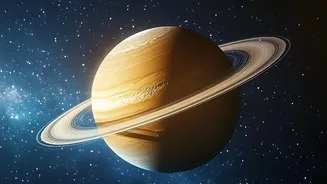
Like Earth, Saturn has seasons because its axis is tilted. With a tilt of about 27 degrees, similar to Earth's 23.5 degrees, different parts of the planet receive more direct sunlight as it completes its orbit. But that’s where the similarities end. A
single year on Saturn lasts for about 29.5 Earth years, meaning each season is a marathon, lasting more than seven of our years. The latest observations, part of the Outer Planet Atmospheres Legacy (OPAL) program, leverage Hubble's long-term watch to track these epic seasonal shifts, which bring profound changes to the gas giant's appearance.
From Winter Blues to Summer Gold
One of the most striking seasonal changes Hubble has documented is the shifting color palette of Saturn's hemispheres. As the northern hemisphere has moved from its long winter into spring and now summer, its appearance has changed dramatically. During its winter, the north pole developed a distinct blue hue. Scientists believe this was because the lack of direct sunlight cleared away photochemical hazes, which are created by reactions between sunlight and atmospheric chemicals. Now, with the sun shining on the north for years, these hazes are being produced again. Recent images show a slight reddish or golden haze over the northern hemisphere, a sign of summer's arrival. This may be due to increased heating from sunlight changing atmospheric circulation or altering the chemical makeup of aerosols in the atmosphere.
The Hexagon's Hazy Return
At Saturn’s north pole lies one of the most bizarre weather patterns in the solar system: a massive, six-sided jet stream known as the hexagon. This feature, wide enough to fit two Earths inside, was first discovered by the Voyager spacecraft in the 1980s. Its remarkable stability has long fascinated scientists. Recent Hubble views confirm the hexagon is still clearly visible, a persistent feature of the northern pole. Researchers theorize this powerful jet stream may act as a barrier, trapping the newly formed summer haze within it and contributing to the region's color change. The latest observations provide a crucial, detailed look at this iconic storm system as the pole heads toward 15 years of winter darkness, after which it will be hidden from view.
A Stormy Outlook
Beyond the large-scale color shifts, Hubble's sharp eye is also tracking smaller, more transient atmospheric storms. These features appear to come and go, offering yearly snapshots of Saturn's churning, active weather systems. The planet’s iconic bands, which are zones of rising and falling gas, also show subtle color variations from year to year. The combination of Hubble's long-term visible-light observations with the infrared capabilities of the James Webb Space Telescope allows scientists to effectively peel back the layers of Saturn's atmosphere, studying how storms, jet streams, and seasonal heating interact as a complex, three-dimensional system.