





The Chef’s Secret Weapon
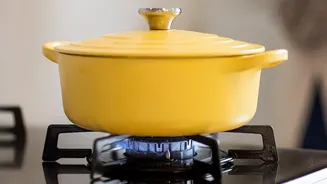
In cooking, observation is everything. A recipe can give you quantities and times, but it cannot account for the humidity in your kitchen, the exact heat of your stove, or the specific texture of your ingredients. Good cooks know this instinctively. They
rely on their senses to guide them. The instruction to note what the mixture looks like is a reminder to be present. Is the batter smooth or lumpy? Are the onions translucent or deeply caramelised? Has the spice mixture darkened and released its aroma? These details are the true turning points in a recipe. Documenting them, even mentally, turns a series of steps into a process you understand. You learn to recognize the signs of success and failure, making you a more confident and intuitive cook. This practice is especially crucial in Indian cooking, where the state of a 'bhuna masala' or the consistency of a dosa batter determines the final outcome.
The Scientist’s First Principle
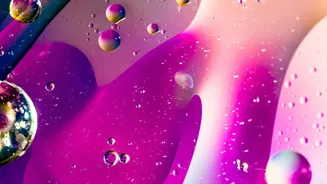
In a scientific setting, this practice is not just helpful; it is fundamental. Rigorous documentation is the bedrock of credible research. Recording the state of a chemical mixture before introducing a new variable ensures that an experiment is repeatable and its results are verifiable. It allows a scientist—or any other scientist—to trace the steps, identify where a reaction deviated, and understand cause and effect. Without this careful log, an unexpected result is just an anomaly. With it, it could be a discovery. This principle of clear, sequential documentation prevents errors, avoids the duplication of failed experiments, and ensures that knowledge is built on a solid foundation. Every detail, from a slight change in colour to a shift in viscosity, is a piece of data that tells a part of the story.
The Artist’s Moment of Truth
For an artist, observation is the wellspring of creativity. The act of truly seeing is a skill developed through patient practice. Before an artist moves on to the final piece, they study their subject, their palette, and their medium. How does the light hit the object? What subtle shades emerge when two colours are blended? What texture does the canvas have? Capturing these details is what gives art its depth and realism. This initial stage of observation is a dialogue between the artist and the world. Writing down or sketching what a mixture of paints looks like is not just about colour matching; it’s about understanding relationships and possibilities. This act of pausing to see, truly see, allows the artist to translate their perception into a tangible form that resonates with others.
Beyond the Mixing Bowl
Here is where this simple instruction reveals its deepest value. Applied to our lives, “writing down what the mixture looked like” is a powerful metaphor for self-reflection. Before making a major life change—switching careers, ending a relationship, moving to a new city—we are often so focused on the next step that we forget to document the present moment. Journaling is the perfect tool for this. Writing down your thoughts, feelings, and circumstances creates a snapshot of your inner world. It helps you understand your own motivations, recognise patterns in your behaviour, and clarify your values. This 'mixture' is the complex blend of your current reality: your fears, hopes, frustrations, and joys. Taking the time to understand this mixture before you add the next 'ingredient'—the big decision—is not an act of hesitation. It is an act of clarity. It ensures that you are moving forward with awareness, not just momentum, allowing you to make choices that are more aligned with who you are and what you truly want.